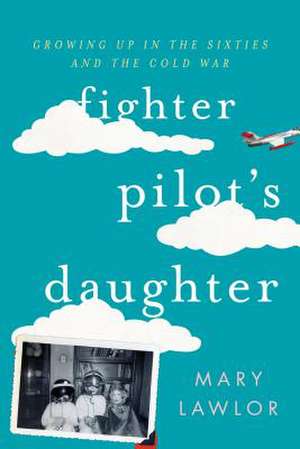
Fighter Pilot's Daughter: Growing Up in the Sixties and the Cold War
Autor Mary Lawloren Limba Engleză Paperback – aug 2015
A personal narrative braided with scholarly, retrospective reflections as to what that narrative means, Fighter Pilot's Daughter zooms in on a little girl with a childhood full of instability, frustration and unanswered questions such that her struggles in growth, her struggles, her yearnings and eventual successes exemplify those of her entire generation.
From California to Georgia to Germany, Lawlor's family was stationed in parts of the world that few are able to experience at so young an age, but being a child of military parents has never been easy. She neatly outlines the unique challenges an upbringing without roots presents someone struggling to come to terms with a world at war, and a home in constant turnover and turmoil. This book is for anyone seeking a finer awareness of the tolls that war takes not just on a nation, but on that nation's sons and daughters, in whose hearts and minds deeper battles continue to rage long after the soldiers have come home.
Preț: 183.15 lei
Preț vechi: 241.47 lei
-24%
Puncte Express: 275
Carte tipărită la comandă
Livrare economică 20 noiembrie-04 decembrie
Livrare prin curier în România Termenul estimat este afișat lângă disponibilitate.
Transport gratuit de la 400.00 lei Plată online sau ramburs, în funcție de opțiunile comenzii.
Retur gratuit în 14 zile Comandă securizată și suport în română.
Specificații
ISBN-13: 9781442255944
ISBN-10: 1442255943
Pagini: 336
Ilustrații: 11 BW Photos
Dimensiuni: 154 x 228 x 25 mm
Greutate: 0.52 kg
Editura: Bloomsbury Publishing
Colecția Rowman & Littlefield
Locul publicării:New York, United States
ISBN-10: 1442255943
Pagini: 336
Ilustrații: 11 BW Photos
Dimensiuni: 154 x 228 x 25 mm
Greutate: 0.52 kg
Editura: Bloomsbury Publishing
Colecția Rowman & Littlefield
Locul publicării:New York, United States
Cuprins
Acknowledgments
Introduction: The Pilot's House
Chapter One: Learning to Fly
Chapter Two: Frannie's Days of Yore
Chapter Three: The Coming of the Cold War
Chapter Four: Waiting Out Korea
Chapter Five: Camping Out in Miami and Topsail
Chapter Six: School Pains and Home Wars
Chapter Seven: Trouble With the Army
Chapter Eight: Strange Days in the Deep South
Chapter Nine: Coming of Age in California
Chapter Ten: Cold War Catholicism, JFK, and Cuba
Chapter Eleven: The Discipline of
Synchronized Swimming
Chapter Twelve: Saint Brigit/Bardot
Chapter Thirteen: Back to the Swamps
Chapter Fourteen: Transition out of America
Chapter Fifteen: Germany in the Sixties
Chapter Sixteen: At Play in the Fields of Empire
Chapter Seventeen: Following European Politics
Chapter Eighteen: Making a Home in Paris
Chapter Nineteen: New Constellations
Chapter Twenty: An Immoveable Feast
Chapter Twenty-One: Our Friends the Draft Resisters
Chapter Twenty-Two: Show Down With Frannie
Chapter Twenty-Three: May '68
Chapter Twenty-Four: Show Down With Jack
Chapter Twenty-Five: Lost Days
Chapter Twenty-Six: Heidelberg Redux
Chapter Twenty-Seven: A Beaker of the Warm South
Chapter Twenty-Eight: The End of the Cold War
Notes
Introduction: The Pilot's House
Chapter One: Learning to Fly
Chapter Two: Frannie's Days of Yore
Chapter Three: The Coming of the Cold War
Chapter Four: Waiting Out Korea
Chapter Five: Camping Out in Miami and Topsail
Chapter Six: School Pains and Home Wars
Chapter Seven: Trouble With the Army
Chapter Eight: Strange Days in the Deep South
Chapter Nine: Coming of Age in California
Chapter Ten: Cold War Catholicism, JFK, and Cuba
Chapter Eleven: The Discipline of
Synchronized Swimming
Chapter Twelve: Saint Brigit/Bardot
Chapter Thirteen: Back to the Swamps
Chapter Fourteen: Transition out of America
Chapter Fifteen: Germany in the Sixties
Chapter Sixteen: At Play in the Fields of Empire
Chapter Seventeen: Following European Politics
Chapter Eighteen: Making a Home in Paris
Chapter Nineteen: New Constellations
Chapter Twenty: An Immoveable Feast
Chapter Twenty-One: Our Friends the Draft Resisters
Chapter Twenty-Two: Show Down With Frannie
Chapter Twenty-Three: May '68
Chapter Twenty-Four: Show Down With Jack
Chapter Twenty-Five: Lost Days
Chapter Twenty-Six: Heidelberg Redux
Chapter Twenty-Seven: A Beaker of the Warm South
Chapter Twenty-Eight: The End of the Cold War
Notes
Recenzii
Mary Lawlor's memoir, Fighter Pilot's Daughter: Growing Up in the Sixties and the Cold War, is terrifically written. The experience of living in a military family is beautifully brought to life. This memoir shows the pressures on families in the sixties, the fears of the Cold War, and also the love that families had that helped them get through those times, with many ups and downs. It's a story that all of us who are old enough can relate to, whether we were involved or not. The book is so well written. Mary Lawlor shares a story that needs to be written, and she tells it very well.
Mary Lawlor, in her brilliantly realized memoir, articulates what accountants would call a soft cost, the cost that dependents of career military personnel pay, which is the feeling of never belonging to the specific piece of real estate called home. . . . [T]he real story is Lawlor and her father, who is ensconced despite their ongoing conflict in Lawlor's pantheon of Catholic saints and Irish presidents, a perfect metaphor for coming of age at a time when rebelling was all about rebelling against the paternalistic society of Cold War America.
Fighter Pilot's Daughter. . . is a candid and splendidly-written account of a young woman caught in the political turmoil of the '60s and the domestic turmoil that percolated around a John Wayne figure who won the Distinguished Flying Cross, eight Air Medals and the Cross of Gallantry across three generations of starspangled blood and guts. ... Among the triumphs of the book is Lawlor's ability to transition from academic - she is the author of two scholarly books and numerous articles about American literature and culture - to popular writing. 'I tried very hard to keep my academic voice out of the book,' said Lawlor, who will be retiring as a professor and director of American Studies after the spring semester. 'In academic writing, you explain and explain and footnote and footnote, and some of the life inevitably comes out of it. I wanted this to have life.' In so many ways it does..[particularizing] her family, including her mother, Frannie, her older twin sisters (Nancy and Lizzie) and a younger sister (Sarah). . . . In many ways the Lawlor women drive her narrative. ... Her principal focus, inevitably, is her Fighter Pilot Father, who, in her words, 'seemed too large and wild for the house.' Jack Lawlor was so true to fighter-pilot form as to be an archetype, hard-drinking, hard-to-please, sometimes (though not always) hard-of-heart. Mary does not spare those details.'
This engrossing memoir adeptly weaves the author's account of growing up in a military family in the United States and Europe with domestic American and international Cold War events. Mary Lawlor's descriptions of her parents' origins and aging, and her perceptive, honest reflections on childhood and young adulthood between the 1950s and 1970s, are illuminated by the knowledge and wisdom that develop over decades of adulthood. In re-visiting her earlier life, the author reveals a process of arriving at a compassionate understanding of the significant people in it-relatives, friends, nuns, boyfriends, and draft resisters, among others-and through this, a clearer understanding of one's self. She demonstrates that comprehension of the broad historical context in which one lives-in her case, the pervasive global rivalry between communism and anticommunism, and its influences on American ideals about family roles, political values, and aspirations, which she questioned and challenged as a young woman drawn into the counterculture-is crucial for attaining such self-knowledge.
Mary Lawlor, in her brilliantly realized memoir, articulates what accountants would call a soft cost, the cost that dependents of career military personnel pay, which is the feeling of never belonging to the specific piece of real estate called home. . . . [T]he real story is Lawlor and her father, who is ensconced despite their ongoing conflict in Lawlor's pantheon of Catholic saints and Irish presidents, a perfect metaphor for coming of age at a time when rebelling was all about rebelling against the paternalistic society of Cold War America.
Fighter Pilot's Daughter. . . is a candid and splendidly-written account of a young woman caught in the political turmoil of the '60s and the domestic turmoil that percolated around a John Wayne figure who won the Distinguished Flying Cross, eight Air Medals and the Cross of Gallantry across three generations of starspangled blood and guts. ... Among the triumphs of the book is Lawlor's ability to transition from academic - she is the author of two scholarly books and numerous articles about American literature and culture - to popular writing. 'I tried very hard to keep my academic voice out of the book,' said Lawlor, who will be retiring as a professor and director of American Studies after the spring semester. 'In academic writing, you explain and explain and footnote and footnote, and some of the life inevitably comes out of it. I wanted this to have life.' In so many ways it does..[particularizing] her family, including her mother, Frannie, her older twin sisters (Nancy and Lizzie) and a younger sister (Sarah). . . . In many ways the Lawlor women drive her narrative. ... Her principal focus, inevitably, is her Fighter Pilot Father, who, in her words, 'seemed too large and wild for the house.' Jack Lawlor was so true to fighter-pilot form as to be an archetype, hard-drinking, hard-to-please, sometimes (though not always) hard-of-heart. Mary does not spare those details.'
This engrossing memoir adeptly weaves the author's account of growing up in a military family in the United States and Europe with domestic American and international Cold War events. Mary Lawlor's descriptions of her parents' origins and aging, and her perceptive, honest reflections on childhood and young adulthood between the 1950s and 1970s, are illuminated by the knowledge and wisdom that develop over decades of adulthood. In re-visiting her earlier life, the author reveals a process of arriving at a compassionate understanding of the significant people in it-relatives, friends, nuns, boyfriends, and draft resisters, among others-and through this, a clearer understanding of one's self. She demonstrates that comprehension of the broad historical context in which one lives-in her case, the pervasive global rivalry between communism and anticommunism, and its influences on American ideals about family roles, political values, and aspirations, which she questioned and challenged as a young woman drawn into the counterculture-is crucial for attaining such self-knowledge.