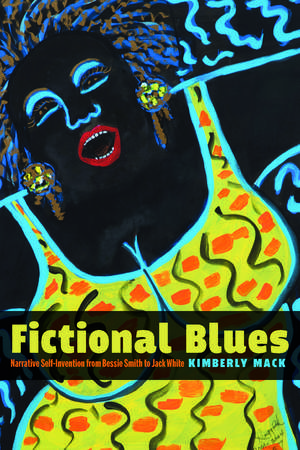
Fictional Blues: Narrative Self-Invention from Bessie Smith to Jack White: African American Intellectual History
Autor Kimberly Macken Limba Engleză Paperback – 18 dec 2020
Using examples of fictional and real-life blues artists culled from popular music and literary works from writers such as Walter Mosley, Alice Walker, and Sherman Alexie, Kimberly Mack demonstrates that the stories blues musicians construct about their lives (however factually slippery) are inextricably linked to the “primary story” of the narrative blues tradition, in which autobiography fuels musicians' reclamation of power and agency.




Preț: 233.77 lei
Puncte Express: 351
Carte disponibilă
Livrare economică 13-27 noiembrie
Livrare express 30 octombrie-05 noiembrie pentru 30.77 lei
Livrare prin curier în România Termenul estimat este afișat lângă disponibilitate.
Transport gratuit de la 400.00 lei Plată online sau ramburs, în funcție de opțiunile comenzii.
Retur gratuit în 14 zile Comandă securizată și suport în română.
Specificații
ISBN-13: 9781625345509
ISBN-10: 162534550X
Pagini: 264
Ilustrații: 3 b&w illus.
Dimensiuni: 152 x 229 x 25 mm
Greutate: 0.42 kg
Ediția:First Edition
Editura: University of Massachusetts Press
Colecția University of Massachusetts Press
Seria African American Intellectual History
ISBN-10: 162534550X
Pagini: 264
Ilustrații: 3 b&w illus.
Dimensiuni: 152 x 229 x 25 mm
Greutate: 0.42 kg
Ediția:First Edition
Editura: University of Massachusetts Press
Colecția University of Massachusetts Press
Seria African American Intellectual History
Notă biografică
KIMBERLY MACK is assistant professor of African American literature at the University of Toledo.
Recenzii
“Fictional Blues is an outstanding contribution to contemporary popular music scholarship. It should be widely read by blues scholars, of course. But it should be taken up beyond that: anyone concerned with race, performance, and authenticity politics in popular music studies should read this confident and erudite book . . . Mack offers us a new way to listen to what we thought we knew and to appreciate anew the artistry, savvy, and ingenuity of blues music, and the people who make it.”—Journal of Popular Music Studies
“By incorporating autobiographical storytelling into the concept of blues, this book is a groundbreaking work that will be foundational for scholars of blues, popular music, American studies, Black studies, and media studies. The book is aimed at scholarly audiences, but the writing is accessible and engaging enough for advanced undergraduates and general audiences. Mack’s work offers a new analytical frame for considering who can participate in blues and how, while simultaneously locating and challenging reductive tropes and exploitative and appropriative participants.”—Journal of the Society for American Music
“Fictional Blues is a rich interdisciplinary study of the potential of storytelling to contest the racist, classist, and masculinist strictures of blues authenticity, . . . open[ing] up new possibilities for Black cultural research, for Black being, and, ultimately, for Black futures.”—American Literary History
“The perspective Mack offers on blues mythology is fresh and compelling. Fictional Blues is well-researched, engaging, clear, confident, and important.”—Emily J. Lordi, author of Black Resonance: Iconic Women Singers and African American Literature
“Mack provides a complex mapping of American blues music to investigate the work it does as a multifaceted cultural trope, from its inception in the Jim Crow South to its global dissemination in the twenty-first century. Fictional Blues is certain to make an impact in African American studies, along with American literary and cultural studies writ large.”—Caroline A. Streeter, author of Tragic No More: Mixed-Race Women and the Nexus of Sex and Celebrity
“When I got into the blues as a teenager, I fully bought into the mythology of tragic mystery men encountering the Devil at some crossroads. If only I'd had Kim Mack's book. It illuminates the whole history of the blues as a unique blend of tall tales and self-revelation, from Ma Rainey's gold-neck theatrics to Jack White's post-postmodern character act. A fun and very necessary read.”—Ann Powers, author of Good Booty: Love And Sex, Black White, Body And Soul In American Music
“With Fictional Blues, Kimberly Mack powerfully argues that the music of blues artists and their fictive literary kin, offer the most foundational of American storytelling and attendant claims of authenticity, making and remaking themselves—and their listeners and readers—in the process.”—Mark Anthony Neal, author of Looking for Leroy: Illegible Black Masculinities
“Kimberly Mack explores her own route through the history of blues, linking figures and approaches from music and literature, and drawing creative connections that suggest new ways of approaching old stories. Exploring blues as a literary trope and heroic narrative, she roams from the complex relationships of The Color Purple to the postmodern mystifications of Jack White, opening provocative discussions and suggesting a broader understanding of blues and the many ways it intersects American culture.”—Elijah Wald, author of Escaping the Delta: Robert Johnson and the Invention of the Blues
“By incorporating autobiographical storytelling into the concept of blues, this book is a groundbreaking work that will be foundational for scholars of blues, popular music, American studies, Black studies, and media studies. The book is aimed at scholarly audiences, but the writing is accessible and engaging enough for advanced undergraduates and general audiences. Mack’s work offers a new analytical frame for considering who can participate in blues and how, while simultaneously locating and challenging reductive tropes and exploitative and appropriative participants.”—Journal of the Society for American Music
“Fictional Blues is a rich interdisciplinary study of the potential of storytelling to contest the racist, classist, and masculinist strictures of blues authenticity, . . . open[ing] up new possibilities for Black cultural research, for Black being, and, ultimately, for Black futures.”—American Literary History
“The perspective Mack offers on blues mythology is fresh and compelling. Fictional Blues is well-researched, engaging, clear, confident, and important.”—Emily J. Lordi, author of Black Resonance: Iconic Women Singers and African American Literature
“Mack provides a complex mapping of American blues music to investigate the work it does as a multifaceted cultural trope, from its inception in the Jim Crow South to its global dissemination in the twenty-first century. Fictional Blues is certain to make an impact in African American studies, along with American literary and cultural studies writ large.”—Caroline A. Streeter, author of Tragic No More: Mixed-Race Women and the Nexus of Sex and Celebrity
“When I got into the blues as a teenager, I fully bought into the mythology of tragic mystery men encountering the Devil at some crossroads. If only I'd had Kim Mack's book. It illuminates the whole history of the blues as a unique blend of tall tales and self-revelation, from Ma Rainey's gold-neck theatrics to Jack White's post-postmodern character act. A fun and very necessary read.”—Ann Powers, author of Good Booty: Love And Sex, Black White, Body And Soul In American Music
“With Fictional Blues, Kimberly Mack powerfully argues that the music of blues artists and their fictive literary kin, offer the most foundational of American storytelling and attendant claims of authenticity, making and remaking themselves—and their listeners and readers—in the process.”—Mark Anthony Neal, author of Looking for Leroy: Illegible Black Masculinities
“Kimberly Mack explores her own route through the history of blues, linking figures and approaches from music and literature, and drawing creative connections that suggest new ways of approaching old stories. Exploring blues as a literary trope and heroic narrative, she roams from the complex relationships of The Color Purple to the postmodern mystifications of Jack White, opening provocative discussions and suggesting a broader understanding of blues and the many ways it intersects American culture.”—Elijah Wald, author of Escaping the Delta: Robert Johnson and the Invention of the Blues