Cantitate/Preț
Produs

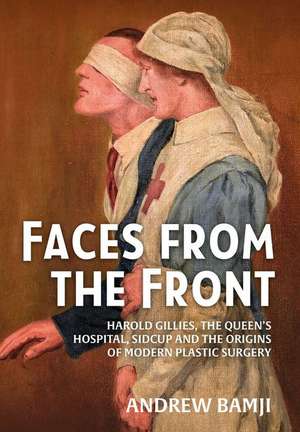
Faces from the Front

Autor Andrew Bamji
en Limba Engleză Paperback – 10 mar 2022

Aplicabilitatea practică a volumului Faces from the Front rezidă în documentarea riguroasă a tranziției de la medicina de urgență pe câmpul de luptă la nașterea unei noi ramuri medicale: chirurgia plastică. Reținem modul în care Andrew Bamji recompune istoria Queen's Hospital din Sidcup, prima instituție dedicată exclusiv reconstrucției faciale. Subliniem că acest proces nu a fost doar unul tehnic, ci și unul de inovație administrativă, prin implementarea echipelor multidisciplinare care includeau chirurgi, dentiști și artiști însărcinați cu documentarea vizuală a progresului operator. Remarcăm structura cărții care utilizează fotografii și picturi de epocă nu doar ca ilustrații, ci ca surse primare pentru a evalua eficacitatea procedurilor experimentale din acea perioadă. Această ediție reprint publicată de HELION & COMPANY oferă o perspectivă tehnică asupra modului în care progresele în anestezie și controlul infecțiilor au permis supraviețuirea unor răni care, în conflictele anterioare, ar fi fost fatale. Cartea reprezintă o alternativă la Other Fronts, Other Wars? pentru cursurile de istoria medicinei sau istorie militară, cu avantajul că se concentrează profund pe o singură locație și pe evoluția unei singure specialități, în loc să ofere o panoramă socială generală. Spre deosebire de sinteza grandioasă oferită de Pandora's Box, lucrarea de față coboară la nivelul micro al înregistrărilor medicale și al experienței subiective a pacientului, oferind date concrete despre viața post-operatorie și reintegrarea socială a veteranilor.

Citește tot Restrânge

Preț: 21750 lei

Puncte Express: 326

Carte disponibilă

Livrare economică 08-22 mai
Livrare express 24-30 aprilie pentru 3264 lei


Specificații

ISBN-13: 9781915113023
ISBN-10: 1915113024
Pagini: 236
Dimensiuni: 170 x 244 x 10 mm
Greutate: 0.48 kg
Ediția:Reprint edition
Editura: HELION & COMPANY

De ce să citești această carte

Această lucrare este esențială pentru studenții la medicină și istoricii militari, oferind o analiză factuală a modului în care traumele de pe front au forțat evoluția chirurgiei plastice. Cititorul câștigă acces la o arhivă vizuală și documentară unică, înțelegând nu doar tehnicile chirurgicale de pionierat ale lui Harold Gillies, ci și complexitatea recuperării psihologice a soldaților desfigurați în Marele Război.


Descriere

Faces from the Front examines the British response to the huge number of soldiers who incurred facial injuries during the First World War. These injuries were produced within a short time span, but (for the first time in a major conflict) did not necessarily lead to death due to developments in anesthesia and improvements in the treatment of infection and blood loss. Casualties were evacuated back to England, where surgeons had an opportunity to develop their skills on a large patient caseload. Harold Gillies, an ambitious young surgeon, developed a new branch of surgery: plastic surgery of the face. In 1915, Gillies set up a dedicated ward for patients with facial injuries at the Cambridge Military Hospital in Aldershot, Hampshire. Following the Battle of the Somme and the escalation in the number of casualties with facial injuries, steps were taken to establish a new hospital entirely focused on the treatment of facial injuries at Sidcup in South-East London. The Queen's Hospital treated more than 5,000 patients between its opening in August 1917 and the mid-1920s; its work was mainly funded by charitable donations. The book uncovers the history of this hospital by analyzing a wide range of sources - including numerous photographs and paintings - which detail the experiences of patients and staff. A team of surgeons and other specialized staff were brought together at Sidcup who, like the hospital's patients, came from Britain, New Zealand, Australia, Canada and the US. The book argues that the development and refinement of new surgical techniques was helped by a multi-disciplinary approach. Detailed patient records - combined with notes, photographs and paintings - were used to evaluate the efficacy of experimental procedures and to educate new surgeons. Treatment often involved multiple operations and took place over long periods of time, and considerable thought was given to the recovery and rehabilitation of patients. The Queen's Hospital had two important legacies: first, it played a pivotal role in the development of modern medical practice by paving the way for a new surgical specialty - plastic surgery - and by showcasing the benefits of specialist hospitals and multi-disciplinary services; second, the reconstruction of damaged faces had a major impact on the patients themselves. Drawing on a unique collection of personal and family accounts of the post-war lives of patients treated at Sidcup, the author explores surgical and aesthetic outcomes and the emotional impact of facial reconstruction.