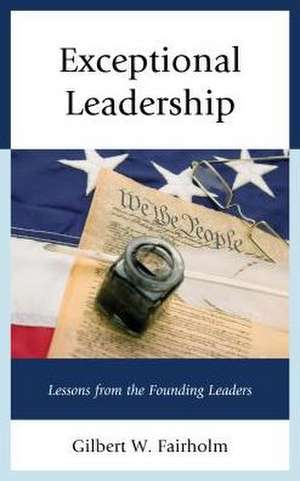
Exceptional Leadership: Lessons from the Founding Leaders
Autor Gilbert W. Fairholmen Limba Engleză Hardback – 20 iun 2013
This book identifies the values and principles of leadership the founding leaders identified and used and that have marked American culture for over two centuries in all dimensions of life. It defines and delimits the actions and attitudes of mind of the exceptional leaders who first articulated and then led in terms of those values as they made America. The ideas about exceptional leadership discussed are taken from their own leadership example and from their thoughtful conclusions. The ideas are fully American. These first leaders drew up the blueprint for what America is and has become. Their creation has survived countless challenges over the two hundred years of its creation to become the United States of America.
Preț: 635.52 lei
Preț vechi: 959.78 lei
-34%
Puncte Express: 953
Carte tipărită la comandă
Livrare economică 08-22 decembrie
Livrare prin curier în România Termenul estimat este afișat lângă disponibilitate.
Transport gratuit pentru acest produs Plată online sau ramburs, în funcție de opțiunile comenzii.
Retur gratuit în 14 zile Comandă securizată și suport în română.
Specificații
ISBN-13: 9780739184141
ISBN-10: 0739184148
Pagini: 334
Dimensiuni: 158 x 235 x 32 mm
Greutate: 0.61 kg
Ediția:New.
Editura: Bloomsbury Publishing
Colecția Lexington Books
Locul publicării:New York, United States
ISBN-10: 0739184148
Pagini: 334
Dimensiuni: 158 x 235 x 32 mm
Greutate: 0.61 kg
Ediția:New.
Editura: Bloomsbury Publishing
Colecția Lexington Books
Locul publicării:New York, United States
Cuprins
Acknowledgments
Chapter 1: Introduction:
American Exceptional Leadership
The Responsibilities of Both Leader and Led
The Founding Documents and the Values and Principles Contained Therein
About America Exceptionalism
Chapter 2: Enduring Values That Made America American
The Scope of Concern
Natural rights
Universal Human Equality
Opportunity
Facilitating Happiness
Liberty and Independence
Freedom
Fairness
Chapter 3: Enduring Principles of Leadership Action
Leadership Principles Embedded in the Constitution
Nurturing Unity-"We the People"
Justice, Happiness and Peace-"establish justice, insure domestic tranquility"
Defense-"provide for the common defense."
Facilitating Commerce-"promote the general welfare."
Individual Freedom and Independence-"the blessings of liberty."
Organizing Principles Embedded in the Preamble of the Constitution
Consent of the Governed
The Separation of Powers
Checks and Balances3
Division of Powers and Responsibilities
External Agency [Foreign] Entanglements
Factional Negotiations and Compromise
PART I: The Formative Years
Introduction
Chapter 4: America's Independent Spirit
Yankee Doodle
Background and Provisions
Implications for Leaders
Chapter 5: Unity, The Albany Plan of Union, 1754
Background and Provisions
Implications for Leaders
Chapter 6: Inherent Rights to Property and Happiness
The Virginia Bill of Rights, June 12, 1776
Background and Provisions
Implications for Leaders
Chapter 7: The Preeminence of Natural Rights
July 4, 1776, The Unanimous Declaration Of The Thirteen United States Of America
Background and Provisions
Implications for Leaders
Chapter 8: Moral Leadership through Service
The Virginia Act for Establishing Religious Freedom, 1786
Background and Provisions
Implications for Leaders
Chapter 9: Organizing for Union, Justice, and the General Welfare
The Constitution of the United States
The Bill of Rights
Background and Provisions
Implications for Leaders
PART II: Development of a New Nation
Introduction and Commentary
The Northwest Ordinance of 1787
Federalist Paper No. 10 (1787-8)
The United States Judiciary Act of 1789
George Washington's Farewell Address (1796)
Thomas Jefferson's First Inaugural Address (1803)
The Star-Spangled Banner (1814)
Chapter 10: Overcoming Internal Conflict
Federalist #10 - The Size and Variety of the Union as a Check on Faction, Daily Advertiser, New York: New York.Thursday, November 22, 1787, James Madison
Background and Provisions
Implications for Leaders
Chapter 11: Finding Liberty via Organizational Leadership
An Act to Establish The Judicial Courts Of The United States. 1789
Background and Provisions
Implications for Leaders
Chapter 12: Linking Religion, Morality, and Education to Leadership
The Northwest Ordinance, July 13, .1787: An Ordinance for The Government Of The Territory Of The United States Northwest Of The River Ohio
Background and Provisions
Implications for Leaders
Chapter 13: Preserving Unity from Internal and External Rivalries
George Washington's Farewell Address, 1796
Background and Provisions
Implications for Leaders
Chapter 14: Equal and Exact Justice to All
Thomas Jefferson's First Inaugural Address, 1801
Background and Provisions
Implications for Leaders
Chapter 15: Coordinating Leadership Under Law
Marbury v. Madison, 1803
Background and Provisions
Implications for Leaders
Chapter 16: Leading with Courage, Liberty, and Continuity
"The Star-Spangled Banner" - 1814
Background and Provisions
Implications for Leaders
PART III: The Early National Period 1816-1855
Introduction and Commentary
An Act Prohibiting Importation of Slaves of 1807
The Monroe Doctrine (1823)
Cherokee Nation v. Georgia (1831)
"My Country, 'Tis of Thee" (1831)
Chapter 17: Prioritizing Freedom over Profit
Act To Prohibit the Importation of Slaves 1807
Background and Provisions
Implications for Leaders
Chapter 18: Protecting Prosperity and Innate Freedoms
Madison's War Message. June 1, 1812
Background and Provisions
Implications for Leaders
Chapter 19: Seeking Unity amid Diversity
Report and Resolutions of the Hartford Convention
Background and Provisions
Implications for Leaders
Chapter 20: Leading toward the Future
The Monroe Doctrine--Extracts From President Monroe's Seventh Annual Message To Congress. December 2, 1823
Background and Provisions
Implications for Leaders
Chapter 21: Balance in Leading Free and Independent People Fairly
Cherokee Nation V. Georgia 1831
Background and Provisions
Implications for Leaders
Chapter 22: Leadership is Changing Attitudes
"My Country, 'Tis of Thee"
Background and Provisions
Implications for Leaders
Chapter 23: American Leadership Has a Paper Trail
Core Values That Still Inform American Leadership
Human Rights
Building Unity
The Meaning of Equality
Happiness
Liberty and Independence
Chapter 24: Principles Guiding Effective Human Relationships
Exceptional Leadership Take Place in Interpersonal Relationships
Separation of Powers and Checks and Balances
Morality and Religion
Freedom
Wellbeing
Negotiation and Compromise
Extra-organizational Relations
The Meaning of Justice
Bibliography
Founding Documents References
Leadership References
Chapter 1: Introduction:
American Exceptional Leadership
The Responsibilities of Both Leader and Led
The Founding Documents and the Values and Principles Contained Therein
About America Exceptionalism
Chapter 2: Enduring Values That Made America American
The Scope of Concern
Natural rights
Universal Human Equality
Opportunity
Facilitating Happiness
Liberty and Independence
Freedom
Fairness
Chapter 3: Enduring Principles of Leadership Action
Leadership Principles Embedded in the Constitution
Nurturing Unity-"We the People"
Justice, Happiness and Peace-"establish justice, insure domestic tranquility"
Defense-"provide for the common defense."
Facilitating Commerce-"promote the general welfare."
Individual Freedom and Independence-"the blessings of liberty."
Organizing Principles Embedded in the Preamble of the Constitution
Consent of the Governed
The Separation of Powers
Checks and Balances3
Division of Powers and Responsibilities
External Agency [Foreign] Entanglements
Factional Negotiations and Compromise
PART I: The Formative Years
Introduction
Chapter 4: America's Independent Spirit
Yankee Doodle
Background and Provisions
Implications for Leaders
Chapter 5: Unity, The Albany Plan of Union, 1754
Background and Provisions
Implications for Leaders
Chapter 6: Inherent Rights to Property and Happiness
The Virginia Bill of Rights, June 12, 1776
Background and Provisions
Implications for Leaders
Chapter 7: The Preeminence of Natural Rights
July 4, 1776, The Unanimous Declaration Of The Thirteen United States Of America
Background and Provisions
Implications for Leaders
Chapter 8: Moral Leadership through Service
The Virginia Act for Establishing Religious Freedom, 1786
Background and Provisions
Implications for Leaders
Chapter 9: Organizing for Union, Justice, and the General Welfare
The Constitution of the United States
The Bill of Rights
Background and Provisions
Implications for Leaders
PART II: Development of a New Nation
Introduction and Commentary
The Northwest Ordinance of 1787
Federalist Paper No. 10 (1787-8)
The United States Judiciary Act of 1789
George Washington's Farewell Address (1796)
Thomas Jefferson's First Inaugural Address (1803)
The Star-Spangled Banner (1814)
Chapter 10: Overcoming Internal Conflict
Federalist #10 - The Size and Variety of the Union as a Check on Faction, Daily Advertiser, New York: New York.Thursday, November 22, 1787, James Madison
Background and Provisions
Implications for Leaders
Chapter 11: Finding Liberty via Organizational Leadership
An Act to Establish The Judicial Courts Of The United States. 1789
Background and Provisions
Implications for Leaders
Chapter 12: Linking Religion, Morality, and Education to Leadership
The Northwest Ordinance, July 13, .1787: An Ordinance for The Government Of The Territory Of The United States Northwest Of The River Ohio
Background and Provisions
Implications for Leaders
Chapter 13: Preserving Unity from Internal and External Rivalries
George Washington's Farewell Address, 1796
Background and Provisions
Implications for Leaders
Chapter 14: Equal and Exact Justice to All
Thomas Jefferson's First Inaugural Address, 1801
Background and Provisions
Implications for Leaders
Chapter 15: Coordinating Leadership Under Law
Marbury v. Madison, 1803
Background and Provisions
Implications for Leaders
Chapter 16: Leading with Courage, Liberty, and Continuity
"The Star-Spangled Banner" - 1814
Background and Provisions
Implications for Leaders
PART III: The Early National Period 1816-1855
Introduction and Commentary
An Act Prohibiting Importation of Slaves of 1807
The Monroe Doctrine (1823)
Cherokee Nation v. Georgia (1831)
"My Country, 'Tis of Thee" (1831)
Chapter 17: Prioritizing Freedom over Profit
Act To Prohibit the Importation of Slaves 1807
Background and Provisions
Implications for Leaders
Chapter 18: Protecting Prosperity and Innate Freedoms
Madison's War Message. June 1, 1812
Background and Provisions
Implications for Leaders
Chapter 19: Seeking Unity amid Diversity
Report and Resolutions of the Hartford Convention
Background and Provisions
Implications for Leaders
Chapter 20: Leading toward the Future
The Monroe Doctrine--Extracts From President Monroe's Seventh Annual Message To Congress. December 2, 1823
Background and Provisions
Implications for Leaders
Chapter 21: Balance in Leading Free and Independent People Fairly
Cherokee Nation V. Georgia 1831
Background and Provisions
Implications for Leaders
Chapter 22: Leadership is Changing Attitudes
"My Country, 'Tis of Thee"
Background and Provisions
Implications for Leaders
Chapter 23: American Leadership Has a Paper Trail
Core Values That Still Inform American Leadership
Human Rights
Building Unity
The Meaning of Equality
Happiness
Liberty and Independence
Chapter 24: Principles Guiding Effective Human Relationships
Exceptional Leadership Take Place in Interpersonal Relationships
Separation of Powers and Checks and Balances
Morality and Religion
Freedom
Wellbeing
Negotiation and Compromise
Extra-organizational Relations
The Meaning of Justice
Bibliography
Founding Documents References
Leadership References
Recenzii
A great deal has been written on the topic of American exceptionalism in recent years, yet Fairholm (emer., Virginia Commonwealth Univ.) carves out a distinctive study of what is exceptional about American leadership. Rather than offer a formal study of mechanics and techniques, Fairholm focuses instead on the values and principles of American leadership and how those things have contributed to the evolution of leadership across American history. What makes American leadership exceptional, according to Fairholm, is how the American founders built leadership principles around the values of human interaction, values that include natural rights, liberty for all, and individual independence. These principles are then reinforced by an American culture that is steeped in values, though Fairholm cautions that America has reached a crossroads regarding its principled commitments. The book's greatest strength and weakness is its extensive inclusion of primary source documents to illustrate the leadership values and principles of the past. The documents bring to life the arguments that Fairholm makes throughout the book. . . . Summing Up: Recommended. General readers and undergraduate students.
Gil Fairholm offers a new understanding of American "exceptionalism" by looking at what makes American leadership exceptional in his new book. Grounding his study in the foundational documents of the country, Fairholm identifies the core principles and values that have made American leadership so important to peoples around the world seeking to create just, free, and equal societies for the past two centuries. Fairholm also gives today's leaders a roadmap for finding our way back to those principles and values as a way to reinvigorate leadership not only at the national level, but at the organizational and work group level as well. The book is a must-read for its insights into history, leadership theory, and-most importantly-leadership practice.
Gil Fairholm offers a new understanding of American "exceptionalism" by looking at what makes American leadership exceptional in his new book. Grounding his study in the foundational documents of the country, Fairholm identifies the core principles and values that have made American leadership so important to peoples around the world seeking to create just, free, and equal societies for the past two centuries. Fairholm also gives today's leaders a roadmap for finding our way back to those principles and values as a way to reinvigorate leadership not only at the national level, but at the organizational and work group level as well. The book is a must-read for its insights into history, leadership theory, and-most importantly-leadership practice.