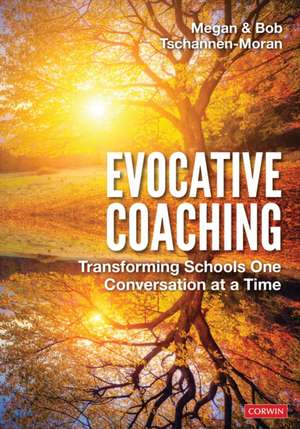
Evocative Coaching
Autor Megan Tschannen-Moran, Robert K. Tschannen-Moranen Limba Engleză Paperback – 19 aug 2020
Notăm cu interes capitolul dedicat „Prezenței în Coaching”, unde Megan Tschannen-Moran și Robert K. Tschannen-Moran extrag lecții surprinzătoare de la dresorii de cai pentru a exemplifica stabilirea încrederii și a raportului în mediul școlar. În această ediție revizuită a Evocative Coaching, descoperim o metodologie rafinată care prioritizează inteligența emoțională în detrimentul evaluării critice. Considerăm că forța acestui text rezidă în structura sa ciclică, organizată în jurul acronimului LEAD: ascultarea poveștilor profesionale, empatizarea pentru conexiune, aprecierea punctelor tari și proiectarea comună a soluțiilor. Spre deosebire de abordările pur tehnice, autorii propun un model centrat pe persoană, ancorat în psihologia pozitivă, menit să elimine barierele psihologice care îi împiedică pe profesori să își atingă potențialul. Ca alternativă la Instructional Coaching de Jim Knight pentru cursurile de management educațional, lucrarea de față are avantajul unei abordări „no-fault”, mutând accentul de pe remedierea defectelor pe valorificarea resurselor interne ale cadrului didactic. Dacă în lucrarea sa anterioară, Trust Matters, Megan Tschannen-Moran analiza importanța încrederii la nivel sistemic, aici instrumentează practic această încredere prin dialoguri model și protocoale de reflecție. Structura progresivă, de la „Marea Buclă” a ascultării până la designul colaborativ, indică o acoperire exhaustivă a procesului de mentorat. Este o resursă esențială pentru liderii care doresc să transforme asistența la ore dintr-o formalitate administrativă într-un motor de schimbare pedagogică reală, oferind un cadru de lucru umanist și fundamentat pe cercetare.
Preț: 295.87 lei
Carte disponibilă
Livrare economică 09-23 noiembrie
Livrare express 24-30 octombrie pentru 34.77 lei
Specificații
ISBN-10: 1071805339
Pagini: 264
Dimensiuni: 254 x 178 x 21 mm
Greutate: 0.5 kg
Ediția:Revizuită
Editura: Sage Publications, Inc
Locul publicării:Thousand Oaks, United States
De ce să citești această carte
Recomandăm această carte liderilor școlari care doresc să treacă de la simpla monitorizare la o susținere autentică a profesorilor. Cititorul câștigă o metodă clară, modelul LEAD, prin care poate transforma rezistența la schimbare în colaborare. Este un instrument esențial pentru oricine ocupă o funcție de mentorat sau coordonare, oferind scenarii de dialog gata de aplicat pentru a construi o cultură școlară bazată pe încredere și performanță.
Despre autor
Megan Tschannen-Moran este profesor la School of Education din cadrul The College of William and Mary, unde coordonează formarea viitorilor directori școlari. Expertiza sa se concentrează pe dezvoltarea liderilor de încredere, cercetările sale fiind publicate în jurnale de prestigiu precum Educational Administration Quarterly. Prin lucrările sale, printre care se numără Trust Matters și Evoking Greatness, ea a fundamentat importanța relațiilor interumane în succesul academic. Robert K. Tschannen-Moran completează această viziune academică prin experiența practică în coaching-ul bazat pe puncte tari și psihologie pozitivă.
Descriere scurtă
Using the LEAD (listen, emphasize, appreciate, and design) process, Evocative Coaches take a partnership role, ask questions, and co-create designs. This person-centered, no-fault, strengths-based model is grounded in adult learning theory and positive psychology and emphasizes the emotional intelligence needed to establish trust.This hands-on guide for coaches
· is grounded in research
· includes real-life vignettes and sample dialogues
· provides tools designed to invite reflection
Recenzii
"In Evocative Coaching, the authors model how a coach can stay completely respectful of a teacher while also continuing to find ways to support a teacher in experimenting with and implementing stronger practices. Using the LEAD Model, along with helpful sample coaching conversations and real-life vignettes, authors have created a logical and intuitive resource."
.
"This book is a must read. It is a must read because it shares wisdom and big heart of the authors. Throughout the book they echo the sentiments of Emerson.. “to find the beauty in others; to leave the world a bit better whether by a healthy child, a garden patch, or a redeemed social condition.”
"Evocative Coaching presents the next level of coaching and speaks more to how to get a teacher to find the answers within themselves and provide the space for a teacher to explore while taking risks within their instructional practices."
Cuprins
Acknowledgments
About the Authors
Chapter 1: Introduction to Evocative Coaching
The Dynamic Dance of Evocative Coaching: LEAD
The Five Concerns of Coaching
The Power of Evocative Coaching
Coaching from a Variety of Roles
Key Points in This Chapter
Questions for Reflection and Discussion
Chapter 2: Coaching Presence
Lessons from a Horse Whisperer
Fostering Trust and Rapport
Holding the Coaching Space
Conveying Coaching Presence
Creative Energy Check-In
The First Coaching Session
Key Points in This Chapter
Questions for Reflection and Discussion
Loop 1: The No-Fault Turn
Chapter 3: Listen for Stories
The Power of Story
Evoking Teacher Stories
Attentive Listening
Imaginative Story Listening
Key Points in This Chapter
Questions for Reflection and Discussion
Chapter 4: Empathize for Connection
Understanding Empathy
Leading with Heart
The Language of Compassion
The Golden Sigh
Key Points in This Chapter
Questions for Reflection and Discussion
Loop 2: The Strengths-Building Turn
The Learning Brief
Chapter 5: Appreciate Strengths
The Principles of Appreciative Inquiry
SOAR—Illuminating the Best of What Is and What Might Be
Key Points in This Chapter
Questions for Reflection and Discussion
Chapter 6: Design-Thinking
Designing SMARTER Experiments
Choreographing the Coaching Dance
Key Points in This Chapter
Questions for Reflection and Discussion
Chapter 7: The Dynamic Flow of Change
Getting into Flow
Managing Clouds, Wind, and Thunder
Rolling with Resistance
Honoring Ambivalence
Exploring Culture Change
Getting out of the Way
Key Points in This Chapter
Questions for Reflection and Discussion
Chapter 8: The Reflective Coach
Hearing Our Own Story
Self-Empathy
Inquiring Into Our Own Professional Practice
Design Our Own Smarter Experiments
Professional Coaching Code of Ethics
Conclusion
Key Points in This Chapter
Questions for Reflection and Discussion
Appendix: Evocative Coaching Principles, Questions, and Reflections
References
Index