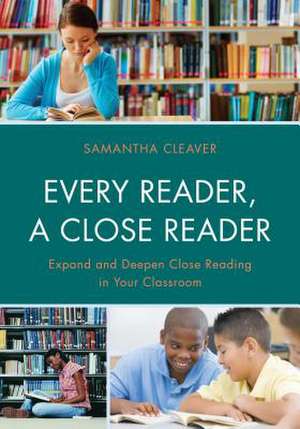
Every Reader a Close Reader: Expand and Deepen Close Reading in Your Classroom
Autor Samantha Cleaveren Limba Engleză Paperback – 17 iul 2015
Preț: 281.24 lei
Preț vechi: 363.94 lei
-23%
Puncte Express: 422
Carte tipărită la comandă
Livrare economică 27 noiembrie-11 decembrie
Livrare prin curier în România Termenul estimat este afișat lângă disponibilitate.
Transport gratuit de la 400.00 lei Plată online sau ramburs, în funcție de opțiunile comenzii.
Retur gratuit în 14 zile Comandă securizată și suport în română.
Specificații
ISBN-13: 9781475814743
ISBN-10: 1475814747
Pagini: 252
Ilustrații: 34 b/w illustrations; 59 tables; 7 textboxes
Dimensiuni: 177 x 253 x 17 mm
Greutate: 0.5 kg
Editura: Bloomsbury Publishing
Colecția Rowman & Littlefield
Locul publicării:New York, United States
ISBN-10: 1475814747
Pagini: 252
Ilustrații: 34 b/w illustrations; 59 tables; 7 textboxes
Dimensiuni: 177 x 253 x 17 mm
Greutate: 0.5 kg
Editura: Bloomsbury Publishing
Colecția Rowman & Littlefield
Locul publicării:New York, United States
V-ar putea interesa
-
 FrankensteinRosie DickinsPreț: 47.73 lei
 -
 More Improving Comprehension 8-9Andrew Brodie-26%Preț: 211.23 lei284.00 lei
 -
 More Improving Comprehension 5-7Andrew Brodie-27%Preț: 207.17 lei283.65 lei
 -
 Grammar 1 Pupil BookSara WernhamPreț: 58.46 lei
 -
 Learn to Read and Write - A parent's guideLucy MarcovitchPreț: 35.51 lei
Cuprins
Contents
Acknowledgments
About the Author
Foreword
Introduction
Close Reading: The Best Reading You Can DoReading Theory: A Brief HistoryClose Reading and the Middle School ReaderEvery Reader a Close Reader OverviewIn This BookUsing This BookWeAreTeachers SurveyGetting Started: Understanding Yourself as a Reader Chapter 1: Close Reading and the Common Core
Introduction to the Common Core State Standards Key Points Using the Common Core ELA StandardsClose Reading and the Common CoreKey PointsWhat's Different? The Shifts in the Common Core Shift 1: Balancing Informational and Literary Text Shift 1: Implications for Close Reading Shift 2: Knowledge in the Disciplines Shift 2: Implications for Close Reading Shift 3: The Staircase of ComplexityShift 3: Implications for Close Reading Shift 4: Text-Based Answers Shift 4: Implications for Close Reading Shift 5: Writing From SourcesShift 5: Implications for Close Reading Shift 6: Academic Vocabulary Shift 6: Implications for Close Reading Key Points Writing Close Reading ObjectivesKey PointsNext Step: Getting Ready to Read Chapter 2: Getting Complex: Selecting and Using Close Reading Texts
Reading Complex Texts: A Gatekeeper SkillKey Points Defining Text ComplexityQuantitative MeasuresQualitative Measures Interpretive Complexity: Reader and Task Considerations Key Points Planning to Use Complex Texts Selecting Perfect Passages in LiteratureSelecting Perfect Passages in Informational Text Choosing Multiple Texts Key Points Gaining Purpose Chapter 3: Setting the Stage: Welcome Students to Text and Set a Purpose for Reading
The Purpose Behind the Purpose Key Points Welcoming Students to The Text: A Case for Frontloading Key Points Using Questions to Set a Purpose for Reading Creating Text-Based Essential Questions Questions StatementsShould Questions Key Points Purpose Setting to Dig DeepFirst Reading: Comprehension SeekingSecond Reading: Analyze the Text Third Reading: Digging Deeper Key Points Making Every Reading Purposeful Chapter 4: Talking to Text: Enhance Student Comprehension through Text-Dependent Questions and Annotation
Crafting Text-Dependent Questions Key Points Creating Sequences of TDQs Key Points Annotation: Talking to TextKey PointsCiting TextQuotations Paraphrasing Key PointsCiting Evidence from Multiple Texts Key Points Using Text Evidence Chapter 5: Applying Close Reading: Create Dialogue and Craft Arguments
Logic, Evidence and Critical Thinking: Defining ArgumentKey Points Crafting ArgumentLogos, Ethos, and Pathos Key PointsDialogic Discussion Key Points Facilitating DiscussionSetting Norms for Discussion: Accountable Talk Key Points Writing ArgumentKey Points Building Student OwnershipChapter 6: Letting Students Lead: Create Ownership over Close Reading
Transfer of Close Reading Skills Key PointsIdentifying Student Strengths Key PointsApplying the Gradual Release Model to Close Reading Key Points Getting Specific: Releasing Various Aspects of Close Reading Student-Selected Texts Student-Created Questions Independent AnnotationStudent-Led DiscussionBuilding the Foundation Chapter 7: Leveling the Field: Empower Struggling Readers with Close Reading
The Common Core and Special EducationProvide Multiple Means of RepresentationProvide Multiple Means of Action and ExpressionProvide Multiple Means of Engagement Key Points Understanding Why Students Struggle with Close Reading Key Points Planning and Leading Close Reading Lessons for Struggling Readers Working with Complex TextAccessing Complex Text in the General Education ClassromAccessing Complex Text in the Resource Classroom Questioning Interacting with Text: Annotation and Citing Text Evidence Discussion and WritingLeveling the Playing Field Chapter 8: Engage English Language Learners in Close Reading
English Language Learners and Close Reading in the Common Core Learning Academic Vocabulary Engaging in Higher Order Thinking Opportunities to Interact Key Points Strategies to Plan and Lead Close Reading with English Language Learners Working with TextQuestioning and Citing Text Evidence Participating in DiscussionArgument WritingClose Reading with ELLs Chapter 9: Raise the Bar: Challenging High-Achieving and Gifted Learners in Close Reading
Gifted Students, the Common Core, and Close Reading The Common Core and Gifted Students A Framework for Gifted Students Key Points Planning and Leading Close Reading for Gifted Learners Working with Complex TextReading (and Rereading) for Purpose Participating in DiscussionWriting ArgumentExecutive Functioning Keeping Close Reading a Challenge Chapter 10: The Ultimate Question: Assessing Close Reading
Developing Effective Formative AssessmentQuestioning Observation Writing Key Points Using Formative Assessment Information Giving Effective Feedback Deep FeedbackImpression FeedbackKey Points Summative AssessmentUsing Rubrics Close Reading and Standardized TestsKey Points A Worthwhile Task
Appendix A: The MDR/WeAreTeachers Close Reading Survey
Planning and Text Selection Setting a Purpose for Reading Annotation and Working with Text Respondent DemographicsAppendix B: Literature for Close Reading in Middle School
Works of Literature: NovelsWorks of Literature: Short Stories Works of Literature: PoetryPicture Books for Middle School ReadersNonfiction: BooksNonfiction: Articles and Shorter TextsNonfiction: Primary SourcesAppendix C: Lesson Plans
Lesson Plan 4.1: Declaration of Sentiments Lesson Plan 4.2: Letters between John and Abigail Adams Lesson Plan 7.1: 6th Mass Extinction Lesson Plan 8.1: Oranges by Gary Soto Appendix D: Additional Tools
Tool 1.1: Common Core Shifts: Self-Assessment Tool 2.1: Planning for Levels of Complexity in Text Tool 3.1: Survey: Why do Students Read?Tool 4.1: Annotation Self-Reflection Tool 5.1: Assess Students' Argument Skills Tool 5.2: Dialogic Classroom Rating Scale Tool 5.3: Argument Writing Foldable Tool 6.1: Assess Student ReadinessTool 6.2: Assess Student Strengths Tool 6.3: Student Discussion Rating Scale Tool 7.1: Struggling Reader Needs Assessment Tool 8.1: ELL Needs Assessment Tool 9.1: Gifted Student Needs Assessment Tool 10.1: Format for a Dual Feedback FormReferences
Index
Acknowledgments
About the Author
Foreword
Introduction
Close Reading: The Best Reading You Can DoReading Theory: A Brief HistoryClose Reading and the Middle School ReaderEvery Reader a Close Reader OverviewIn This BookUsing This BookWeAreTeachers SurveyGetting Started: Understanding Yourself as a Reader Chapter 1: Close Reading and the Common Core
Introduction to the Common Core State Standards Key Points Using the Common Core ELA StandardsClose Reading and the Common CoreKey PointsWhat's Different? The Shifts in the Common Core Shift 1: Balancing Informational and Literary Text Shift 1: Implications for Close Reading Shift 2: Knowledge in the Disciplines Shift 2: Implications for Close Reading Shift 3: The Staircase of ComplexityShift 3: Implications for Close Reading Shift 4: Text-Based Answers Shift 4: Implications for Close Reading Shift 5: Writing From SourcesShift 5: Implications for Close Reading Shift 6: Academic Vocabulary Shift 6: Implications for Close Reading Key Points Writing Close Reading ObjectivesKey PointsNext Step: Getting Ready to Read Chapter 2: Getting Complex: Selecting and Using Close Reading Texts
Reading Complex Texts: A Gatekeeper SkillKey Points Defining Text ComplexityQuantitative MeasuresQualitative Measures Interpretive Complexity: Reader and Task Considerations Key Points Planning to Use Complex Texts Selecting Perfect Passages in LiteratureSelecting Perfect Passages in Informational Text Choosing Multiple Texts Key Points Gaining Purpose Chapter 3: Setting the Stage: Welcome Students to Text and Set a Purpose for Reading
The Purpose Behind the Purpose Key Points Welcoming Students to The Text: A Case for Frontloading Key Points Using Questions to Set a Purpose for Reading Creating Text-Based Essential Questions Questions StatementsShould Questions Key Points Purpose Setting to Dig DeepFirst Reading: Comprehension SeekingSecond Reading: Analyze the Text Third Reading: Digging Deeper Key Points Making Every Reading Purposeful Chapter 4: Talking to Text: Enhance Student Comprehension through Text-Dependent Questions and Annotation
Crafting Text-Dependent Questions Key Points Creating Sequences of TDQs Key Points Annotation: Talking to TextKey PointsCiting TextQuotations Paraphrasing Key PointsCiting Evidence from Multiple Texts Key Points Using Text Evidence Chapter 5: Applying Close Reading: Create Dialogue and Craft Arguments
Logic, Evidence and Critical Thinking: Defining ArgumentKey Points Crafting ArgumentLogos, Ethos, and Pathos Key PointsDialogic Discussion Key Points Facilitating DiscussionSetting Norms for Discussion: Accountable Talk Key Points Writing ArgumentKey Points Building Student OwnershipChapter 6: Letting Students Lead: Create Ownership over Close Reading
Transfer of Close Reading Skills Key PointsIdentifying Student Strengths Key PointsApplying the Gradual Release Model to Close Reading Key Points Getting Specific: Releasing Various Aspects of Close Reading Student-Selected Texts Student-Created Questions Independent AnnotationStudent-Led DiscussionBuilding the Foundation Chapter 7: Leveling the Field: Empower Struggling Readers with Close Reading
The Common Core and Special EducationProvide Multiple Means of RepresentationProvide Multiple Means of Action and ExpressionProvide Multiple Means of Engagement Key Points Understanding Why Students Struggle with Close Reading Key Points Planning and Leading Close Reading Lessons for Struggling Readers Working with Complex TextAccessing Complex Text in the General Education ClassromAccessing Complex Text in the Resource Classroom Questioning Interacting with Text: Annotation and Citing Text Evidence Discussion and WritingLeveling the Playing Field Chapter 8: Engage English Language Learners in Close Reading
English Language Learners and Close Reading in the Common Core Learning Academic Vocabulary Engaging in Higher Order Thinking Opportunities to Interact Key Points Strategies to Plan and Lead Close Reading with English Language Learners Working with TextQuestioning and Citing Text Evidence Participating in DiscussionArgument WritingClose Reading with ELLs Chapter 9: Raise the Bar: Challenging High-Achieving and Gifted Learners in Close Reading
Gifted Students, the Common Core, and Close Reading The Common Core and Gifted Students A Framework for Gifted Students Key Points Planning and Leading Close Reading for Gifted Learners Working with Complex TextReading (and Rereading) for Purpose Participating in DiscussionWriting ArgumentExecutive Functioning Keeping Close Reading a Challenge Chapter 10: The Ultimate Question: Assessing Close Reading
Developing Effective Formative AssessmentQuestioning Observation Writing Key Points Using Formative Assessment Information Giving Effective Feedback Deep FeedbackImpression FeedbackKey Points Summative AssessmentUsing Rubrics Close Reading and Standardized TestsKey Points A Worthwhile Task
Appendix A: The MDR/WeAreTeachers Close Reading Survey
Planning and Text Selection Setting a Purpose for Reading Annotation and Working with Text Respondent DemographicsAppendix B: Literature for Close Reading in Middle School
Works of Literature: NovelsWorks of Literature: Short Stories Works of Literature: PoetryPicture Books for Middle School ReadersNonfiction: BooksNonfiction: Articles and Shorter TextsNonfiction: Primary SourcesAppendix C: Lesson Plans
Lesson Plan 4.1: Declaration of Sentiments Lesson Plan 4.2: Letters between John and Abigail Adams Lesson Plan 7.1: 6th Mass Extinction Lesson Plan 8.1: Oranges by Gary Soto Appendix D: Additional Tools
Tool 1.1: Common Core Shifts: Self-Assessment Tool 2.1: Planning for Levels of Complexity in Text Tool 3.1: Survey: Why do Students Read?Tool 4.1: Annotation Self-Reflection Tool 5.1: Assess Students' Argument Skills Tool 5.2: Dialogic Classroom Rating Scale Tool 5.3: Argument Writing Foldable Tool 6.1: Assess Student ReadinessTool 6.2: Assess Student Strengths Tool 6.3: Student Discussion Rating Scale Tool 7.1: Struggling Reader Needs Assessment Tool 8.1: ELL Needs Assessment Tool 9.1: Gifted Student Needs Assessment Tool 10.1: Format for a Dual Feedback FormReferences
Index
Recenzii
This book is a must-read for instructional coaches. Cleaver provides useful information and guidance for planning for close reading. As our school implements close reading as a practice, I know Every Reader a Close Reader will be my go-to guide for the next few years.
This book serves as a wonderful resource for both general and special educators in the field. Comprehensive and up-to-date, professionals will find it highly useful, as the material presented is well written and reader-friendly. By using the Common Core State Standards (CCSS) as a frame of reference, as well as personal experiences and teacher examples, the author provides a very strong foundation of the importance of close reading in the classroom.
In an educational landscape where "close reading" and "text-dependent questions" are buzzwords, this book brings the act of close reading alive in a way that can be immediately put to use in the classroom. Every Reader a Close Reader gives teachers and instructional leaders the foundational knowledge needed to understand why adopting the approach of close reading is important for all readers, while making it clear that there is not one way to implement the approach and giving concrete examples of how it will change depending on classroom context. Every Reader a Close Reader clears the misconceptions about close reading, bringing the "ah-ha" moments for instructional coaches and teachers.
Many articles and books have addressed the Common Core Standards. Even though most materials provide a sound understanding of the standards and potential ways to embed them, there hasn't been a "how to" like Samantha Cleaver's book for close reading. Through her research, she invites you into classrooms to discover other teacher's lessons and materials that have been utilized effectively in helping students meet the standards and develop their skills as readers. This is a vital read for all educators in all disciplines that looking for ways to implement the standards and help student grow as readers.
This book provides a flexible and functional approach to close reading that is clear and helpful.
This text is a valuable turn in ongoing pedagogical conversations, and will help teachers to understand the theory behind and the potential power of close reading, wisely modeled and mentored.
Most importantly, it will help teachers in immediately applicable ways to assist their students to more engaged and agentive reading.
A unique gift of this book is its emphasis on helping teachers reflect on their own reading and teaching, helping the reader to learn from classroom innovation and student response how to teach in more assistive and wide-awake ways.
This book serves as a wonderful resource for both general and special educators in the field. Comprehensive and up-to-date, professionals will find it highly useful, as the material presented is well written and reader-friendly. By using the Common Core State Standards (CCSS) as a frame of reference, as well as personal experiences and teacher examples, the author provides a very strong foundation of the importance of close reading in the classroom.
In an educational landscape where "close reading" and "text-dependent questions" are buzzwords, this book brings the act of close reading alive in a way that can be immediately put to use in the classroom. Every Reader a Close Reader gives teachers and instructional leaders the foundational knowledge needed to understand why adopting the approach of close reading is important for all readers, while making it clear that there is not one way to implement the approach and giving concrete examples of how it will change depending on classroom context. Every Reader a Close Reader clears the misconceptions about close reading, bringing the "ah-ha" moments for instructional coaches and teachers.
Many articles and books have addressed the Common Core Standards. Even though most materials provide a sound understanding of the standards and potential ways to embed them, there hasn't been a "how to" like Samantha Cleaver's book for close reading. Through her research, she invites you into classrooms to discover other teacher's lessons and materials that have been utilized effectively in helping students meet the standards and develop their skills as readers. This is a vital read for all educators in all disciplines that looking for ways to implement the standards and help student grow as readers.
This book provides a flexible and functional approach to close reading that is clear and helpful.
This text is a valuable turn in ongoing pedagogical conversations, and will help teachers to understand the theory behind and the potential power of close reading, wisely modeled and mentored.
Most importantly, it will help teachers in immediately applicable ways to assist their students to more engaged and agentive reading.
A unique gift of this book is its emphasis on helping teachers reflect on their own reading and teaching, helping the reader to learn from classroom innovation and student response how to teach in more assistive and wide-awake ways.