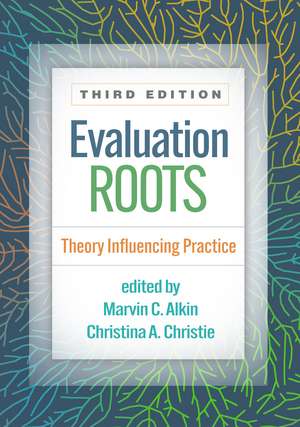
Evaluation Roots, Third Edition: Theory Influencing Practice
Editat de Marvin C. Alkin, Christina A. Christieen Limba Engleză Paperback – 16 mar 2023
New to This Edition
*Chapters on culturally responsive evaluation, Indigenous evaluation, and developmental evaluation.
*Organized around theories rather than individual theorists.
*Increased attention to practical applications, including a chapter distilling the goals, methods, and standards of evaluations based on each theory.
*Case study chapter on the role of theory in evaluation policy.
Preț: 440.53 lei
Puncte Express: 661
Carte disponibilă
Livrare economică 09-23 noiembrie
Livrare express 23-29 octombrie pentru 39.82 lei
Livrare prin curier în România Termenul estimat este afișat lângă disponibilitate.
Transport gratuit pentru acest produs Plată online sau ramburs, în funcție de opțiunile comenzii.
Retur gratuit în 14 zile Comandă securizată și suport în română.
Specificații
ISBN-13: 9781462551392
ISBN-10: 1462551394
Pagini: 318
Dimensiuni: 178 x 254 x 17 mm
Greutate: 0.56 kg
Ediția:1
Editura: Guilford Publications
Colecția Guilford Press
ISBN-10: 1462551394
Pagini: 318
Dimensiuni: 178 x 254 x 17 mm
Greutate: 0.56 kg
Ediția:1
Editura: Guilford Publications
Colecția Guilford Press
Cuprins
I. Introduction
1. Evaluation Roots: Theory to Practice, Christina A. Christie, Jennifer E. Ho, & Marvin C. Alkin
2. Evaluation Theory, Marvin C. Alkin
3. An Evaluation Theory Tree: A Framework for Guiding a Range of Evaluation Practice, Christina A. Christie & Marvin C. Alkin
II. Methods
4. Randomized Field Experiments: Advances in Practice, Robert F. Boruch & Herbert M. Turner, III
5. Evaluation: Multiple Paths to Evaluation Influence and Social Betterment, Melvin M. Mark & Gary T. Henry
6. Theory-Driven Evaluation Approaches: Conventional and Innovative, Huey T. Chen
III. Valuing
7. Valuing Science: Theory as a Guide to Practice, Michael Scriven
8. Responsive Evaluation, Robert E. Stake and Merel Visse
9. Deliberative Democratic Evaluation: The Evaluator as Moral Fiduciary, Ernest R. House
10. Values-Engaged Democratic Evaluation: Evaluation and Democracy, Jennifer C. Greene
11. Culturally Responsive Evaluation: Critical and Liberatory Roots, Rodney Hopson & Vidhya Shanker
12. Transformative Lens in Evaluation: A Pathway to Transformative Change, Donna M. Mertens
13. Culturally Responsive Indigenous Evaluation: An Indigenous Journey Through Culturally Responsive Approaches, Fiona Cram & Jill Anne Chouinard
IV. Use
14. Practical Policy Evaluation: Aligning Theory with Practice, Eleanor Chelimsky
15. Context Sensitive Evaluation: An Approach to Research-Based Use, Marvin C. Alkin
16. The Ongoing Evolution of Utilization-Focused Evaluation: Practice Informed by Theory, Research, and Reflection, Michael Quinn Patton
17. Empowerment Evaluation: It Works in Practice, But Does it Work in Theory?, David M. Fetterman
18. The Curious Case of Practical Participatory Evaluation: Explorations of the Theory–Practice Relationship, J. Bradley Cousins & Hind Al Hudib
19. Learning-Centered Evaluation: The Transformational Power of Evaluation Redux, Hallie Preskill
20. The “Theory” of Interactive Evaluation Practice, Jean A. King
21. Developmental Evaluation, Michael Quinn Patton
V. Other Theories
22. Evaluation Theory Synopses, Alana R. Kinarsky & Emi Fujita-Conrads
VI. Conclusion
23. Theory Influencing Practice, Marvin C. Alkin, Christina A. Christie, & Naomi A. Stephen
24. Evaluation Policy as a Bridge Between Evaluation Theory and Practice: The Office of Indian Health Services, A Case Example, Emi Fujita-Conrads, Christina A. Christie, & Elizabeth FastHorse
1. Evaluation Roots: Theory to Practice, Christina A. Christie, Jennifer E. Ho, & Marvin C. Alkin
2. Evaluation Theory, Marvin C. Alkin
3. An Evaluation Theory Tree: A Framework for Guiding a Range of Evaluation Practice, Christina A. Christie & Marvin C. Alkin
II. Methods
4. Randomized Field Experiments: Advances in Practice, Robert F. Boruch & Herbert M. Turner, III
5. Evaluation: Multiple Paths to Evaluation Influence and Social Betterment, Melvin M. Mark & Gary T. Henry
6. Theory-Driven Evaluation Approaches: Conventional and Innovative, Huey T. Chen
III. Valuing
7. Valuing Science: Theory as a Guide to Practice, Michael Scriven
8. Responsive Evaluation, Robert E. Stake and Merel Visse
9. Deliberative Democratic Evaluation: The Evaluator as Moral Fiduciary, Ernest R. House
10. Values-Engaged Democratic Evaluation: Evaluation and Democracy, Jennifer C. Greene
11. Culturally Responsive Evaluation: Critical and Liberatory Roots, Rodney Hopson & Vidhya Shanker
12. Transformative Lens in Evaluation: A Pathway to Transformative Change, Donna M. Mertens
13. Culturally Responsive Indigenous Evaluation: An Indigenous Journey Through Culturally Responsive Approaches, Fiona Cram & Jill Anne Chouinard
IV. Use
14. Practical Policy Evaluation: Aligning Theory with Practice, Eleanor Chelimsky
15. Context Sensitive Evaluation: An Approach to Research-Based Use, Marvin C. Alkin
16. The Ongoing Evolution of Utilization-Focused Evaluation: Practice Informed by Theory, Research, and Reflection, Michael Quinn Patton
17. Empowerment Evaluation: It Works in Practice, But Does it Work in Theory?, David M. Fetterman
18. The Curious Case of Practical Participatory Evaluation: Explorations of the Theory–Practice Relationship, J. Bradley Cousins & Hind Al Hudib
19. Learning-Centered Evaluation: The Transformational Power of Evaluation Redux, Hallie Preskill
20. The “Theory” of Interactive Evaluation Practice, Jean A. King
21. Developmental Evaluation, Michael Quinn Patton
V. Other Theories
22. Evaluation Theory Synopses, Alana R. Kinarsky & Emi Fujita-Conrads
VI. Conclusion
23. Theory Influencing Practice, Marvin C. Alkin, Christina A. Christie, & Naomi A. Stephen
24. Evaluation Policy as a Bridge Between Evaluation Theory and Practice: The Office of Indian Health Services, A Case Example, Emi Fujita-Conrads, Christina A. Christie, & Elizabeth FastHorse
Recenzii
"The third edition of Evaluation Roots is transformative, and one of the best resources available for understanding the variety of approaches for conducting contemporary evaluations. The revised evaluation theory tree, which categorizes approaches instead of theorists, is a vast improvement, alongside newer approaches and developments such as culturally responsive evaluation and culturally responsive Indigenous evaluation. This book is a 'must read' for evaluation practitioners and students across the globe. I will use it as a text in my evaluation theory graduate courses."--Stewart I. Donaldson, PhD, Distinguished University Professor, Claremont Graduate University
“A fantastic resource for beginning and experienced evaluators alike. The book's organization and the final chapter on theory prototypes allow readers to easily see and compare each theory's defining features and applications. This gives readers a menu of options to determine what theory is best for a given project. For the beginner, the book provides an excellent introduction to the wide world of evaluation, and the many ways one can approach and carry it out. Experienced evaluators are invited to revisit how and why they do evaluations, whether they are implementing the theories they think they are, and whether a given approach is right for a particular context.”--Jessica Shaw, PhD, Department of Psychology, University of Illinois at Chicago
"In its third edition, this book remains one of the best introductions to the field of evaluation and its myriad approaches, practices, and purposes. I plan to use the book in my graduate courses, and will also incorporate its evaluation framework into my workshops, since it offers the right balance of depth and breadth needed to help train the next generation of evaluation practitioners and scholars. The authors succeed wonderfully in showing the importance of evaluation theories for empowering participants, understanding policy and program impacts, highlighting stakeholder values, and helping to ensure that evaluations are useful."--Tarek Azzam, PhD, Department of Education, University of California, Santa Barbara
"This book does a great job of demonstrating the complexity of the evaluation field from both theoretical and practical standpoints. The theory tree helps students grasp the foundations of each theory and travel along the 'branches' of method, use, and valuing to see the relationships between various approaches. Sharing the perspectives of expert practitioners, the third edition is an important tool for learning and reference. It is a valuable addition to graduate-level Program Evaluation courses across multiple disciplines."--Kim Cook, EdD, MBA, Department of Management and Leadership, Neeley School of Business, Texas Christian University-
“A fantastic resource for beginning and experienced evaluators alike. The book's organization and the final chapter on theory prototypes allow readers to easily see and compare each theory's defining features and applications. This gives readers a menu of options to determine what theory is best for a given project. For the beginner, the book provides an excellent introduction to the wide world of evaluation, and the many ways one can approach and carry it out. Experienced evaluators are invited to revisit how and why they do evaluations, whether they are implementing the theories they think they are, and whether a given approach is right for a particular context.”--Jessica Shaw, PhD, Department of Psychology, University of Illinois at Chicago
"In its third edition, this book remains one of the best introductions to the field of evaluation and its myriad approaches, practices, and purposes. I plan to use the book in my graduate courses, and will also incorporate its evaluation framework into my workshops, since it offers the right balance of depth and breadth needed to help train the next generation of evaluation practitioners and scholars. The authors succeed wonderfully in showing the importance of evaluation theories for empowering participants, understanding policy and program impacts, highlighting stakeholder values, and helping to ensure that evaluations are useful."--Tarek Azzam, PhD, Department of Education, University of California, Santa Barbara
"This book does a great job of demonstrating the complexity of the evaluation field from both theoretical and practical standpoints. The theory tree helps students grasp the foundations of each theory and travel along the 'branches' of method, use, and valuing to see the relationships between various approaches. Sharing the perspectives of expert practitioners, the third edition is an important tool for learning and reference. It is a valuable addition to graduate-level Program Evaluation courses across multiple disciplines."--Kim Cook, EdD, MBA, Department of Management and Leadership, Neeley School of Business, Texas Christian University-
Notă biografică
Marvin C. Alkin, EdD, is Emeritus Professor in the Social Research Methods Division in the School of Education and Information Studies at the University of California, Los Angeles (UCLA). He has written extensively on evaluation practice, evaluation utilization, and comparative evaluation theory. Dr. Alkin is a founder and former Director of the UCLA Center for the Study of Evaluation. He has been a consultant to six national governments and has conducted more than 85 evaluations of a variety of educational, governmental, and foundation programs. Dr. Alkin received UCLA’s 2024–2025 Edward A. Dickson Emeritus Professorship Award for his scholarly contributions post-retirement. He is also a recipient of the Lazarsfeld Evaluation Theory Award and the Research on Evaluation Award from the American Evaluation Association.
Christina A. Christie, PhD, is Wasserman Dean and Professor in the School of Education and Information Studies at the University of California, Los Angeles. Her work has three main foci: applied evaluation research studies, research on evaluation practice, and theoretical analysis. Dr. Christie is a recipient of the Marcia Guttentag Early Career Award and the Research on Evaluation Award from the American Evaluation Association (AEA), as well as the Distinguished Scholar Award from the Research on Evaluation Special Interest Group of the American Educational Research Association. She has served on the board of the AEA and as an associate editor and section editor of the American Journal of Evaluation.
Christina A. Christie, PhD, is Wasserman Dean and Professor in the School of Education and Information Studies at the University of California, Los Angeles. Her work has three main foci: applied evaluation research studies, research on evaluation practice, and theoretical analysis. Dr. Christie is a recipient of the Marcia Guttentag Early Career Award and the Research on Evaluation Award from the American Evaluation Association (AEA), as well as the Distinguished Scholar Award from the Research on Evaluation Special Interest Group of the American Educational Research Association. She has served on the board of the AEA and as an associate editor and section editor of the American Journal of Evaluation.
Descriere
Showing how evaluation practice looks when guided by theory, the third edition of the influential "theory tree" book is significantly revised with over 80% new material, including a greater focus on equity and theories over theorists. Chapters from leading authorities describe the goals of each theory; the type of evaluation for which it is appropriate (formative, summary formative, summative, adaptive); the size of the program for which it is most applicable; specific prescriptions; and observable actions that help to define the theory. Readers are given the tools to select suitable approaches for the size, contexts and stage of an evaluation and their own personal values.