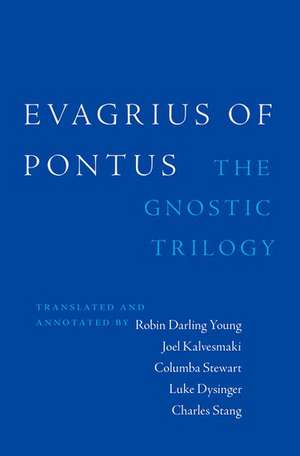
Evagrius of Pontus: The Gnostic Trilogy
Traducere și comentarii de Robin Darling Young, Joel Kalvesmaki, Columba Stewart, Charles M. Stang, Fr. Luke Dysingeren Limba Engleză Hardback – feb 2024
Remarcăm în această ediție publicată de Oxford University Press un efort academic monumental de a restitui integritatea operei fundamentale a lui Evagrius of Pontus. Organizarea materialului urmărește structura originală a trilogiei — Praktikos, Gnostikos și Kephalaia Gnostika — oferind pentru prima dată de la sfârșitul antichității un tablou complet al cosmologiei și ascetismului evagrian într-un singur volum. Metodologia utilizată de traducători este una critică și comparativă, integrând variantele siriace și grecești pentru a recupera pasaje din Kephalaia Gnostika care au supraviețuit fragmentar în limba originală din cauza acuzațiilor de erezie.
Această ediție acoperă aceeași arie ca The Gnostic Chapters de Stephen J Davis, dar cu o abordare mult mai vastă, reunind toate cele trei părți ale trilogiei și oferind un aparat critic extins ce include note explicative și referințe bibliografice exhaustive. Apreciem în mod deosebit modul în care textul este ancorat în contextul literaturii antice, facilitând înțelegerea aforismelor enigmatice ale lui Evagrius. Ritmul lecturii este dictat de densitatea conceptuală a textului, fiind o lucrare de referință care nu se limitează la traducere, ci propune o reconstrucție teologică și istorică.
În contextul altor lucrări, precum Evagrius and His Legacy de Joel Kalvesmaki, volumul de față servește drept sursă primară esențială, oferind baza textuală pe care se sprijină studiile despre influența autorului asupra misticismului bizantin și occidental. Este o resursă indispensabilă pentru studiul bisericii timpurii, reușind să clarifice tranziția de la cele opt gânduri ispititoare la sistemul celor șapte păcate capitale.
Preț: 516.61 lei
Preț vechi: 768.32 lei
-33%
Carte disponibilă
Livrare economică 15-26 mai
Specificații
ISBN-10: 0199997675
Pagini: 528
Dimensiuni: 165 x 224 x 61 mm
Greutate: 0.86 kg
Editura: Oxford University Press
Colecția OUP USA
Locul publicării:New York, United States
De ce să citești această carte
Recomandăm acest volum cercetătorilor și pasionaților de patristică și istoria religiilor. Cititorul câștigă acces la un text care a modelat spiritualitatea creștină, prezentat acum într-o formă bilingvă reconstituită (greacă și siriacă). Este o ocazie rară de a studia sistemul filosofic al lui Evagrius în totalitatea sa, beneficiind de expertiza unor traducători de renume care clarifică terminologia complexă a ascetismului timpuriu.
Despre autor
Robin Darling Young este profesor asociat de teologie la Catholic University of America din Washington, DC. Specialistă în istoria creștinismului timpuriu și în literatura siriacă, ea a coordonat această ediție alături de o echipă de experți precum Joel Kalvesmaki și Columba Stewart. Expertiza sa se concentrează pe recuperarea și interpretarea textelor ascetice care au circulat în mediile monastice din Egipt și Orientul Apropiat, aducând o perspectivă academică riguroasă asupra operelor controversate ale lui Evagrius of Pontus.
Descriere
The Gnostic Trilogy is the best-known and most important work by the ascetic philosopher and teacher Evagrius of Pontus. Among the writers of his age, Evagrius stands out for his short, perplexing, and absorbing aphorisms, which provide sharp insight into philosophy, Scripture, human nature, and the natural world.The first part of the trilogy, the Praktikos (The Practiced One), provides a diagnosis and treatment of the eight tempting thoughts. It was a foundational text for monastic asceticism and was the basis for the later Seven Deadly sins tradition. The second, Gnostikos (The Knower), explains how someone who has mastered the body and mental delusions should teach others. The third, longest, and most controversial, the Kephalaia gnostika (Gnostic Chapters), ranges broadly over the origin of the universe, the nature of rational beings, and the hidden symbols of Scripture. This part was responsible for Evagrius's condemnation as a heretic and, as a result, does not survive intact in the original Greek and must be restored from ancient translations.This volume presents the Trilogy in its entirety for the first time since antiquity and provides a fresh, comprehensive English translation of all three works, in all their known ancient versions, both Greek and Syriac. Detailed explanatory notes, cross-references to Scripture, to ancient literature, and to Evagrius's other writings, as well as commentary on the translation techniques of the Syriac translators, provide the necessary resources for understanding this significant but puzzling text.
Recenzii
In addition to a clear introduction, the translating team has annotated the texts with references primarily to other Evagrian works, but also to significant Christian and philosophical literature and to some essential scholarship. Useful indexes complete the book. Readers have been given the tools to craft their own intellectual journeys through these remarkable and enigmatic pieces of Christian asceticism spirituality, and theology. The translators deserve gratitude and congratulations for a landmark achievement in the study of Evagrius, monasticism, and late ancient Christian philosophy.
This is a work of monumental scholarship that for the first time since late antiquity makes the GT available as Evagrius intended, together with the supporting material needed to start navigating the various challenges it presents. It is an invaluable resource both for experienced scholars of Evagrius and for those encountering him for the first time; and given the ever-increasing scholarly interest in Evagrius and the importance of the GT, it is extremely welcome and timely.
Notă biografică
Robin Darling Young is Associate Professor of Church History at the Catholic University of America. Joel Kalvesmaki holds a fellowship at Catholic University of America and is the director of the Text Alignment Network.Columba Stewart is Professor of Theology at Saint John's University and executive director of the Hill Museum & Manuscript library.Charles M. Stang is Professor of Early Christian Thought and the Director of the Center for the Study of World Religions at Harvard Divinity School. Luke Dysinger is Professor of Church History and Moral Theology at St. John's Seminary.