Cantitate/Preț
Produs

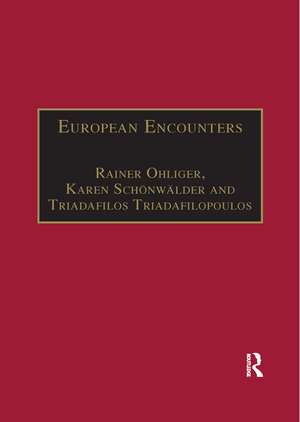
European Encounters: Migrants, Migration and European Societies Since 1945: Research in Migration and Ethnic Relations Series

Autor Rainer Ohliger, Karen Schönwälder
en Limba Engleză Paperback – 30 iun 2020

Bazându-ne pe datele furnizate de seria Research in Migration and Ethnic Relations Series a editurii Routledge, notăm cu interes că European Encounters propune o reevaluare a istoriei continentale postbelice prin prisma mobilității umane. Apreciem modul în care editorii Rainer Ohliger și Karen Schönwälder reușesc să demonstreze că istoria europeană de după 1945 este, în esență, o istorie a migrației, fie că vorbim despre expulzări, refugiați sau migrația forței de muncă.

Volumul extinde cadrul propus de Europe, Migration and Identity de Jan Logemann prin adăugarea unor date noi din regiuni adesea neglijate în studiile vest-centrice. Structura cărții este organizată riguros, începând cu pluralitatea experiențelor migratorii — unde remarcăm capitolul dedicat „demixării” etnice din România secolului XX, semnat de Rainer Ohliger și Cătălin Turliuc — și continuând cu provocările politice și sociale. Această progresie permite cititorului să înțeleagă cum întâlnirile dintre europeni și nou-veniți au modelat identitatea colectivă actuală. În contextul operei sale, Rainer Ohliger continuă cercetările începute în Diasporas and Ethnic Migrants, însă aici mută accentul de la formarea minorităților în Europa de Est către un peisaj european integrat și multidisciplinar.

Ceea ce diferențiază această lucrare este atenția acordată agenției individuale și genului, cum ar fi analiza migrației profesionale feminine, elemente care lipsesc din abordările pur instituționale. De asemenea, prin includerea unor studii despre Pakistanis în Norvegia sau refugiații romi în Țările de Jos, European Encounters oferă o perspectivă comparativă necesară pentru studenții de la istorie contemporană și științe politice, subliniind eșecurile guvernamentale în procesul de învățare instituțională.

Citește tot Restrânge

Din seria Research in Migration and Ethnic Relations Series

Preț: 41360 lei

Puncte Express: 620

Carte disponibilă

Livrare economică 16-30 noiembrie
Livrare express 30 octombrie-05 noiembrie pentru 3532 lei

Livrare prin curier în România Termenul estimat este afișat lângă disponibilitate.
Transport gratuit pentru acest produs Plată online sau ramburs, în funcție de opțiunile comenzii.
Retur gratuit în 14 zile Comandă securizată și suport în română.

Specificații

ISBN-13: 9780367604615
ISBN-10: 0367604612
Pagini: 336
Dimensiuni: 153 x 219 x 21 mm
Greutate: 0.45 kg
Ediția:1
Editura: Taylor & Francis
Colecția Routledge
Seria Research in Migration and Ethnic Relations Series

Locul publicării:Oxford, United Kingdom

De ce să citești această carte

Recomandăm această carte cercetătorilor și studenților interesați de sociologie și istorie politică. Veți câștiga o înțelegere profundă a modului în care valurile de migrație de după 1945 au construit, de fapt, identitatea europeană modernă. Este un instrument esențial pentru a înțelege complexitatea etnică a Europei actuale, oferind studii de caz concrete, de la experiența estoniană la cea românească, într-un format academic riguros.


Despre autor

Rainer Ohliger este un cercetător specializat în istoria migrației și a minorităților etnice, fiind recunoscut pentru expertiza sa asupra spațiului central și est-european. În lucrările sale, precum Diasporas and Ethnic Migrants, a analizat mecanismele prin care grupurile etnice se transformă în diaspore. Karen Schönwälder contribuie cu o perspectivă sociologică și politică asupra integrării, activitatea sa fiind axată pe răspunsurile statelor europene la diversitatea culturală. Împreună, coordonează acest volum multidisciplinar care sintetizează decenii de cercetări în domeniul relațiilor etnice.


Descriere scurtă

This book reminds us of Europe's multi-faceted history of expulsions, flight, and labour migration and the extent to which European history since 1945 is a history of migration. While immigration and ethnic plurality have often been divisive issues, encounters between Europeans and newcomers have also played an important part in the development of a European identity. The authors analyze questions of individual and collective identities, political responses to migration, and the way in which migrants and migratory movements have been represented, both by migrants themselves and their respective host societies. The book's distinctive multi-disciplinary and international approach brings together experts from several fields including history, sociology, anthropology and political science. ’European Encounters’ will serve as an invaluable tool for students of contemporary European history, migration, and ethnic identities.

Cuprins

Contents: Introduction: European encounters: Europe's migratory experiences, Karen Schönwälder, Rainer Ohliger and Triadafilos Triadafilopoulos. The Plurality of the Migratory Experience: Einwanderungsland Deutschland: a new look at its post-war history, Anne von Oswald, Karen Schönwälder and Barbara Sonnenberger; Post-war immigration to Estonia: a comparative perspective, Hill Kulu; Minorities into migrants: emigration and ethnic unmixing in twentieth-century Romania, Rainer Ohliger and Catalin Turliuc; Female professional immigration in post-war Europe: counteracting an historical amnesia, Umut Erel and Eleonore Kofman. Migration as a Political and Social Challenge: The political consequences of forced population transfers: refugee incorporation in Greece and West Germany, Triadafilos Triadafilopoulos; Why governments do not learn: colonial migrants and gypsy refugees in the Netherlands, Wim Willems; The Norwegian encounter with Pakistanis: diversities and paradoxes on the road to Norway's immigration stop, Hallvard Tjelmeland; Gendered policies - gendered patterns: female labour migration from Turkey to Germany from the 1960s to the 1990s, Esra Erdem and Monika Mattes; Constructing boundaries in a multicultural nation: the discourse of 'overforeignization' in Switzerland, Damir Skenderovic. Individual and Collective Identities: The role of discourse in the construction of an emigré community: Ukrainian displaced persons in Germany and Austria after the Second World War, Volodymyr Kulyk; The impact of distorted memory: historical narratives and expellee integration in West Germany, 1945-1970, Pertti Ahonen; Do national narratives matter? identity formation among Portuguese migrants in France and Germany, Andrea Klimt; Whatever happened to the Albanians? some clues to a twentieth-century European mystery, Isa Blumi; Recovering memory is regaining dignity: collective memory and migration in France, Laure Teulières; Index.

Recenzii

’This interesting volume constitutes an important contribution to the still much neglected migration history of post war Europe. By including case studies from states at the margin as well as stressing the relevance of agency and gendered patterns, the chapters in this multifaceted and multilayered book will function as an empirical and conceptual stimulus for future research.’ Professor Leo Lucassen, University of Amsterdam, The Netherlands ’European Encounters is a rich and ambitious history of migration and the migrant experience in Europe, which does not stick to the standard script. It covers many countries, east and west, and examines not only the history of migration since 1945, but problems of politics, ethnicity, identity, gender, and historical memory. Anyone who wants to know how migration has reshaped modern Europe should read this book.’ Professor James F. Hollifield, Southern Methodist University, USA ’This edited collection brings together new and interesting work on European migration...the breadth, range and scope of the analyses enhances our understanding of the diversity and richness of Europe’s migration experience. For this reason, the book is a welcome addition to the literature.’ Journal of Southern Europe and the Balkans ’In this important volume, Rainer Ohliger, Karen Schönwälder and Triadafilos Triadafilopoulos weave together a collection of essays that challenge dominant assumptions pervading the literature on post-World War II European migration...this is a significant collection of essays, and one that should occupy a prominent place on the shelves of serious migration scholars...a monumental volume that will likely reshape European migration scholarship in profound ways.’ Focaal: European Journal of Anthropology

Descriere

The contributors to this book remind us of the extent to which contemporary European history is a history of migration. The topics range from the expulsions of ethnic Greeks and Germans after the two world wars to female labour migration from Turkey; they include the formation of a Ukrainian identity among Displaced Persons as well as the response