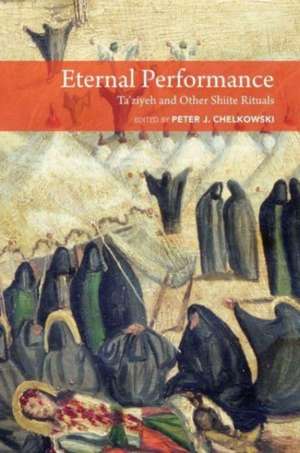
Eternal Performance
Editat de Peter J. Chelkowskien Limba Engleză Paperback – 5 sep 2024
În volumul Eternal Performance, structura materialului este concepută pentru a oferi o perspectivă multidisciplinară asupra modului în care un eveniment istoric și religios — martiriul lui Hussein la Karbala — s-a transformat într-o formă complexă de artă performativă globală. Metodologia abordată de editorul Peter J. Chelkowski combină rigoarea istorică cu studiile teatrale, grupând contribuții care acoperă totul, de la originile schismei sunnit-șiite până la aspectele tehnice ale antrenamentului actorilor în tradiția Ta'ziyeh. Considerăm că această abordare transformă volumul dintr-o simplă analiză religioasă într-o resursă esențială pentru înțelegerea teatrului ritualic. Descoperim în cuprins o progresie logică: de la fundamentul teologic și istoric, spre analize specifice ale spațiului scenic și ale stilurilor de interpretare. Un element distinctiv este includerea traducerii piesei „Martiriul lui Hussein”, oferind cititorului acces direct la textul care stă la baza acestui „teatru total”. Reținem, de asemenea, capitolul dedicat transformării Ta'ziyeh din ritual de doliu în teatru secular și comic, o nuanță adesea ignorată în studiile clasice despre Islam. Această lucrare reprezintă o alternativă necesară la The Women of Karbala pentru cursurile de antropologie religioasă sau studii islamice, având avantajul unei focalizări stricte pe dimensiunea performativă și pe evoluția tehnicilor teatrale, mai degrabă decât pe dinamica de gen. În contextul operei sale, Peter J. Chelkowski continuă aici explorarea puterii simbolurilor și a miturilor colective începută în Staging a Revolution: the Art of Persuasion in the Islamic Republic of Iran, însă mută accentul de pe persuasiunea politică modernă pe reziliența și adaptabilitatea ritualului istoric în spații diverse, de la Teheran până în America de Nord și Caraibe.
Preț: 201.68 lei
Carte disponibilă
Livrare economică 02-16 noiembrie
Livrare express 17-23 octombrie pentru 36.95 lei
Specificații
ISBN-10: 1803094451
Pagini: 432
Ilustrații: 90 halftones
Dimensiuni: 152 x 229 x 33 mm
Greutate: 0.63 kg
Editura: Seagull Books
De ce să citești această carte
Recomandăm această carte cercetătorilor și studenților interesați de intersecția dintre religie și artele spectacolului. Cititorul câștigă o înțelegere profundă a modului în care suferința istorică este transpusă în estetică teatrală. Este o resursă rară care explică nu doar ce este Muharram, ci și cum se „joacă” acesta pe scenă, oferind instrumente de analiză pentru teatrul tradițional iranian și impactul său cultural global.
Despre autor
Peter J. Chelkowski este un reputat specialist în cultura și religia Iranului, fiind recunoscut pentru studiile sale aprofundate asupra formelor de teatru ritualic și a iconografiei politice. Activitatea sa academică s-a concentrat pe modul în care tradițiile religioase și spectacolul public modelează identitatea socială. În Eternal Performance, el își folosește expertiza pentru a coordona o analiză complexă a fenomenului Ta'ziyeh, consolidându-și poziția de autoritate în studiul legăturilor dintre credința șiită și expresia artistică, temă pe care a explorat-o și în analizele sale despre Revoluția Iraniană.
Descriere scurtă
Over the centuries, observances of Muharram, the first month of the Islamic calendar, have traveled far from their origins at Karbala—a windswept desert plain that is now a town in present-day Iraq—where, according to tradition, Hussein, the beloved grandson of Prophet Muhammad, was brutally put to death together with seventy-two of his male companions on the tenth day of the month. For this reason, Muharram is synonymous with both the first month and the tenth day. Hussein’s passion and death are considered the ultimate example of sacrifice for Shia Muslims and scores of rituals devoted to Muharram have developed during the last thirteen centuries, especially in Iran where Twelver Shi’ism became the state religion in the sixteenth century.
As the essays describe in Eternal Performance, many of these rituals were exported to other lands over time. They crossed boundaries and cultures from Iran and Iraq to Lebanon, the Indian subcontinent, North America, and the Caribbean. Yet all Muharram rituals, no matter where or how they are performed, have their origins in Karbala. The transformation and transmission of these observances to their present-day forms around the world are the result of the intersection of multiple races, religions, and artistic traditions. Eternal Performance explores the social, political, cultural, artistic, and religious significance of Muharram rituals for millions of global observers.
Notă biografică
Cuprins
Editor's Introduction
Editor's Note on Transliteration
Time Out of Memory: Ta'ziyeh, the Total Drama
by Peter J. Chelkowski
The Ta'ziyeh of the Martyrdom of Hussein
translated and with an introduction by Rebecca Ansary Pettys
The Origins of the Sunnite-Shiite Divide and the Emergence of the Ta'ziyeh Tradition
by Kamran Scot Aghaie
Muharram Ceremonies observed in Tehran by Ilya Nicolaevich Berezin (1843)
by Jean and Jacqueline Calmard
Acting Styles and Actor Training in Ta'ziyeh
by William O. Beeman and Mohammad B. Ghaffari
Identification and Analysis of the Scenic Space in Traditional Iranian Theater
by Mohammad Reza Khaki; translated by Iraj Anvar
Peripheral Ta'ziyeh: The Transformation of Ta'ziyeh from Muharram Mourning Ritual to Secular and Comical Theatre
by Iraj Anvar
A View from the Inside: The Anatomy of the Persian Ta'ziyeh Plays
by Sadegh Homayouni
Garden of the Brave in War: Recollections of Iran
by Terence O'Donnell
Karbala Drag Kings and Queens
by Negar Mottahedeh
Compelling Reasons to Sing: The Music of Ta'ziyeh
by Stephen Blum
Ta'ziyeh as Theatre of Protest
by Hamid Dabashi
Shi'ite Narratives of Karbala and Christian Rites of Penance: Michel Foucault and the Culture of the Iranian Revolution, 1978–79
by Janet Afary
Moses and the Wandering Dervish: Ta'ziyeh at Trinity College
by Milla Cozart Riggio
Mohammad B. Ghaffari, Ta'ziyeh Director: an interview with Peter J. Chelkowski
Presenting Ta'ziyeh at Lincoln Center
by Nigel Redden
Ta'ziyeh in France: The Ritual of Renewal at the Festival d'Automne
by Alain Crombecque
by Anna Vanzan
Remembering Ta'ziyeh in Iraq
by Elizabeth Fernea
Ritual, Blood, and Shiite Identity: Ashura in Nabatiyya, Lebanon
by Augustus Richard Norton
Shiite Theater in South Lebanon: Some Notes on The Karbala Drama and the Sabaya
by Sabrina Mervin
Flagellation and Fundamentalism: (Trans)forming Meaning, Identity, and Gender though Pakistani Women's Rituals of Mourning
By Mary Elaine Hegland
The Heart of Lament: Pakistani-American Muslim Women's Azadari Rituals
by Bridget Blomfield
From the Sun-Scorched Desert of Iran to the Beaches of Trinidad: Ta'ziyeh's Journey from Asia to the Caribbean
by Peter J. Chelkowski
List of Contributors