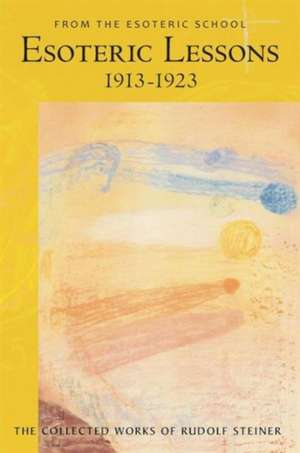
Esoteric Lessons 1913-1923
Autor Rudolf Steiner Traducere de Marsha Posten Limba Engleză Paperback – 20 dec 2008
În centrul acestui volum masiv de peste 550 de pagini se află tranziția seismică a mișcării spirituale fondate de Rudolf Steiner de la rădăcinile sale teozofice către o realitate pământească autonomă. Ne-a atras atenția în mod deosebit structura tripartită a lucrării, care documentează efortul esoteric depus între fondarea Societății Antroposofice (1913) și reorganizarea sa de la Conferința de Crăciun (1923). Prima parte a cărții subliniază o intensitate remarcabilă a muncii spirituale, cu 39 de lecții desfășurate în doar 19 luni. Accentul cade aici pe latura practică a meditației, esențială pentru consolidarea noii mișcări. Cititorii familiarizați cu Guidance in Esoteric Training vor aprecia modul în care acest volum extinde exercițiile de dezvoltare interioară, oferind un context istoric și instrucțiuni specifice care au precedat structura formală a Școlii de Științe Spirituale. Spre deosebire de abordarea mai generală din alte lucrări, aici găsim note de curs luate de participanți, oferind o perspectivă directă asupra modului în care Steiner ghida discipolii pe calea rozicruciană. Merită menționat faptul că izbucnirea Primului Război Mondial a provocat o fractură în această activitate, partea a doua a cărții fiind mult mai scurtă și reflectând dificultatea muncii esoterice într-o Europă devastată. Totuși, secțiunea a treia aduce un element de noutate absolută: lecțiile oferite cercului de tineri, care introduc o orientare către viitor sub semnul Arhanghelului Mihail. Față de Inner Reading and Inner Hearing, care se concentrează pe cercetarea spirituală în pragul războiului, Esoteric Lessons 1913-1923 funcționează ca o punte documentară și practică spre formarea Primei Clase, oferind inclusiv mantrele folosite în acei ani formativi.
Preț: 220.65 lei
Carte disponibilă
Livrare economică 05-19 mai
Livrare express 18-24 aprilie pentru 115.54 lei
Specificații
ISBN-10: 0880106182
Pagini: 556
Ilustrații: black & white illustrations
Dimensiuni: 154 x 234 x 35 mm
Greutate: 0.82 kg
Editura: Steiner Books
V-ar putea interesa
-
 How Can Mankind Find the Christ Again?Rudolf SteinerPreț: 107.79 lei
 -
 Study Companion to Esoteric SciencClopper AlmonPreț: 80.19 lei
 -
 Preț: 142.61 lei
 -
 Life Between Death and RebirthRudolf SteinerPreț: 141.67 lei
 -
 Spiritual ResistancePeter SelgPreț: 173.44 lei
 -
 The Destiny of the Michael CommunityPeter SelgPreț: 79.39 lei
 -
 Mani and Rudolf SteinerChristine GruwezPreț: 79.79 lei
 -
 Saucy Tomatoes and Blueberry ThrillsJohn BloomPreț: 64.52 lei
 -
 Freedom Through LoveNick ThomasPreț: 57.95 lei
 -
 Preț: 289.35 lei
 -
 Esoterische Betrachtungen karmischer Zusammenhänge 5Rudolf SteinerPreț: 121.32 lei
De ce să citești această carte
Această ediție este esențială pentru cei care doresc să înțeleagă evoluția practică a antroposofiei dincolo de prelegeri teoretice. Cititorul câștigă acces la meditații și instrucțiuni care nu au fost destinate inițial publicului larg, oferind instrumente concrete pentru disciplina spirituală. Este o resursă fundamentală pentru studiul istoriei esoterismului occidental și pentru aprofundarea metodei de meditație propuse de Steiner în perioada sa de maximă maturitate creativă.
Despre autor
Rudolf Steiner (1861–1925) a fost un filosof, ezoterist și reformator social austriac, cunoscut pentru fondarea antroposofiei. După o primă etapă dedicată filosofiei libertății și editării operelor științifice ale lui Goethe, Steiner și-a extins cercetările către „știința spirituală”. Opera sa vastă include contribuții în educație (pedagogia Waldorf), agricultură biodinamică și medicină antroposofică. Volumul de față face parte din seria sa de lecții esoterice, reflectând efortul său constant de a sintetiza claritatea gândirii occidentale cu interogațiile profunde ale spiritului, marcând desprinderea sa definitivă de tradiția teozofică.