Cantitate/Preț
Produs

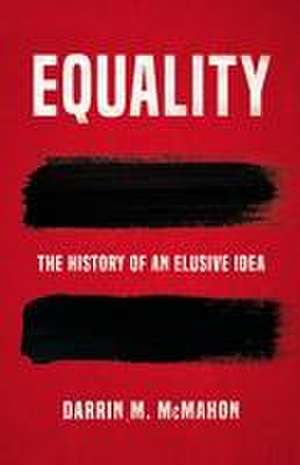
Equality

Autor Darrin M McMahon
en Limba Engleză Hardback – 14 noi 2023

Începând cu analiza modului în care egalitatea a fost imaginată ca justiție în cetatea ateniană, Equality propune o perspectivă istorică vastă asupra unui ideal pe care tindem să îl considerăm, în mod eronat, o aspirație strict modernă. Subliniem modul în care Darrin M McMahon demonstrează că ambivalența noastră față de acest concept nu este un fenomen recent, ci o constantă istorică: am dorit egalitatea, dar am chestionat mereu limitele ei și beneficiarii săi. Reținem că această lucrare de 528 de pagini nu se limitează la un manifest politic, ci investighează cum ideea de egalitate a fost utilizată de actori de pe întreg spectrul ideologic, de la revoluționarii haitieni până la ideologiile totalitare ale secolului XX care au distorsionat conceptul pentru a segrega umanitatea. Această monografie este comparabilă cu A Brief History of Equality de Thomas Piketty în rigurozitate, dar actualizată pentru a include o dimensiune mult mai largă a istoriei ideilor, depășind sfera economică pentru a explora rădăcinile filosofice și teologice. În contextul operei sale anterioare, Equality continuă preocuparea autorului pentru marile concepte universale, precum cele explorate în Happiness: A History sau Divine Fury. Dacă în lucrările precedente Darrin M McMahon analiza geniul și fericirea ca forțe transformatoare, aici el plasează egalitatea în centrul dinamicii sociale, arătând cum fiecare generație a fost nevoită să reinventeze acest ideal pentru a răspunde provocărilor timpului său. Considerăm că abordarea sa echilibrată oferă claritatea necesară într-o epocă în care disparitățile globale par să amenințe însăși coeziunea socială.

Citește tot Restrânge

Preț: 22495 lei

Puncte Express: 337

Carte disponibilă

Livrare economică 22 mai-05 iunie


Specificații

ISBN-13: 9780465093939
ISBN-10: 0465093930
Pagini: 528
Dimensiuni: 170 x 252 x 30 mm
Greutate: 1.16 kg
Editura: BASIC BOOKS

De ce să citești această carte

Pentru studenții la istorie și științe politice, Equality oferă un cadru teoretic esențial pentru a înțelege de ce egalitatea rămâne un subiect atât de diviziv. Cititorul câștigă o perspectivă critică asupra modului în care acest ideal a fost folosit atât pentru eliberare, cât și pentru excludere, primind instrumentele intelectuale necesare pentru a naviga dezbaterile contemporane despre justiția socială și inechitate economică.


Descriere scurtă

"We live at a time of soaring global inequalities and a concerted challenge to the very notion that human beings can live as equals. Equality, in short, is in crisis. Yet surprisingly little work has been done to understand this complex ideal. Far from being a modern aspiration, as is commonly thought, equality has a long history stretching back to the ancient world. Across the ages, we have also been profoundly ambivalent toward-and even skeptical of-equality: we have both desired equality and questioned how much of it exactly we want and for whom. Today's anxiety about equality is the historic norm. In Equality, historian Darrin M. McMahon offers the definitive intellectual history of equality. McMahon traces equality's global origins in early human societies before he turns to its ideological development from antiquity, through the Middle Ages and the Enlightenment, into the modern period. Taking a close look at how equality has been imagined over time-as justice in ancient Greece, for instance, or fraternity in the age of the Enlightenment-McMahon finds that across the ages our ambivalence about what equality means and who deserves to be equals has led to dramatic transformations in the very concept. While equality is today associated with the political left's fight for social justice, the concept has been reimagined by every generation, and put to many different uses over time by actors from across the political spectrum. The ideal has in fact served just as often to consolidate the position of elites in fraternity as to contest their power. Ancient Athenians and Haitian revolutionaries built a more levelled political system through appeals to equality; 19th-century Marxists used the idea to wage class warfare; fascists and Nazis divided the world into equals and unequals, with horrific results; and postwar civil rights reformers, feminists, and gay activists built a more just society by advocating equality for all. Today, socioeconomic inequality is spiraling globally, and the dream of an equal world seems threatened. Only by studying equality's deep history, McMahon concludes, might we make it anew for our own age. Spanning centuries of history, this is a magisterial history of equality, revealing how we came to value the ideal and why we continue to reimagine what it means"--