
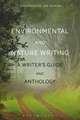
Environmental and Nature Writing: A Writer's Guide and Anthology: Bloomsbury Writer's Guides and Anthologies
Autor Dr Sean Prentiss, Dr Joe Wilkinsen Limba Engleză Hardback – 3 mai 2026
· The history of writing about the environment from the ancient world to contemporary works
· Image, description and metaphor
· Environmental journalism, poetry, and fiction
· Researching, revising and publishing
· Styles of nature writing, from discovery to memoir to polemic
With the craft guide and anthology now wholly conversant to give an in-depth look at the various ways to write about the environment, the book also includes inspiring examples of work by Ross Gay, Maximiliane Donicht, Nick Neely, Camille T. Dungy, Amy Nezhukumatathil, John Hausdoerffer among many others!
| Toate formatele și edițiile | Preț | Express |
|---|---|---|
| Paperback (2) | 153.36 lei Precomandă | |
| Bloomsbury Publishing – 3 mai 2026 | 153.36 lei Precomandă | |
| Bloomsbury Publishing – 17 noi 2016 | 169.49 lei 3-5 săpt. | +92.00 lei 5-11 zile |
| Hardback (2) | 417.94 lei Precomandă | |
| Bloomsbury Publishing – 3 mai 2026 | 417.94 lei Precomandă | |
| Bloomsbury Publishing – 17 noi 2016 | 619.42 lei 3-5 săpt. |



Preț: 417.94 lei
Preț vechi: 579.11 lei
-28% Precomandă
Puncte Express: 627
Preț estimativ în valută:
73.98€ • 85.93$ • 64.09£
73.98€ • 85.93$ • 64.09£
Carte nepublicată încă
Doresc să fiu notificat când acest titlu va fi disponibil:
Se trimite...
Preluare comenzi: 021 569.72.76
Specificații
ISBN-13: 9781350346482
ISBN-10: 1350346489
Pagini: 408
Ilustrații: 1 bw illus
Dimensiuni: 156 x 234 x 25 mm
Greutate: 0.45 kg
Ediția:2nd edition
Editura: Bloomsbury Publishing
Colecția Bloomsbury Academic
Seria Bloomsbury Writer's Guides and Anthologies
Locul publicării:London, United Kingdom
ISBN-10: 1350346489
Pagini: 408
Ilustrații: 1 bw illus
Dimensiuni: 156 x 234 x 25 mm
Greutate: 0.45 kg
Ediția:2nd edition
Editura: Bloomsbury Publishing
Colecția Bloomsbury Academic
Seria Bloomsbury Writer's Guides and Anthologies
Locul publicării:London, United Kingdom
V-ar putea interesa
-
 Writing Biography and AutobiographyBrian D. Osborne-43%Preț: 113.22 lei198.05 lei
 -
 Writing Fiction: A practical guide from New York's acclaimed creative writing schoolGotham Writers' Workshop-18%Preț: 177.96 lei216.19 lei
 -
 Analyze Anything: A Guide to Critical Reading and WritingDr Gregory Fraser-17%Preț: 230.07 lei278.13 lei
 -
 Writers and Their NotebooksZan BockesPreț: 179.38 lei
 -
 Wired for StoryLisa Cron-21%Preț: 75.99 lei95.74 lei
 -
 Writing the Comedy MovieMarc Blake-18%Preț: 198.00 lei241.52 lei
 -
 -27%Preț: 64.97 lei89.47 lei
Cuprins
Part I: An Introduction to Nature and Environmental Writing
1. The Trailhead
2. A Short History of Nature and Environmental Writing
Part II: The Craft of Nature and Environmental Writing
3: Seeing the World, Believing the World
4: Living Maps
5: People and Place
6: The River Above, the River Below
7: The Art of Activism
8: A World Larger than Ourselves
9: The Nature and Environmental Essay, Story, and Poem
10: One More Time to the River: Writing is Rewriting
11: A Trail Guide
12: Place-Based Activities
Part III Environmental and Nature Writing Anthology
Creative Nonfiction
Fiction
Poetry
Index
1. The Trailhead
2. A Short History of Nature and Environmental Writing
Part II: The Craft of Nature and Environmental Writing
3: Seeing the World, Believing the World
4: Living Maps
5: People and Place
6: The River Above, the River Below
7: The Art of Activism
8: A World Larger than Ourselves
9: The Nature and Environmental Essay, Story, and Poem
10: One More Time to the River: Writing is Rewriting
11: A Trail Guide
12: Place-Based Activities
Part III Environmental and Nature Writing Anthology
Creative Nonfiction
Fiction
Poetry
Index
Recenzii
Praise for the first edition: This book presents an introductory history of nature writing-covering subcategories ranging from pastoral and adventure writing to postcolonial and climate change narratives-and serves as a comprehensive guide to the elements of its craft in essays, stories, and poems. Both veterans and newcomers to environmental and nature writing will find inspiration in the exercises and anthology sections, which include work by Camille T. Dungy, Juan Felipe Herrera, Benjamin Percy, and many others.
The planet is in a real crisis - and one good effect is that it seems to be producing ever more wonderful writers about nature and the environment, almost as a human produces antibodies to ward off disease. Here you will find introductions to many of them--and an invitation to join their ranks.
Sean Prentiss and Joe Wilkins' new craft text and anthology, Nature and Environmental Writing, is a writing manual full of provocative prompts and a respectful and informative literary history of the genre we have previously kept in a small box marked "nature writing." It also includes a discerning multi-genre reader. The book challenges writers to factor into their writing the imprint of place and landscape on the human story. Whether writers adopt this textbook for a classroom setting or embark upon its lessons and inspirations in a self-study, they will surely come away with new and wild ideas about the subtle influences that science, the natural world, and the environmental imagination exert on all of our experiences, memories, and stories.
This is lucid, interesting and highly readable.
The sense of historical development coupled with the sensitivity to the changing social and cultural landscapes makes this book useful to a number of audiences and promises to invite even more nature writers to join those already on the trail . Part II focuses on various writerly concerns such as tone, symbol, point of view, character (both people and place), persona, research, revision, and the like. Prentiss and Wilkins deal with these issues by creating chapters that offer related readings from the anthology, a free-write prompt, an illustrating vignette, a discussion of the issue at hand, and exercises. These are standard writing issues for nature writers, and I find Prentiss and Wilkins's treatment of them straightforward and refreshing . Environmental and Nature Writing: A Writer's Guide and Anthology includes nonfiction, fiction, and poetry and provides a great range of writing from multiple perspectives covering multiple genres. I find the collection useful, as models for writers and as challenges to how we define nature and environmental writing. Prentiss and Wilkins have given us a useful trail to follow . I will use Prentiss and Wilkins's book the next time I teach nature writing.
This is an important and novel contribution to the social and cultural history of sport. With chapters that firmly establish how vital the study of the senses is to the study of athletics across Greek history, this volume changes the landscape of ancient sport history and encourages us to take on new approaches.
The planet is in a real crisis - and one good effect is that it seems to be producing ever more wonderful writers about nature and the environment, almost as a human produces antibodies to ward off disease. Here you will find introductions to many of them--and an invitation to join their ranks.
Sean Prentiss and Joe Wilkins' new craft text and anthology, Nature and Environmental Writing, is a writing manual full of provocative prompts and a respectful and informative literary history of the genre we have previously kept in a small box marked "nature writing." It also includes a discerning multi-genre reader. The book challenges writers to factor into their writing the imprint of place and landscape on the human story. Whether writers adopt this textbook for a classroom setting or embark upon its lessons and inspirations in a self-study, they will surely come away with new and wild ideas about the subtle influences that science, the natural world, and the environmental imagination exert on all of our experiences, memories, and stories.
This is lucid, interesting and highly readable.
The sense of historical development coupled with the sensitivity to the changing social and cultural landscapes makes this book useful to a number of audiences and promises to invite even more nature writers to join those already on the trail . Part II focuses on various writerly concerns such as tone, symbol, point of view, character (both people and place), persona, research, revision, and the like. Prentiss and Wilkins deal with these issues by creating chapters that offer related readings from the anthology, a free-write prompt, an illustrating vignette, a discussion of the issue at hand, and exercises. These are standard writing issues for nature writers, and I find Prentiss and Wilkins's treatment of them straightforward and refreshing . Environmental and Nature Writing: A Writer's Guide and Anthology includes nonfiction, fiction, and poetry and provides a great range of writing from multiple perspectives covering multiple genres. I find the collection useful, as models for writers and as challenges to how we define nature and environmental writing. Prentiss and Wilkins have given us a useful trail to follow . I will use Prentiss and Wilkins's book the next time I teach nature writing.
This is an important and novel contribution to the social and cultural history of sport. With chapters that firmly establish how vital the study of the senses is to the study of athletics across Greek history, this volume changes the landscape of ancient sport history and encourages us to take on new approaches.