Cantitate/Preț
Produs

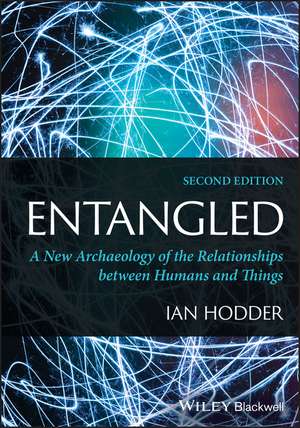
Entangled

Autor Ian Hodder
en Limba Engleză Paperback – 2 noi 2023

În prima parte a volumului Entangled, intitulată „Thinking About Things Differently”, observăm o schimbare fundamentală de paradigmă: trecerea de la obiectul static la fluxul material. Ian Hodder nu se limitează la a descrie artefactele, ci analizează modul în care „lucrurile-în-sine” devin noduri într-o rețea complexă de dependențe. Această a doua ediție (2. Auflage) rafinează conceptele de „entanglement” (înlănțuire), oferind o structură riguroasă care pornește de la necesitatea umană de a depinde de obiecte și ajunge la modul în care obiectele, la rândul lor, depind de alte obiecte pentru a funcționa și a supraviețui.

Suntem de părere că această lucrare reprezintă punctul culminant al tranziției autorului de la studiile teoretice timpurii, precum cele din Archaeological Theory in Europe, către o arheologie a relațiilor materiale aplicată practic în Çatalhöyük Excavations. Structura narativă este una progresivă: primele capitole stabilesc cadrul ontologic, în timp ce secțiunile despre producție, schimb și consum demonstrează cum înlănțuirea materială direcționează cursul istoriei umane.

Acoperă aceeași arie tematică precum Archaeology of Entanglement de Lindsay Der, dar cu o abordare mult mai unitară și teoretică, fiind scrisă de un singur autor care și-a dedicat ultimele decenii acestui concept. Spre deosebire de Entangled Things de Alison Hulme, care utilizează exemple etnografice pentru a analiza dorința sau tezaurizarea, Ian Hodder rămâne ancorat în disciplina arheologiei, oferind un instrumentar critic pentru înțelegerea evoluției umane prin prisma culturii materiale.

Citește tot Restrânge

Preț: 32621 lei

Puncte Express: 489

Carte disponibilă

Livrare economică 04-18 mai
Livrare express 18-24 aprilie pentru 3838 lei


Specificații

ISBN-13: 9781119855866
ISBN-10: 1119855861
Pagini: 240
Dimensiuni: 179 x 252 x 16 mm
Greutate: 0.48 kg
Ediția:2. Auflage
Editura: John Wiley and Sons Ltd
Locul publicării:Hoboken, United States

De ce să citești această carte

Recomandăm această carte oricărui student sau cercetător în arheologie și antropologie care dorește să înțeleagă de ce nu putem separa istoria umană de istoria obiectelor. Cititorul câștigă o perspectivă clară asupra teoriei înlănțuirii, învățând să privească artefactele nu ca pe niște simple unelte, ci ca pe parteneri activi care modelează comportamentul și evoluția socială.


Despre autor

Ian Richard Hodder (n. 1948) este un arheolog britanic de renume mondial, recunoscut ca pionier al teoriei postprocesualiste în arheologie între anii 1980 și 1990. Profesor de antropologie la Universitatea Stanford începând cu anul 2002, Hodder a coordonat proiectul de excavare de la Çatalhöyük din Turcia, unul dintre cele mai importante situri neolitice din lume. Opera sa a redefinit modul în care arheologii interpretează simbolismul și structurile sociale, trecând dincolo de analizele pur funcționaliste spre o înțelegere nuanțată a relației dintre oameni și mediul lor material.


Notă biografică

Ian Hodder is Dunlevie Family Professor Emeritus in the Department of Anthropology at Stanford University and Professor of Archaeology at Koç University, Istanbul. He led a large-scale excavation project at the Neolithic site of çatalhöyük in Turkey between 1993 and 2018. His books include Symbols in Action, Reading the Past, The Leopard's Tale: Revealing the Mysteries of çatalhöyük, The Domestication of Europe, The Archaeological Process: An Introduction, and Archaeological Theory Today.

Cuprins

Contents Epigraph viii List of Figures ix Preface and Acknowledgements for First Edition xii Preface and Acknowledgements for Second Edition xiii 1Thinking About Things Differently (from Things to Flows) 1 What Is a Thing? 1 Things-in-Themselves? 3 Changing Definitions of Entanglement 8 From Things to Strings 12 Weaker and Stronger Entanglements 14 Conclusion - (a) Why Process Matters 15 Conclusion - (b) Are We at One with Things? 16 2 Humans Depend on Things 19 Dependence: Some Introductory Concepts 20 Forms of Dependence 21 Reflective and Non-reflective Relationships with Things 22 Going Toward and Away from Things 24 Identification and Ownership 26 Some Previous Accounts of the Human Dependence on Things 29 Being There with Things 29 Material Culture and Materiality 32 Cognition and the Extended Mind 36 Conclusion: Things R Us 39 3 Things Depend on Other Things 41 Forms of Connection Between Things 43 Production and Reproduction 43 Exchange 43 Use 44 Consumption 44 Discard 44 Post-deposition 44 Affordances 49 From Affordance to Dependence 51 The French School - Operational Chains 52 Behavioral Chains 54 Things Depend on Past Things and on Future Things 58 Entangled Ideas 58 Conclusion 59 4 Things Depend on Humans 65 Things Fall Apart 68 Behavioral Archaeology and Material Behavior 70 Behavioral Ecology 74 Human Behavioral Ecology 79 The Temporalities of Things 83 Conclusion: The Unruliness of Things 84 5 Human-Human Entanglement 86 Inequality, Power and Entanglement 87 Poverty Traps 90 Emotional Bonds 92 Conclusion 93 6 Exploring Entanglement 95 The Physical Processes of Things 95 Temporalities 98 Forgetness 101 The Tautness of Entanglements and Path Dependency 103 Types and Degrees of Entanglement 105 Cores and Peripheries of Entanglements 108 Contingency 109 Conclusion 111 7 Entangled Abstractions and Bodily Engagements 113 Abstraction, Metaphor and Mimesis 114 From Granola to Beethoven 117 Abstract Entanglements at Çatalhöyük 123 Conclusion 126 8 Two Examples Regarding the Onset of Domestication and Sedentary Village Life: China and the Middle East 128 China 128 Middle East 130 Conclusion 138 9 Method 139 Tanglegrams 140 Formal Network Approaches 144 Sequencing Entanglements 147 Diachronic Entanglements 152 Interpretation 156 Conclusion 159 10 Toward an Entangled String Theory and Comparison with Other Approaches 160 Things Do Not Have Agency 161 There Is No Present, Only a Flow from Past to Future 163 Toward an Entangled String Theory 164 Other Contemporary Approaches 171 Latour and Actor Network Theory 172 Assemblage Theory 175 Containment and Enchainment 176 Ontologies 177 Material Engagement Theory 178 Agential Realism 179 Conclusion 180 11 Conclusion: From Things to Flows 182 Aquatic Culture? 182 Some Final Examples 183 Some Loose Ends 186 Bibliography 189 Index 209