Cantitate/Preț
Produs

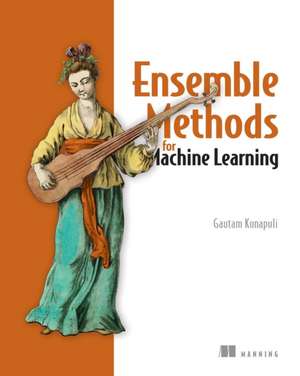
Ensemble Methods for Machine Learning

Autor Gautam Kunapuli
en Limba Engleză Paperback – 2 mai 2023

ABORDAREA PRACTICĂ: Volumul Ensemble Methods for Machine Learning se distanțează de manualele teoretice rigide, propunând un raport echilibrat între conceptele fundamentale și implementarea lor directă în cod Python. Apreciem în mod deosebit structura orientată pe rezultate, unde fiecare metodă de ansamblu — fie că vorbim de algoritmi paraleli precum Random Forests sau secvențiali precum Gradient Boosting — este validată prin aplicații reale în producție. Considerăm că forța acestui text rezidă în capacitatea de a demistifica „înțelepciunea mulțimilor” aplicată datelor, fără a recurge la un aparat matematic excesiv.

Merită menționat că autorul Gautam Kunapuli pune un accent deosebit pe diversitatea modelelor și pe ingineria caracteristicilor (feature engineering), oferind soluții concrete pentru probleme de clasificare, regresie și recomandare. Abordarea diferă de Ensemble Methods de Zhi-Hua Zhou prin faptul că este mult mai puțin abstractă și mult mai aplicabilă; în timp ce Zhou explorează fundamentele teoretice profunde, Kunapuli se concentrează pe studii de caz precum recunoașterea scrisului de mână sau diagnosticul medical, facilitând o tranziție rapidă de la teorie la experimentare.

Pe parcursul celor peste 350 de pagini, cititorul este ghidat prin tehnici de Newton boosting și gestionarea etichetelor de tip „count”, culminând cu un capitol esențial despre explicabilitatea modelelor. Într-o eră a algoritmilor de tip „cutie neagră”, această resursă oferă instrumentele necesare pentru a construi sisteme ML nu doar performante, ci și transparente. Stilul vizual și abundența fragmentelor de cod fac din această lucrare de la Manning un instrument de lucru indispensabil pentru orice programator Python care dorește să optimizeze acuratețea predicțiilor sale.

Citește tot Restrânge

Preț: 31986 lei

Preț vechi: 39982 lei
-20%

Puncte Express: 480

Carte disponibilă

Livrare economică 27 mai-10 iunie
Livrare express 12-16 mai pentru 6518 lei


Specificații

ISBN-13: 9781617297137
ISBN-10: 1617297135
Pagini: 352
Dimensiuni: 185 x 231 x 20 mm
Greutate: 0.65 kg
Editura: Manning

De ce să citești această carte

Recomandăm această carte programatorilor Python care vor să treacă dincolo de modelele simple de machine learning. Câștigați o înțelegere practică a modului în care combinarea mai multor algoritmi poate elimina erorile individuale, obținând rezultate robuste chiar și pe seturi de date limitate. Este o investiție sigură pentru cei care prioritizează performanța în producție și au nevoie de metode clare de explicare a deciziilor luate de modele.


Despre autor

Gautam Kunapuli este un expert recunoscut în domeniu, cu o carieră de peste 15 ani care îmbină rigoarea academică cu experiența practică din industria de machine learning. Această dublă perspectivă îi permite să traducă cercetările avansate în metodologii de lucru eficiente pentru dezvoltatori. Expertiza sa se reflectă în modul în care abordează subiecte complexe precum algoritmii de ansamblu și optimizarea acestora, punând accent pe utilitatea lor în rezolvarea problemelor reale de business și știința datelor.


Notă biografică

Gautam Kunapuli has over 15 years of experience in academia and the machine learning industry. He has developed several novel algorithms for diverse application domains including social network analysis, text and natural language processing, behaviour mining, educational data mining and biomedical applications. He has also published papers exploring ensemble methods in relational domains and with imbalanced data.

Descriere

Ensemble machine learning combines the power of multiple machine learning approaches, working together to deliver models that are highly performant and highly accurate. Inside Ensemble Methods for Machine Learning you will find: Methods for classification, regression, and recommendations Sophisticated off-the-shelf ensemble implementations Random forests, boosting, and gradient boosting Feature engineering and ensemble diversity Interpretability and explainability for ensemble methods Ensemble machine learning trains a diverse group of machine learning models to work together, aggregating their output to deliver richer results than a single model. Now in Ensemble Methods for Machine Learning you’ll discover core ensemble methods that have proven records in both data science competitions and real-world applications. Hands-on case studies show you how each algorithm works in production. By the time you're done, you'll know the benefits, limitations, and practical methods of applying ensemble machine learning to real-world data, and be ready to build more explainable ML systems. Purchase of the print book includes a free eBook in PDF, Kindle, and ePub formats from Manning Publications. About the Technology Automatically compare, contrast, and blend the output from multiple models to squeeze the best results from your data. Ensemble machine learning applies a “wisdom of crowds” method that dodges the inaccuracies and limitations of a single model. By basing responses on multiple perspectives, this innovative approach can deliver robust predictions even without massive datasets. About the Book Ensemble Methods for Machine Learning teaches you practical techniques for applying multiple ML approaches simultaneously. Each chapter contains a unique case study that demonstrates a fully functional ensemble method, with examples including medical diagnosis, sentiment analysis, handwriting classification, and more. There’s no complex math or theory—you’ll learn in a visuals-first manner, with ample code for easy experimentation! What’s Inside Bagging, boosting, and gradient boosting Methods for classification, regression, and retrieval Interpretability and explainability for ensemble methods Feature engineering and ensemble diversity About the Reader For Python programmers with machine learning experience. About the Author Gautam Kunapuli has over 15 years of experience in academia and the machine learning industry. Table of Contents PART 1 - THE BASICS OF ENSEMBLES 1 Ensemble methods: Hype or hallelujah? PART 2 - ESSENTIAL ENSEMBLE METHODS 2 Homogeneous parallel ensembles: Bagging and random forests 3 Heterogeneous parallel ensembles: Combining strong learners 4 Sequential ensembles: Adaptive boosting 5 Sequential ensembles: Gradient boosting 6 Sequential ensembles: Newton boosting PART 3 - ENSEMBLES IN THE WILD: ADAPTING ENSEMBLE METHODS TO YOUR DATA 7 Learning with continuous and count labels 8 Learning with categorical features 9 Explaining your ensembles