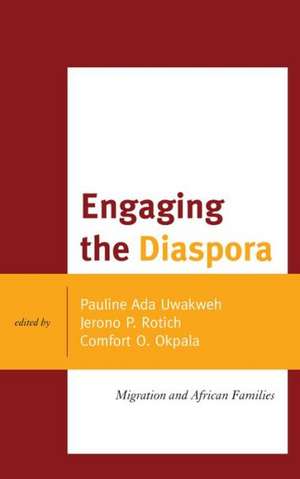
Engaging the Diaspora: Migration and African Families: The Africana Experience and Critical Leadership Studies
Editat de Pauline Ada Uwakweh, Jerono P. Rotich, Comfort O. Okpala Contribuţii de Ifeyinwa Mbakogu, Amon Okpala, Khadidja Arfi, Michael Kremer, Iheanyichukwu N. Osondu, Amy Duffuor, Shirley Mthethwa-Sommers, Joya Uraizeeen Limba Engleză Paperback – 26 mar 2015


Preț: 335.82 lei
Preț vechi: 435.38 lei
-23%
Puncte Express: 504
Carte tipărită la comandă
Livrare economică 04-18 decembrie
Livrare prin curier în România Termenul estimat este afișat lângă disponibilitate.
Transport gratuit de la 400.00 lei Plată online sau ramburs, în funcție de opțiunile comenzii.
Retur gratuit în 14 zile Comandă securizată și suport în română.
Specificații
ISBN-13: 9781498515481
ISBN-10: 1498515487
Pagini: 208
Ilustrații: 8 Tables
Dimensiuni: 151 x 232 x 16 mm
Greutate: 0.32 kg
Editura: Bloomsbury Publishing
Colecția Lexington Books
Seria The Africana Experience and Critical Leadership Studies
Locul publicării:New York, United States
ISBN-10: 1498515487
Pagini: 208
Ilustrații: 8 Tables
Dimensiuni: 151 x 232 x 16 mm
Greutate: 0.32 kg
Editura: Bloomsbury Publishing
Colecția Lexington Books
Seria The Africana Experience and Critical Leadership Studies
Locul publicării:New York, United States
Cuprins
Part One: The African Immigrant Family in the Diaspora: Intersecting Forces
Introduction: (Re)Configuring African Migration Since the Last Forty Years: Issues, Concepts and Contexts by Pauline Ada Uwakweh
Chapter 1: Negotiating Marriage and Motherhood: A Critical Perspective on the Immigration Narratives of Buchi Emecheta and Chimamanda Adichie by Pauline Ada Uwakweh
Chapter 2: Who is the Parent and Who is the Kid?: The Changing Face of Parenting for African Parents in the Diaspora by Ifeyinwa Mbakogu
Chapter 3:
Migrant African Children Remembering War: Memoirs and Stereotypes by Joya Uraizee
Chapter 4:
The Algerian Diaspora in the United States: Dynamics of Language by Khadidja Arfi
Chapter 5: Physical Activity and Recreation Lifestyle in Transition: A Study of African Immigrant and Refugee Youth by Jerono Rotich
Part Two: Adapting the Diaspora: Perspectives on African Immigrant Employment and Spirituality
Chapter 6: The Experiences of African-born Professors in Higher Education: A Phenomenological Study by Comfort Okpala and Amon Okpala
Chapter 7: Diamonds on the Soles of their Shoes": Experiences of African-born Educators in U.S. Predominantly-White Colleges by Shirley Mthethwa-Sommers
Chapter 8: The Golden Ticket: Adjustment of African Diversity Visa Lottery Winners in America byMichael Kremer
Chapter 9: The Role of Cultural Associations: National and Ethnic in Africa and Diaspora by Iheanyi Osondu
Chapter 10: Fusing Faith and Place: An Examination of Localized Civic Engagement in African Immigrant Churches by Amy Duffuor
Introduction: (Re)Configuring African Migration Since the Last Forty Years: Issues, Concepts and Contexts by Pauline Ada Uwakweh
Chapter 1: Negotiating Marriage and Motherhood: A Critical Perspective on the Immigration Narratives of Buchi Emecheta and Chimamanda Adichie by Pauline Ada Uwakweh
Chapter 2: Who is the Parent and Who is the Kid?: The Changing Face of Parenting for African Parents in the Diaspora by Ifeyinwa Mbakogu
Chapter 3:
Migrant African Children Remembering War: Memoirs and Stereotypes by Joya Uraizee
Chapter 4:
The Algerian Diaspora in the United States: Dynamics of Language by Khadidja Arfi
Chapter 5: Physical Activity and Recreation Lifestyle in Transition: A Study of African Immigrant and Refugee Youth by Jerono Rotich
Part Two: Adapting the Diaspora: Perspectives on African Immigrant Employment and Spirituality
Chapter 6: The Experiences of African-born Professors in Higher Education: A Phenomenological Study by Comfort Okpala and Amon Okpala
Chapter 7: Diamonds on the Soles of their Shoes": Experiences of African-born Educators in U.S. Predominantly-White Colleges by Shirley Mthethwa-Sommers
Chapter 8: The Golden Ticket: Adjustment of African Diversity Visa Lottery Winners in America byMichael Kremer
Chapter 9: The Role of Cultural Associations: National and Ethnic in Africa and Diaspora by Iheanyi Osondu
Chapter 10: Fusing Faith and Place: An Examination of Localized Civic Engagement in African Immigrant Churches by Amy Duffuor
Recenzii
This book is an important, timely addition to the large and growing literature on a particular area of migration studies: the experiences of Africans in the diaspora. The first part focuses on the intersecting forces that have shaped the African immigrant experience, while the second part focuses on adaptive experiences. The book's principal strength is its detailed coverage of aspects of the African immigrant experience that have received little or no attention in previous research, including parenting, spirituality, recreation, war experiences, and language. In terms of methodology, the book's interdisciplinary approach and the use of both qualitative and quantitative data contribute to the richness of the discussion. . . .Overall, the book contributes to the understanding of the variety and complexity of the African immigrant experience. An excellent resource for students of migration studies, researchers, and policy makers. Summing Up: Highly recommended. General, undergraduate, and graduate collections.
[This book] is . .. a timely and highly relevant volume. . . .This book offers a unique view of immigrants' challenges inflected by moving personal insights from its authors. Interdisciplinary in scope, the book brings together sociological, political, economic, psychological, and literary analyses of immigrant experiences, emphasizing the intersectionality of race, ethnicity, social class, and gender in the process. . . .Each chapter is replete with pertinent facts about problems surmounted during immigration based on ethnographic observations, interviews, and literary examples. . . .Engaging the Diaspora might best be read by university students, policy experts, and scholars as an open-ended narrative that paves the way for further in-depth research on the social and cultural impact of the African immigrant experience.
The 2010 U.S. Census showed that between 2000 and 2010, the number of foreign-born Africans living in the U.S. doubled, going from almost 900,000 to 1.6 million people. For the first time, the number of Africans who have immigrated to the U.S. voluntarily has surpassed the number who immigrated involuntarily during the era of the trans-Atlantic slave trade. If for no other reasons than these, the African immigrant population in the U.S. is worthy of serious scholarly research. There are additional reasons, as well, including: the changing nature of family structures, gender roles and parenting styles; education, career mobility and earnings among first and second generation immigrants; political involvement at the local, state, national and international levels; relations among different African immigrant communities and with the African-American community; the nature of connections with families back home and with developments in the countries of origin; and, comparisons with other immigrant groups, such as South Asians. All of these issues and more are examined in Engaging the Diaspora: Migration and African Families, edited by Dr. Pauline Ada Uwakweh. Very much needed, by scholars and by immigrant families themselves, this volume will break new ground and stimulate additional research in this area.
[This book] is . .. a timely and highly relevant volume. . . .This book offers a unique view of immigrants' challenges inflected by moving personal insights from its authors. Interdisciplinary in scope, the book brings together sociological, political, economic, psychological, and literary analyses of immigrant experiences, emphasizing the intersectionality of race, ethnicity, social class, and gender in the process. . . .Each chapter is replete with pertinent facts about problems surmounted during immigration based on ethnographic observations, interviews, and literary examples. . . .Engaging the Diaspora might best be read by university students, policy experts, and scholars as an open-ended narrative that paves the way for further in-depth research on the social and cultural impact of the African immigrant experience.
The 2010 U.S. Census showed that between 2000 and 2010, the number of foreign-born Africans living in the U.S. doubled, going from almost 900,000 to 1.6 million people. For the first time, the number of Africans who have immigrated to the U.S. voluntarily has surpassed the number who immigrated involuntarily during the era of the trans-Atlantic slave trade. If for no other reasons than these, the African immigrant population in the U.S. is worthy of serious scholarly research. There are additional reasons, as well, including: the changing nature of family structures, gender roles and parenting styles; education, career mobility and earnings among first and second generation immigrants; political involvement at the local, state, national and international levels; relations among different African immigrant communities and with the African-American community; the nature of connections with families back home and with developments in the countries of origin; and, comparisons with other immigrant groups, such as South Asians. All of these issues and more are examined in Engaging the Diaspora: Migration and African Families, edited by Dr. Pauline Ada Uwakweh. Very much needed, by scholars and by immigrant families themselves, this volume will break new ground and stimulate additional research in this area.