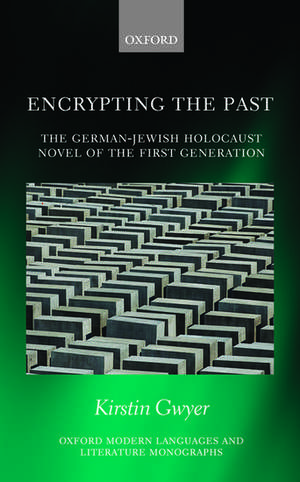
Encrypting the Past: The German-Jewish Holocaust novel of the first generation
Autor Kirstin Gwyeren Limba Engleză Hardback – 11 sep 2014
Preț: 960.54 lei
Preț vechi: 1399.63 lei
-31%
Puncte Express: 1441
Carte tipărită la comandă
Livrare economică 04-09 decembrie
Livrare prin curier în România Termenul estimat este afișat lângă disponibilitate.
Transport gratuit pentru acest produs Plată online sau ramburs, în funcție de opțiunile comenzii.
Retur gratuit în 14 zile Comandă securizată și suport în română.
Specificații
ISBN-13: 9780198709930
ISBN-10: 0198709935
Pagini: 256
Dimensiuni: 152 x 223 x 21 mm
Greutate: 0.44 kg
Editura: Oxford University Press
Colecția OUP Oxford
Locul publicării:Oxford, United Kingdom
ISBN-10: 0198709935
Pagini: 256
Dimensiuni: 152 x 223 x 21 mm
Greutate: 0.44 kg
Editura: Oxford University Press
Colecția OUP Oxford
Locul publicării:Oxford, United Kingdom
V-ar putea interesa
-
 Backing Hitler: Consent and Coercion in Nazi GermanyRobert Gellately-16%Preț: 196.66 lei233.26 lei
 -
 Slave Labor in Nazi Concentration CampsMarc Buggeln-30%Preț: 785.50 lei1121.03 lei
 -
 -28%Preț: 452.26 lei626.08 lei
 -
 Golden HarvestJan T. Gross-18%Preț: 88.72 lei108.16 lei
 -
 -12%Preț: 264.21 lei301.18 lei
 -
 Case for AuschwitzRobert Jan van PeltPreț: 419.60 lei
 -
 Hitler and the Final SolutionGerald FlemingPreț: 230.21 lei
 -
 On the Edge of the AbyssKalman ChameidesPreț: 124.29 lei
 -
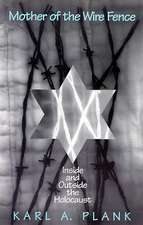 Mother of the Wire FenceKarl PlankPreț: 178.83 lei
 -
 A Guest in the House of IsraelClark M. WilliamsonPreț: 300.99 lei
 -
 Facing the Abusing GodDavid R. BlumenthalPreț: 312.09 lei
 -
 Ending AuschwitzMarc H. EllisPreț: 175.25 lei
 -
 Hitler, Germans, and the Jewish QuestionSarah Ann Gordon-19%Preț: 483.33 lei596.70 lei
 -
 This Time We KnewThomas CushmanPreț: 308.72 lei
 -
 Preț: 42.56 lei
 -
 The Last SeasonRobert JosephPreț: 93.32 lei
 -
 Democide: Nazi Genocide and Mass MurderR. J. Rummel-18%Preț: 1151.13 lei1403.82 lei
 -
 The Holocaust and the War of IdeasEdward Alexander-9%Preț: 820.85 lei902.03 lei
 -
 The Nuremberg Trials - The Complete Proceedings Vol 1Bob CarruthersPreț: 179.88 lei
 -
 The Nuremberg Trials - The Complete Proceedings Vol 2Bob CarruthersPreț: 187.56 lei
 -
 The Nuremberg Trials - The Complete Proceedings Vol 3Bob CarruthersPreț: 178.14 lei
 -
 The Nuremberg Trials - The Complete Proceedings Vol 4Bob CarruthersPreț: 209.86 lei
 -
 Preț: 116.68 lei
 -
 Preț: 364.81 lei
Recenzii
Kirstin Gwyer's meticulously researched and skillfully argued study identifies a surprising yet significant 'blind spot' in both academic research and popular reception, highlighting how and why novels by German-Jewish authors of the 'first generation' were ignored first by publishers and subsequently by scholarship ... The volume includes a thorough bibliography and useful index, and Gwyer's study will be of great value and interest to scholars working on these specific authors and to scholars of Holocaust studies and trauma theory more generally. The author demonstrates an impressive knowledge of the German, English, French, and Dutch reception of the works under consideration, yet one wishes that English translations of all citations from primary, secondary, and theoretical works would have been provided, so that this important volume could reach the broadest possible audience.
Notă biografică
Kirstin Gwyer is Lecturer in German at St Hugh's College, University of Oxford.