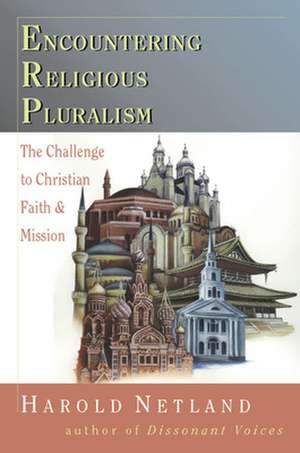
Encountering Religious Pluralism
Autor Harold Netlanden Limba Engleză Paperback – 14 aug 2001
Manual și monografie de referință în domeniul apologeticii, Encountering Religious Pluralism explorează provocările fundamentale pe care diversitatea religioasă contemporană le lansează credinței creștine tradiționale. Observăm cum Harold Netland nu se limitează la o simplă descriere a peisajului multireligios, ci urmărește emergența etosului pluralist, identificând rădăcinile filosofice care au remodelat misiunea creștină în secolul XXI. Autorul dedică o secțiune substanțială analizei critice a gândirii lui John Hick, figură centrală în legitimarea pluralismului, oferind un răspuns susținut întrebărilor despre natura adevărului și validitatea pretențiilor de exclusivitate ale Evangheliei. Subliniem rigoarea cu care sunt tratate criteriile de judecată între sisteme de credință rivale, textul culminând cu propunerea unui cadru teologic evanghelic robust. Această lucrare completează perspectiva oferită de Christianity and Religious Diversity, adăugând o dimensiune polemică și analitică mai profundă față de teoriile lui Hick, în timp ce volumul menționat se concentrează mai mult pe efectele globalizării asupra tradițiilor religioase. În contextul operei sale, Encountering Religious Pluralism rafinează temele din Dissonant Voices, menținând preocuparea autorului pentru chestiunea adevărului, dar aplicând-o aici într-un dialog direct cu teologia liberală. Față de Spirituality Without God, unde analizează atracția Occidentului față de budism, acest volum oferă fundamentul teoretic necesar pentru a înțelege de ce pluralismul a devenit paradigma dominantă în mediul academic și cultural.
Preț: 235.42 lei
Carte disponibilă
Livrare economică 09-23 noiembrie
Specificații
ISBN-10: 083081552X
Pagini: 368
Dimensiuni: 154 x 231 x 26 mm
Greutate: 0.51 kg
Editura: InterVarsity Press
V-ar putea interesa
-
 A Trinitarian Theology of Religions: An Evangelical ProposalGerald R. McDermott-15%Preț: 346.16 lei406.47 lei
 -
 Led Into MysteryJohn W. DegruchyPreț: 240.39 lei
 -
 Faith Speaking UnderstandingKevin J. VanhoozerPreț: 242.32 lei
 -
 Preț: 125.29 lei
 -
 Approaching the EndStanley HauerwasPreț: 150.05 lei
 -
 The Story of Christian TheologyRoger E. OlsonPreț: 435.01 lei
 -
 Preț: 133.68 lei
 -
 Spiritual TheologySimon ChanPreț: 212.83 lei
 -
 Truth or ConsequencesMillard J. EricksonPreț: 236.66 lei
 -
 Christ CrucifiedDonald Mac LeodPreț: 197.29 lei
 -
 The Mosaic of Christian BeliefRoger E. OlsonPreț: 194.38 lei
 -
 Handbook of Catholic ApologeticsPeter KreeftPreț: 169.57 lei
 -
 The Cross in the Experience of Our LordR A FinlaysonPreț: 43.11 lei
 -
 The One-Minute ApologistDave ArmstrongPreț: 104.80 lei
De ce să citești această carte
Această carte este esențială pentru studenții la teologie și apologetică, oferind instrumentele intelectuale necesare pentru a naviga într-o lume marcată de relativism religios. Cititorul câștigă o înțelegere clară a argumentelor lui John Hick și, mai important, învață cum să formuleze un răspuns creștin coerent și fidel Scripturii, fără a ignora complexitatea dialogului interreligios contemporan.
Despre autor
Harold Netland este profesor de filozofia religiei și studii interculturale la Trinity Evangelical Divinity School din Illinois. Experiența sa academică este dublată de o cunoaștere profundă a contextului est-asiatic, petrecând o mare parte din cariera profesională în Japonia. Această perspectivă interculturală îi permite să abordeze pluralismul nu doar ca pe o teorie abstractă, ci ca pe o realitate trăită. Expertiza sa în budism și în procesele de modernizare a religiilor sub influența globalizării îl poziționează ca pe unul dintre cei mai importanți teologi evanghelici contemporani care tratează relația dintre creștinism și alte tradiții religioase.