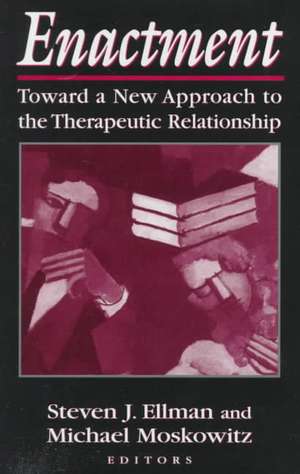
Enactment: Toward a New Approach to the Therapeutic Relationship: Jason Aronson, Inc.
Editat de Steven J. Ellman, Michael Moskowitzen Limba Engleză Hardback – mar 1998
Din seria Jason Aronson, Inc.
- 23%
 Preț: 730.25 lei
 - 42%
 Preț: 300.34 lei
 - 29%
 Preț: 863.40 lei
 - 29%
 Preț: 633.34 lei
 - 23%
 Preț: 727.46 lei
 - 29%
 Preț: 617.46 lei
 - 28%
 Preț: 673.79 lei
 - 31%
 Preț: 537.73 lei
 - 29%
 Preț: 650.25 lei
 - 33%
 Preț: 678.27 lei
 - 16%
 Preț: 139.07 lei
 - 31%
 Preț: 570.88 lei
 - 29%
 Preț: 524.52 lei
 - 32%
 Preț: 747.37 lei
 - 31%
 Preț: 537.73 lei
 - 32%
 Preț: 594.28 lei
 - 31%
 Preț: 571.49 lei
 - 31%
 Preț: 539.46 lei
 - 31%
 Preț: 570.88 lei
 - 16%
 Preț: 313.21 lei
 - 26%
 Preț: 883.01 lei
 - 31%
 Preț: 569.73 lei
 - 31%
 Preț: 598.23 lei
 - 24%
 Preț: 592.61 lei
 - 28%
 Preț: 497.29 lei
 - 30%
 Preț: 388.83 lei
 - 29%
 Preț: 617.29 lei
 - 31%
 Preț: 571.79 lei
 - 29%
 Preț: 523.81 lei
 - 31%
 Preț: 572.72 lei
 - 32%
 Preț: 748.87 lei
 - 29%
 Preț: 522.98 lei
 - 31%
 Preț: 597.55 lei
 - 31%
 Preț: 570.17 lei
 - 30%
 Preț: 644.22 lei
 - 29%
 Preț: 615.96 lei
 - 32%
 Preț: 746.40 lei
 - 30%
 Preț: 550.84 lei
 - 18%
 Preț: 336.56 lei
 - 32%
 Preț: 697.72 lei
 - 30%
 Preț: 644.73 lei
 - 30%
 Preț: 643.16 lei
 - 31%
 Preț: 413.70 lei
 - 32%
 Preț: 681.48 lei
 - 24%
 Preț: 657.15 lei
 - 23%
 Preț: 276.97 lei
 - 28%
 Preț: 495.84 lei
 - 29%
 Preț: 521.69 lei
Preț: 595.53 lei
Preț vechi: 779.26 lei
-24%
Puncte Express: 893
Carte tipărită la comandă
Livrare economică 28 noiembrie-12 decembrie
Livrare prin curier în România Termenul estimat este afișat lângă disponibilitate.
Transport gratuit pentru acest produs Plată online sau ramburs, în funcție de opțiunile comenzii.
Retur gratuit în 14 zile Comandă securizată și suport în română.
Specificații
ISBN-13: 9781568215846
ISBN-10: 1568215843
Pagini: 210
Dimensiuni: 163 x 236 x 22 mm
Greutate: 0.53 kg
Editura: Bloomsbury Publishing
Colecția Jason Aronson Inc
Seria Jason Aronson, Inc.
Locul publicării:New York, United States
ISBN-10: 1568215843
Pagini: 210
Dimensiuni: 163 x 236 x 22 mm
Greutate: 0.53 kg
Editura: Bloomsbury Publishing
Colecția Jason Aronson Inc
Seria Jason Aronson, Inc.
Locul publicării:New York, United States
Recenzii
Several major trends in psychoanalytic theory and technique converge on the concept of enactment in a way that allows us to see where we are comping from and where we are heading, where major agreement exists and where disagreements convey questions for continuing exploration. This book brings together the history of transference and countertransference in a compact, digestible way that sets the stage for the examination of recent points of convergence. The chapters in the first half develop the concept of enactment in classical and new theoretical papers. The second half demonstrates the clinical usefulness of the idea of enactment and locates it at the center of the therapeutic process. The final chapter draws together the many strands presented in the book to give an overview of agreements and of questions that remain. Enactment is an exciting, comprehensive book to be explored, used in training, and valued by psychotherapists of all persuasions and levels of experience.
Ellman and Moskowitz's timely new book is a superb collection of the essential papers on enactment. Tracing its history from Freud's writings on transference to the most current ideas in today's psychoanalytic world, the editors include contributions that refine the technical meaning of the term, illustrate its clinical applicability, and point out both the advantages and disadvantages of thinking in terms of enactment. Ellman's concluding chapter, itself worth the purchase price of the volume, documents substantial changes in the classical theory of technique and explores enactments in relation to analysts' capacities to regulate their own narcissism. His conclusions go a long way to modifying the analyst's participation leading 'toward a new approach to the therapeutic relationship.' The book will be an important scholarly resource for anyone interested in the therapeutic relationship and psychoanalysts.
Ellman and Moskowitz's timely new book is a superb collection of the essential papers on enactment. Tracing its history from Freud's writings on transference to the most current ideas in today's psychoanalytic world, the editors include contributions that refine the technical meaning of the term, illustrate its clinical applicability, and point out both the advantages and disadvantages of thinking in terms of enactment. Ellman's concluding chapter, itself worth the purchase price of the volume, documents substantial changes in the classical theory of technique and explores enactments in relation to analysts' capacities to regulate their own narcissism. His conclusions go a long way to modifying the analyst's participation leading 'toward a new approach to the therapeutic relationship.' The book will be an important scholarly resource for anyone interested in the therapeutic relationship and psychoanalysts.