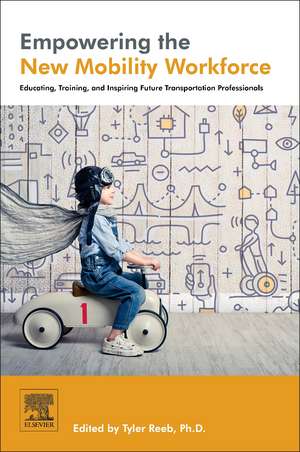
Empowering the New Mobility Workforce: Educating, Training, and Inspiring Future Transportation Professionals
Editat de Tyler Reeben Limba Engleză Paperback – 18 iun 2019
După parcurgerea acestui volum, cititorul va fi capabil să fundamenteze strategii de recrutare și retenție bazate pe date concrete, adaptând structura organizațională la un peisaj tehnologic în continuă schimbare. Considerăm că Empowering the New Mobility Workforce nu este doar o analiză teoretică, ci un instrument operațional esențial în contextul în care sectorul transporturilor necesită 4,6 milioane de noi angajați în următorul deceniu. Subliniem faptul că Tyler Reeb a reușit să reunească specialiști care traduc tendințele demografice și tehnologice în modele de competențe aplicabile imediat.
Structura volumului este riguros divizată pentru a asigura o progresie logică. Prima parte explorează schimbările demografice, punând accent pe integrarea populațiilor subreprezentate și pe transferul de cunoștințe între generații, de la Baby Boomers la Millennials. A doua parte se concentrează pe tehnologiile transformaționale, de la sisteme informaționale geospațiale la vehicule conectate. Merită menționat că autorii nu neglijează abilitățile „old-school”, considerându-le la fel de critice ca expertiza high-tech în gestionarea noilor coridoare de transport.
Complementar lucrării Sustainable Rail Transport 5, care se axează specific pe inovația în infrastructura feroviară, volumul editat de Reeb acoperă ecosistemul uman și educațional necesar pentru toate modurile de transport. Totodată, față de Transportation and Mobility Technology Futures, care analizează impactul tehnologiilor asupra politicilor economice, această carte oferă soluții practice pentru formarea profesională și dezvoltarea de curriculum, fiind un ghid indispensabil pentru directorii de resurse umane și planificatorii urbani care doresc să construiască trasee de carieră sustenabile.
Preț: 621.66 lei
Preț vechi: 878.95 lei
-29%
Carte tipărită la comandă
Livrare economică 01-15 decembrie
Specificații
ISBN-10: 0128160888
Pagini: 440
Dimensiuni: 152 x 229 x 25 mm
Greutate: 0.59 kg
Editura: ELSEVIER SCIENCE
V-ar putea interesa
-
 -39%Preț: 636.95 lei1038.22 lei
 -
 -9%Preț: 634.25 lei696.98 lei
 -
 -9%Preț: 640.58 lei703.94 lei
 -
 -28%Preț: 640.89 lei894.80 lei
 -
 -25%Preț: 618.01 lei818.88 lei
 -
 Transportation, Land Use, and Environmental PlanningElizabeth Deakin-24%Preț: 627.06 lei824.82 lei
 -
 -40%Preț: 620.88 lei1028.26 lei
 -
 Sustainable Parking Management: Practices, Policies, and MetricsNada Milosavljevic-26%Preț: 605.55 lei818.96 lei
 -
 -29%Preț: 620.26 lei878.79 lei
 -
 International Air Carrier Liability: Safety and SecurityDavid HodgkinsonPreț: 363.27 lei
 -
 Part 1: Long-term impacts of COVID-19 on mobility and travel behaviourPatricia L. Mokhtarian-32%Preț: 746.43 lei1092.47 lei
 -
 Uas Integration Into Civil AirspaceDouglas M Marshall-19%Preț: 542.37 lei669.59 lei
 -
 -27%Preț: 1276.69 lei1737.99 lei
 -
 -27%Preț: 1054.84 lei1438.35 lei
 -
 Code of Federal Regulations, Title 14 Aeronautics and Space 1-59, Revised as of January 1, 2020Office Of The Federal Register (U SPreț: 533.38 lei
 -
 Code of Federal Regulations, Title 23 Highways, Revised as of April 1, 2020Office Of The Federal Register (U SPreț: 350.44 lei
Public țintă
1) Researchers and graduate students in transportation management, logistics, supply chain management, and transportation engineering, 2) Transportation practitioners such as transportation managers, transportation planners, human resource directors, workforce development specialists, and 3) Transportation officials in Federal DOTs and State DOTsDe ce să citești această carte
Această carte se adresează liderilor din transporturi și mediul academic care trebuie să răspundă crizei de personal din domeniu. Cititorul câștigă acces la studii de caz internaționale și metodologii verificate pentru analiza pieței muncii. Este un instrument strategic pentru oricine dorește să înțeleagă cum tehnologia și demografia vor dicta viitorul mobilității globale, oferind soluții concrete pentru educație și formare profesională.
Descriere scurtă
This book will empower readers to establish ongoing communities of practice that cultivate sustainable career pathways that respond to ever-evolving socioeconomic trends and transformational technologies.
- Provides a comprehensive assessment of the new technologies and consumer attitudes driving change in personal vehicle, mass transit, active transportation, and goods movement, both domestically and internationally
- Identifies the career pathways, experiential learning models, and types of curriculum needed to prepare emerging professionals to develop and operate transportation systems of the future
- Emphasizes, through case studies, innovative practices emerging in public- and private-sector transportation organizations
- Draws on key work conducted in the United States and around the world, acknowledging the increasing interconnectedness of transportation systems between countries, economies and social networks that transcend national boundaries
Cuprins
1. How demographics are changing our vision of transportation systems
2. Recruiting underrepresented populations to the transportation workforce
3. Passing the torch from Baby Boomers to Millennials and future generations
4. Why language acquisition is essential in preparing Millennial workers for transportation careers
5. Why K-12 is critical to recruiting the next generation of transportation professionals
6. Middle-skill transportation jobs to rebuild the middle class
Part 2: Transformational Technology
7. Why technology is changing the skills and competencies for the future
8. Why old-school skills are just as critical as high-tech skills
9. Using technology to teach technological skills and competencies
10. Geospatial information systems technologies
11. Connected vehicles and connected corridors
12. Critical telecommunications and information-technology skill sets
Part 3: Talent Pipelines and Career Pathways
13. How career pathways are constructed and understood
14. When to develop a pipeline, pathway, or career ladder
15. Employer-driven transportation workforce development models
16. Workplace learning
Part 4: The Changing Role of Transportation Agencies
17. State DOTs
18. MPOs
19. Civic Markets for Smart Cities
20. Balancing urban and rural services
21. Transportation consultants
Part 5: Transportation Networks for the Mobility Revolution
22. New Collar Jobs and skills-driven training and curriculum
23. Linking transportation research, workforce, education, and employer communities
24. Online micro credentialing for displaced and incumbent workers
25. Virtual networks for career choices
26. Exemplary innovators in building the next-generation mobility workforce
27. Partnership tools as critical engines for change