
Emerson: Poems
Autor Ralph Waldo Emerson Editat de Peter Washingtonen Limba Engleză Hardback – 14 sep 2004
Această ediție de colecție, îngrijită de Peter Washington, reunește esența lirică a lui Ralph Waldo Emerson, oferind o structură cronologică ce permite urmărirea evoluției sale de la debutul poetic din 1847 până la selecțiile din 1876. Spre deosebire de volumele sale de eseuri, această antologie dezvăluie o latură mai intimă și emoțională a gânditorului american, fără a abandona însă rigoarea filozofică a transcendentalismului. Apreciem în mod deosebit organizarea textelor în trei secțiuni majore, care reflectă maturizarea stilistică a autorului: de la prospețimea din Poems (1847), trecând prin profunzimea din May-Day and Other Pieces, până la rafinamentul ultimelor selecții. Cititorii familiarizați cu Essays and Poems vor aprecia în acest volum concentrarea exclusivă pe versuri, fapt ce permite o analiză mai atentă a ritmului și a metaforei emersoniene. Dacă în Self-Reliance & Other Essays by Ralph Waldo Emerson autorul teoretizează independența spiritului, în acest volum de poezie el o ilustrează prin imagini concrete, precum celebrul „foc tras de fermieri” din „Concord Hymn” sau frumusețea autosuficientă a florii din „The Rhodora”. Structura cărții ghidează cititorul printr-o varietate de forme, de la oda patriotică la catrenul cu influențe orientale (precum traducerile din Hafiz). Ne-a atras atenția modul în care temele recurente în opera sa, precum relația dintre suflet și lumea înconjurătoare, sunt recontextualizate liric. Față de edițiile anterioare care amestecau proza cu versurile, acest format Hardback de 256 de pagini se concentrează pe puritatea vocii poetice, oferind o experiență de lectură fluidă și coerentă, esențială pentru înțelegerea deplină a moștenirii lăsate de Ralph Waldo Emerson.
Preț: 109.52 lei
Carte disponibilă
Livrare economică 17 noiembrie-01 decembrie
Specificații
ISBN-10: 1400043166
Pagini: 256
Dimensiuni: 115 x 168 x 20 mm
Greutate: 0.24 kg
Editura: Knopf Doubleday Publishing Group
V-ar putea interesa
-
 The Best of Ralph Waldo EmersonRalph Waldo EmersonPreț: 87.67 lei
 -
 The ABC's of Science/NatureCharles OliverPreț: 38.04 lei
 -
 Essays - Second SeriesRalph Waldo EmersonPreț: 98.70 lei
 -
 Literary Ethics / The Method of Nature (Annotated)Ralph Waldo EmersonPreț: 36.91 lei
 -
 La Confiance En SoiRalph Waldo EmersonPreț: 41.58 lei
 -
 Nature, Addresses, and Lectures. by Ralph Waldo EmersonRalph Waldo EmersonPreț: 63.73 lei
 -
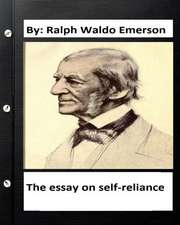 The Essay on Self-Reliance. byRalph Waldo EmersonPreț: 54.80 lei
 -
 The American Scholar (1838) byRalph Waldo EmersonPreț: 47.93 lei
De ce să citești această carte
Recomandăm această antologie oricărui cititor pasionat de literatura americană clasică și de filozofia transcendentalistă. Veți descoperi un Emerson mai vulnerabil și mai sensibil, a cărui poezie completează perfect eseurile sale celebre. Este o resursă valoroasă pentru studenți și cadre didactice, oferind o privire de ansamblu asupra modului în care natura și individualismul au fost transformate în artă literară de cel mai influent gânditor al secolului al XIX-lea.
Despre autor
Ralph Waldo Emerson (1803–1882) a fost o figură centrală a culturii americane, eseist, filozof și poet, lider al mișcării transcendentaliste. Cunoscut sub numele de „Înțeleptul din Concord”, și-a început cariera ca pastor, dar a evoluat rapid spre o filozofie a individualismului radical și a armoniei cu natura, expusă inițial în eseul „Nature” (1836). Opera sa, care include volume fundamentale precum Essays: First Series și Essays: Second Series, a influențat generații de scriitori, de la Thoreau la Whitman. Prin cele peste 1.500 de prelegeri susținute, Emerson a promovat ideea că experiența personală este singura autoritate legitimă în fața convențiilor sociale.
Notă biografică
Descriere scurtă
Known for challenging traditional thought and for his faith in the individual, Emerson was the chief spokesman for the Transcendentalist movement. His poems speak to his most passionately held belief: that external authority should be disregarded in favor of one’s own experience. From the embattled farmers who “fired the shot heard round the world” in the stirring “Concord Hymn,” to the flower in “The Rhodora,” whose existence demonstrates “that if eyes were made for seeing, / Then Beauty is its own excuse for being,” Emerson celebrates the existence of the sublime in the human and in nature.
Combining intensity of feeling with his famous idealism, Emerson’s poems reveal a moving, more intimate side of the man revered as the Sage of Concord.
Cuprins
The Rhodora
The Humble-Bee
Fable
Astræa
Etienne de la Boe´ce
Suum Cuique
Compensation
Forbearance
Berrying
Thine Eyes Still Shined
Eros
Loss and Gain
Hamatreya
The Snow-Storm
Painting and Sculpture
Holidays
From the Persian of Hafiz
Ghaselle
Xenophanes
The Day’s Ration
Blight
Musketaquid
Hymn (‘By the rude bridge that arched the flood’)
The Sphinx
Each and All
The Problem
To Rhea
The Visit
Uriel
The World-Soul
From MAY-DAY AND OTHER PIECES (1867)
Brahma
Nemesis
Fate
Freedom
Ode Sung in the Town Hall
Boston Hymn
Love and Thought
Lover’s Petition
Una
Letters
Rubies
Merlin’s Song
The Test
Nature I
Nature II
The Romany Girl
My Garden
The Titmouse
Days
Sea-Shore
Two Rivers
Waldeinsamkeit
Terminus
The Past
Experience
Compensation
Culture
Politics
Heroism
Character
Friendship
Beauty
Manners
Art
Spiritual Laws
Unity
Worship
Quatrains
From SELECTED POEMS (1876)
The Nun’s Aspiration
Hymn (‘We love the venerable house’)
Cupido
Boston
Silence
The Three Dimensions
Motto to ‘The Poet’
Motto to ‘Gifts’
Motto to ‘Nature’
Motto to ‘Nominalist and Realist’
Motto to ‘History’
South Wind
From THE UNPUBLISHED POEMS
‘William does thy frigid soul’
‘Perhaps thy lot in life is higher’
Song
‘I spread my gorgeous sail’
‘O what is Heaven but the fellowship’
‘Ah strange strange strange’
‘See yonder leafless trees against the sky’
‘Do that which you can do’
‘Few are free’
Van Buren
The Future
Rex
‘And when I am entombed in my place’
‘Bard or dunce is blest, but hard’
‘It takes philosopher or fool’
‘Tell men what they knew before’
‘I use the knife’
‘There is no evil but can speak’
‘The sea reflects the rosy sky’
‘In this sour world, O summerwind’
‘Look danger in the eye it vanishes’
‘As I walked in the wood’
‘I sat upon the ground’
‘Good Charles the spring’s adorer’
‘Around the man who seeks a noble end’
‘In the deep heart of man a poet dwells’
‘O what are heroes prophets men’
‘Yet sometime to the sorrow stricken’
The Bohemian Hymn
‘Kind & holy were the words’
‘Divine Inviters! I accept’
‘Go if thou wilt ambrosial Flower’
‘In Walden wood the chickadee’
‘Star seer Copernicus’
‘At last the poet spoke’
‘I grieve that better souls than mine’
Nantasket
Water
‘Where the fungus broad & red’
‘From the stores of eldest Matter’
‘And the best gift of God’
‘Stout Sparta shrined the god of Laughter’
‘Brother, no decrepitude’
‘Who knows this or that’
‘Saadi loved the new & old’
‘And as the light divided the dark’
‘When devils bite’
‘Comfort with a purring cat’
‘I cannot find a place so lonely’
‘This shining hour is an edifice’
‘The sparrow is rich in her nest’
‘Bended to fops who bent to him’
Elizabeth Hoar
‘Cloud upon cloud’
‘Since the devil hopping on’
‘Poets are colorpots’
‘Thanks to those who go & come’
‘I must not borrow light’
‘Comrade of the snow & wind’
‘God only knew how Saadi dined’
‘Friends to me are frozen wine’
‘That each should in his house abide’
New England Capitalist
‘On a raisin stone’
‘Go out into Nature and plant trees’
‘Pale Genius roves alone’
‘Burn your literary verses’
‘Intellect gravely broods apart on joy’
‘The civil world will much forgive’
‘Mask thy wisdom with delight’
‘Roomy Eternity’
Terminus
‘More sweet than my refrain’
‘O Boston city lecture-hearing’
‘A patch of meadow & upland’
‘And he like me is not too proud’
‘Park & ponds are good by day’
‘For Lyra yet shall be the pole’
‘A score of airy miles will smooth’
‘All things rehearse’
‘Pedants all’
‘I leave the book, I leave the wine’
‘Easy to match what others do’
‘If wishes would carry me over the land’
Maia
‘Seyd planted where the deluge ploughed’
‘Forbore the ant hill, shunned to tread’
‘Borrow Urania’s subtile wings’
‘The comrade or the book is good’
‘Is the pace of nature slow?’
‘Why honor the new men’
‘Think not the gods receive thy prayer’
‘Inspired we must forget our books’
‘Upon a rock yet uncreate’
LONGER POEMS
Woodnotes I
May-Day
The Adirondacs
From The Poet