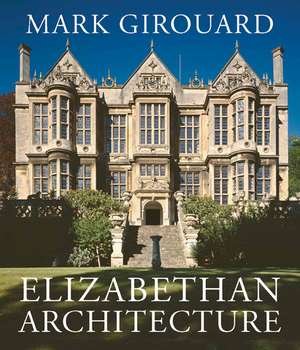
Elizabethan Architecture
Autor Mark Girouarden Limba Engleză Hardback – 8 dec 2009
Publicată sub egida prestigioasă a Paul Mellon Centre la Yale University Press, această lucrare monumentală reprezintă încununarea unei cariere dedicate înțelegerii spațiului construit britanic. Ne-a atras atenția modul în care Mark Girouard reușește să transforme analiza tehnică într-o experiență senzorială, invitându-ne să explorăm clădirile bizare și incitante ale epocii elisabetane și iacobiene. De la marile case nobiliare până la pavilioanele de vânătoare ce par adevărate bijuterii arhitecturale, autorul propune o lectură care oglindește efervescența literară a contemporanilor Shakespeare sau Marlowe.
Apreciem în mod deosebit calitatea excepțională a producției grafice; cele 300 de ilustrații, echilibrat împărțite între reproduceri color și detalii alb-negru, permit cititorului să observe finisajele ornamentale aduse de meșteșugarii străini și modul în care ordinele clasice s-au împletit cu tradiția locală. Tonul este unul erudit, dar marcat de entuziasmul descoperirii, oferind o perspectivă vie asupra structurilor sociale care au dictat evoluția planurilor de locuințe.
Complementar volumului Literature and Architecture in Early Modern England de Anne M Myers din aceeași perioadă artistică, care se concentrează pe dialogul dintre text și piatră, lucrarea lui Girouard are o perspectivă mult mai ancorată în materialitatea construcției și în influențele europene venite dinspre Italia, Franța și Țările de Jos. Față de scrierile sale mai personale, precum Friendships, Elizabethan Architecture păstrează rigoarea academică, dar o infuzează cu aceeași plăcere a detaliului anecdotic și cultural care l-a consacrat pe autor ca un narator neegalat al istoriei britanice.
Preț: 449.35 lei
Carte disponibilă
Livrare economică 13-27 noiembrie
Livrare express 29 octombrie-04 noiembrie pentru 183.17 lei
Specificații
ISBN-10: 0300093861
Pagini: 400
Ilustrații: 150 b-w + 150 color illus.
Dimensiuni: 254 x 305 x 48 mm
Greutate: 3.36 kg
Editura: Yale University Press
Colecția Paul Mellon Centre
V-ar putea interesa
-
 -26%Preț: 91.19 lei123.73 lei
 -
 Renaissance ArchitectureChristy Anderson-23%Preț: 149.91 lei194.09 lei
 -
 Preț: 116.18 lei
 -
 The Ten Books on ArchitectureVitruviusPreț: 140.25 lei
 -
 The Sources of Modern Architecture and DesignNikolaus Pevsner-21%Preț: 105.72 lei133.48 lei
 -
 The English Country HouseMary Miers-8%Preț: 398.32 lei432.96 lei
 -
 English Vision, AnBen PentreathPreț: 374.84 lei
 -
 Burghley HouseAshley Hicks-8%Preț: 440.07 lei478.33 lei
 -
 The Four Books of ArchitectureAndrea PalladioPreț: 154.58 lei
 -
 The English HouseDan CruickshankPreț: 203.37 lei
 -
 -35%Preț: 211.41 lei324.12 lei
 -
 -16%Preț: 271.23 lei321.63 lei
 -
 -17%Preț: 236.44 lei284.79 lei
 -
 Drawing ArchitectureHelen ThomasPreț: 347.80 lei
 -
 Cooking and Dining in Tudor and Early Stuart EnglandPeter BrearsPreț: 337.04 lei
 -
 Preț: 406.93 lei
 -
 Holkham: An English Treasure House and Its LandscapeElizabeth Angelicoussis-15%Preț: 341.76 lei401.40 lei
 -
 Preț: 252.87 lei
De ce să citești această carte
Recomandăm această carte oricărui pasionat de istorie și estetică ce dorește să înțeleagă rădăcinile identității vizuale engleze. Cititorul câștigă acces la o arhivă vizuală spectaculoasă și la o analiză de profunzime care explică cum au devenit clădirile simboluri ale puterii. Este un obiect de colecție indispensabil pentru biblioteca unui arhitect sau a unui istoric de artă, oferind o sinteză magistrală a unei epoci de aur.
Despre autor
Mark Girouard este unul dintre cei mai distinși istorici de arhitectură britanici, recunoscut la nivel internațional pentru capacitatea sa de a îmbina rigoarea academică cu un stil narativ captivant. Autor al unor lucrări de referință precum „Life in the English Country House”, Girouard a modelat înțelegerea publică asupra evoluției locuinței nobiliare. Membru marcant al mediului cultural britanic, el a documentat nu doar structurile de piatră, ci și viețile celor care le-au locuit. Experiența sa de o viață în cercetare și observație directă se reflectă în detaliul fin și autoritatea cu care abordează fiecare subiect tratat.
Descriere scurtă
In this beautiful and fascinating book, Mark Girouard discusses social structure and the way of life behind it, the evolution of the house plan, the excitement of English patrons and craftsmen as they learned not only about the classic Five Orders and the buildings of Ancient Rome, the surprising wealth of architectural drawings that survive from the period, the inroads of foreign craftsmen who brought new fashions in ornament, but also the strength of the native tradition that was creatively integrated with the “antique” style. Behind the book is a vivid consciousness of the European scene: Italy, France, central Europe and above all the Low Countries and their influence on England. But the principal argument of the book is the unique individuality of the English achievement.
The result of new research and fieldwork, as well as a lifetime’s observation and scholarship, this remarkable book displays Girouard’s unique sense of style and his enduring excitement for the architecture of the period.
Published for the Paul Mellon Centre for Studies in British Art
Notă biografică
Recenzii
“If you are interested in high Elizabethan–style country houses, this is the book for you.”--Library Journal