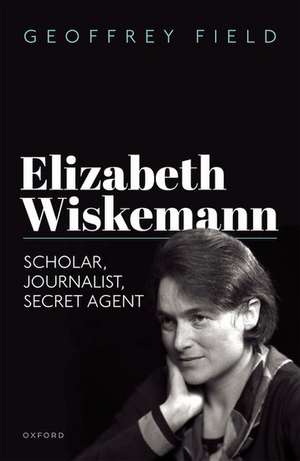
Elizabeth Wiskemann: Scholar, Journalist, Secret Agent
Autor Geoffrey Fielden Limba Engleză Hardback – 11 ian 2023
Remarcăm în acest volum o analiză riguroasă a modului în care Elizabeth Wiskemann a navigat structurile de putere ale secolului XX, transformând eșecul inițial al unei cariere academice într-o prezență influentă în jurnalismul politic și spionajul de război. Credem că valoarea practică a lucrării rezidă în studiile de caz detaliate despre ascensiunea nazismului în Berlinul Republicii de Weimar și destabilizarea economică a Europei de Est, perspective pe care Wiskemann le-a documentat direct pe teren. Structura narativă urmărește evoluția sa de la studentă la Cambridge la jurnalistă expulzată din Germania, oferind o privire din interior asupra modului în care informațiile erau colectate și analizate în zonele de conflict precum Praga sau Berna.
Această biografie semnată de Geoffrey Field completează perspectiva oferită de The Journalism of Milena Jesenská, adăugând dimensiunea geopolitică și rigoarea academică pe care Wiskemann a menținut-o chiar și în scrierile sale jurnalistice. În timp ce volumul despre Jesenská se concentrează pe observația socială și experiența personală în Praga interbelică, Field documentează activitatea de agent secret și influența lui Wiskemann asupra politicilor externe britanice. De asemenea, lucrarea se distinge de titluri precum Discovering Women's History prin focalizarea pe intersecția dintre gen și agențiile de informații de stat, oferind un context academic solid pentru înțelegerea modului în care femeile au penetrat sferele diplomației și securității. Ritmul este unul alert, susținut de datele factuale despre colaborarea cu O.S.S. și despre munca sa de pionierat în studiul relației Hitler-Mussolini, făcând din acest titlu o resursă esențială pentru curriculumul de istorie contemporană.
Preț: 374.24 lei
Preț vechi: 470.12 lei
-20%
Carte disponibilă
Livrare economică 06-11 noiembrie
Livrare express 21-27 octombrie pentru 141.92 lei
Specificații
ISBN-10: 0192870629
Pagini: 352
Ilustrații: 9 black and white figures/illustrations
Dimensiuni: 161 x 240 x 20 mm
Greutate: 0.71 kg
Editura: OUP OXFORD
Colecția OUP Oxford
Locul publicării:Oxford, United Kingdom
De ce să citești această carte
Recomandăm această biografie cititorilor interesați de istoria serviciilor de informații și de rolul femeilor în diplomația europeană. Veți descoperi parcursul fascinant al unei cercetătoare care a definit studiile moderne despre dictaturile secolului XX. Este o lectură fundamentală pentru a înțelege cum jurnalismul de calitate s-a împletit cu spionajul în momentele critice ale Europei, oferind totodată o lecție despre reziliență profesională într-o lume dominată de bărbați.
Despre autor
Geoffrey Field este un istoric reputat, specializat în istoria modernă a Europei și în studii de gen. Prin această lucrare publicată la OUP Oxford, Field demonstrează o capacitate remarcabilă de a sintetiza documente de arhivă din sfera jurnalismului politic și a serviciilor secrete. Expertiza sa în contextul britanic și european al secolului XX îi permite să plaseze viața lui Elizabeth Wiskemann într-un cadru sociologic mai larg, analizând barierele academice și oportunitățile oferite de instituții precum Chatham House pentru femeile intelectuale ale epocii.
Descriere
Recenzii
Field's study not only recovers the career of a once-influential female journalist, historian and secret agent, but it also provides insight into the history of foreign correspondents in interwar Europe, the rise of Nazism, wartime espionage, and the gendered obstacles women faced when they sought to establish themselves in male-dominated fields. This book is an example of the genre of biography at its best.
Notă biografică
Cuprins
- Introduction
- 1: Becoming a Journalist: From Cambridge to Berlin
- 2: Czechoslovakia and the Nazi 'Drang nach Osten'
- 3: Secret Agent in Wartime Switzerland
- 4: 'Dear Mr. Dulles': A Special Relationship
- 5: Starting Over in Postwar Europe
- 6: The Academic Life and After