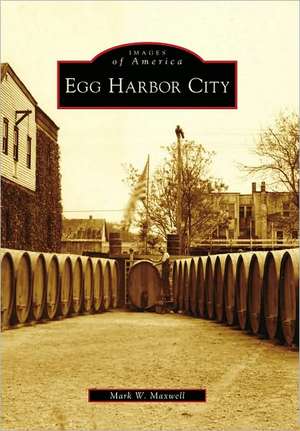
Egg Harbor City
Autor Mark Maxwellen Limba Engleză Paperback – 8 feb 2010
Egg Harbor City was founded as a refuge from the sweeping nativism of the Know-Nothings, a group that tried to limit immigration and naturalization into the United States. Egg Harbor City was a place where German Americans could maintain the traditions, language, and lifestyle of their fatherland. The city was designed in rectangular blocks with lots for building, gardening, or farming. Parks were built and a harbor was planned on the north side of the city with rail lines connecting it to the Camden and Atlantic Railroad. Following the 1876 Centennial Exhibition in Philadelphia, Egg Harbor City's wines earned the community great respect, and it became known as the "Wine City," drawing hundreds of visitors to its many wineries. Egg Harbor City celebrates the early years of the place once known as the most German city in the United States of America.
Preț: 137.95 lei
Puncte Express: 207
Carte disponibilă
Livrare economică 06-20 noiembrie
Livrare prin curier în România Termenul estimat este afișat lângă disponibilitate.
Transport gratuit de la 400.00 lei Plată online sau ramburs, în funcție de opțiunile comenzii.
Retur gratuit în 14 zile Comandă securizată și suport în română.
Specificații
ISBN-13: 9780738565729
ISBN-10: 0738565725
Pagini: 128
Dimensiuni: 163 x 231 x 8 mm
Greutate: 0.32 kg
Editura: Arcadia Publishing (SC)
ISBN-10: 0738565725
Pagini: 128
Dimensiuni: 163 x 231 x 8 mm
Greutate: 0.32 kg
Editura: Arcadia Publishing (SC)
V-ar putea interesa
-
 The National ParksDayton DuncanPreț: 448.41 lei
 -
 In Reckless HandsVictoria F NoursePreț: 278.69 lei
 -
 Southern PastW Fitzhugh BrundagePreț: 205.97 lei
 -
 FrankfordBrian H HarrisPreț: 132.99 lei
 -
 Sin in the Second CityKaren AbbottPreț: 142.15 lei
 -
 Names on the LandGeorge R StewartPreț: 149.87 lei
 -
 NimitzE B PotterPreț: 224.90 lei
 -
 The Wordy ShipmatesSarah VowellPreț: 116.93 lei
Notă biografică
Mark W. Maxwell has lived most of his life in Egg Harbor City and can trace his family roots in the area back to the early 1700s. He is a forensic scientist for the New Jersey State Police and is the president of the Egg Harbor City Historical Society.
Descriere
Egg Harbor City was founded as a refuge from the sweeping nativism of the Know-Nothings, a group that tried to limit immigration and naturalization into the United States. Egg Harbor City was a place where German Americans could maintain the traditions, language, and lifestyle of their fatherland. The city was designed in rectangular blocks with lots for building, gardening, or farming. Parks were built and a harbor was planned on the north side of the city with rail lines connecting it to the Camden and Atlantic Railroad. Following the 1876 Centennial Exhibition in Philadelphia, Egg Harbor City's wines earned the community great respect, and it became known as the "Wine City," drawing hundreds of visitors to its many wineries. Egg Harbor City celebrates the early years of the place once known as the most German city in the United States of America.