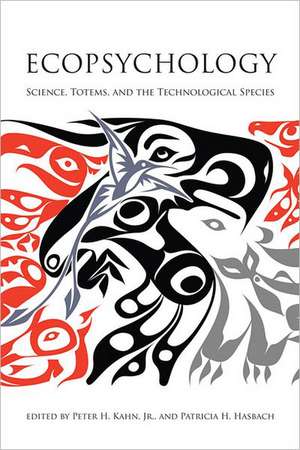
Ecopsychology
Editat de Peter H. Kahn, Patricia H. Hasbachen Limba Engleză Paperback – 20 iul 2012
This book takes on that challenge and proposes a reenvisioned ecopsychology. Contributors consider such topics as the innate tendency for people to bond with local place; a meaningful nature language; the epidemiological evidence for the health benefits of nature interaction; the theory and practice of ecotherapy; Gaia theory; ecovillages; the neuroscience of perceiving natural beauty; and sacred geography. Taken together, the essays offer a vision for human flourishing and for a more grounded and realistic environmental psychology.
Preț: 326.11 lei
Puncte Express: 489
Carte tipărită la comandă
Livrare economică 04-18 decembrie
Livrare prin curier în România Termenul estimat este afișat lângă disponibilitate.
Transport gratuit de la 400.00 lei Plată online sau ramburs, în funcție de opțiunile comenzii.
Retur gratuit în 14 zile Comandă securizată și suport în română.
Specificații
ISBN-13: 9780262517782
ISBN-10: 0262517787
Pagini: 356
Dimensiuni: 152 x 229 x 22 mm
Greutate: 0.58 kg
Editura: Mit Press
ISBN-10: 0262517787
Pagini: 356
Dimensiuni: 152 x 229 x 22 mm
Greutate: 0.58 kg
Editura: Mit Press
Notă biografică
Peter H. Kahn, Jr., is a Professor in the Department of Psychology and School of Environmental and Forest Sciences at the University of Washington, author of Technological Nature (MIT Press), and Editor-in-Chief of the Journal Ecopsychology. He is coauthor (Patricial H. Hasbach) of The Rediscovery of the Wild (MIT Press).
Patricia H. Hasbach is a licensed clinical psychotherapist in private practice in Eugene, Oregon, and a faculty member in the Department of Counseling Psychology at Lewis & Clark College, where she is codirector of the Ecopsychology Certificate Program. Hasbach and Peter H. Kahn, Jr., are coeditors of Ecopsychology: Science, Totems, and the Technological Species (MIT Press, 2012).
Andrew Fisher has worked in the anti-hunger field for twenty-five years, as the executive director of national and local food groups, and as a researcher, organizer, policy advocate, and coalition builder. He has led successful efforts to gain passage of multiple pieces of federal food and nutrition legislation.
Peter H. Kahn, Jr., is a Professor in the Department of Psychology and School of Environmental and Forest Sciences at the University of Washington, author of Technological Nature (MIT Press), and Editor-in-Chief of the Journal Ecopsychology. He is coauthor (Patricial H. Hasbach) of The Rediscovery of the Wild (MIT Press).
Patricia H. Hasbach is a licensed clinical psychotherapist in private practice in Eugene, Oregon, and a faculty member in the Department of Counseling Psychology at Lewis & Clark College, where she is codirector of the Ecopsychology Certificate Program. Hasbach and Peter H. Kahn, Jr., are coeditors of Ecopsychology: Science, Totems, and the Technological Species (MIT Press, 2012).
Patricia H. Hasbach is a licensed clinical psychotherapist in private practice in Eugene, Oregon, and a faculty member in the Department of Counseling Psychology at Lewis & Clark College, where she is codirector of the Ecopsychology Certificate Program. Hasbach and Peter H. Kahn, Jr., are coeditors of Ecopsychology: Science, Totems, and the Technological Species (MIT Press, 2012).
Lynn Margulis (1938–2011) was Distinguished Professor of Botany at the University of Massachusetts at Amherst. An evolutionary theorist and biologist, science author, and educator, Margulis was the modern originator of the symbiotic theory of cell evolution. Once considered heresy, her ideas are now part of the microbiological revolution.
Peter H. Kahn, Jr., is a Professor in the Department of Psychology and School of Environmental and Forest Sciences at the University of Washington, author of Technological Nature (MIT Press), and Editor-in-Chief of the Journal Ecopsychology. He is coauthor (Patricial H. Hasbach) of The Rediscovery of the Wild (MIT Press).
Patricia H. Hasbach is a licensed clinical psychotherapist in private practice in Eugene, Oregon, and a faculty member in the Department of Counseling Psychology at Lewis & Clark College, where she is codirector of the Ecopsychology Certificate Program. Hasbach and Peter H. Kahn, Jr., are coeditors of Ecopsychology: Science, Totems, and the Technological Species (MIT Press, 2012).
Patricia H. Hasbach is a licensed clinical psychotherapist in private practice in Eugene, Oregon, and a faculty member in the Department of Counseling Psychology at Lewis & Clark College, where she is codirector of the Ecopsychology Certificate Program. Hasbach and Peter H. Kahn, Jr., are coeditors of Ecopsychology: Science, Totems, and the Technological Species (MIT Press, 2012).
Andrew Fisher has worked in the anti-hunger field for twenty-five years, as the executive director of national and local food groups, and as a researcher, organizer, policy advocate, and coalition builder. He has led successful efforts to gain passage of multiple pieces of federal food and nutrition legislation.
Peter H. Kahn, Jr., is a Professor in the Department of Psychology and School of Environmental and Forest Sciences at the University of Washington, author of Technological Nature (MIT Press), and Editor-in-Chief of the Journal Ecopsychology. He is coauthor (Patricial H. Hasbach) of The Rediscovery of the Wild (MIT Press).
Patricia H. Hasbach is a licensed clinical psychotherapist in private practice in Eugene, Oregon, and a faculty member in the Department of Counseling Psychology at Lewis & Clark College, where she is codirector of the Ecopsychology Certificate Program. Hasbach and Peter H. Kahn, Jr., are coeditors of Ecopsychology: Science, Totems, and the Technological Species (MIT Press, 2012).
Patricia H. Hasbach is a licensed clinical psychotherapist in private practice in Eugene, Oregon, and a faculty member in the Department of Counseling Psychology at Lewis & Clark College, where she is codirector of the Ecopsychology Certificate Program. Hasbach and Peter H. Kahn, Jr., are coeditors of Ecopsychology: Science, Totems, and the Technological Species (MIT Press, 2012).
Lynn Margulis (1938–2011) was Distinguished Professor of Botany at the University of Massachusetts at Amherst. An evolutionary theorist and biologist, science author, and educator, Margulis was the modern originator of the symbiotic theory of cell evolution. Once considered heresy, her ideas are now part of the microbiological revolution.
Peter H. Kahn, Jr., is a Professor in the Department of Psychology and School of Environmental and Forest Sciences at the University of Washington, author of Technological Nature (MIT Press), and Editor-in-Chief of the Journal Ecopsychology. He is coauthor (Patricial H. Hasbach) of The Rediscovery of the Wild (MIT Press).
Patricia H. Hasbach is a licensed clinical psychotherapist in private practice in Eugene, Oregon, and a faculty member in the Department of Counseling Psychology at Lewis & Clark College, where she is codirector of the Ecopsychology Certificate Program. Hasbach and Peter H. Kahn, Jr., are coeditors of Ecopsychology: Science, Totems, and the Technological Species (MIT Press, 2012).
Descriere
An ecopsychology that integrates our totemic selves-our kinship with a more than human world-with our technological selves.