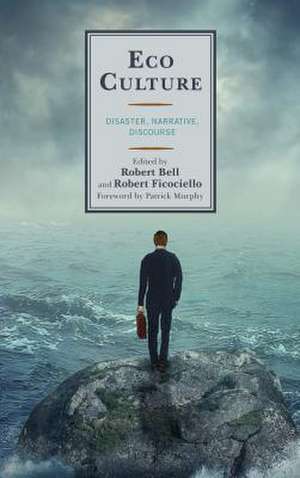
Eco Culture: Disaster, Narrative, Discourse: Ecocritical Theory and Practice
Editat de Robert Bell, Robert Ficociello Cuvânt înainte de Patrick Murphy Contribuţii de Kirk Boyle, Charles Byler, Kristen Chamberlain, Danielle Crawford, Nicole L. Freiner, Stephanie Hankinson, Peer Illner, Amy Lantinga, Marceleen Mosher, Minna Niemi, Hannah Stark, Liane Tanguay, Erik Trumpen Limba Engleză Hardback – 15 noi 2017
Din seria Ecocritical Theory and Practice
- 32%
 Preț: 528.45 lei
 - 31%
 Preț: 531.25 lei
 - 33%
 Preț: 581.25 lei
 - 26%
 Preț: 293.65 lei
 - 23%
 Preț: 328.98 lei
 -
 Preț: 325.23 lei
 - 26%
 Preț: 286.85 lei
 - 31%
 Preț: 529.58 lei
 - 33%
 Preț: 582.81 lei
 - 27%
 Preț: 284.27 lei
 - 33%
 Preț: 550.43 lei
 - 36%
 Preț: 690.52 lei
 - 28%
 Preț: 353.14 lei
 - 25%
 Preț: 367.77 lei
 - 33%
 Preț: 640.50 lei
 - 33%
 Preț: 550.88 lei
 - 27%
 Preț: 352.24 lei
 - 33%
 Preț: 705.42 lei
 - 34%
 Preț: 569.73 lei
 - 26%
 Preț: 360.79 lei
 - 25%
 Preț: 571.04 lei
 - 36%
 Preț: 679.30 lei
 - 33%
 Preț: 549.31 lei
 - 33%
 Preț: 581.55 lei
 - 32%
 Preț: 616.15 lei
 - 36%
 Preț: 679.30 lei
 - 27%
 Preț: 362.06 lei
 - 29%
 Preț: 343.17 lei
 - 23%
 Preț: 320.61 lei
 - 27%
 Preț: 285.65 lei
 - 33%
 Preț: 614.26 lei
 - 35%
 Preț: 561.12 lei
 - 33%
 Preț: 582.62 lei
 - 34%
 Preț: 574.47 lei
 - 22%
 Preț: 326.87 lei
 - 34%
 Preț: 600.88 lei
 - 26%
 Preț: 286.85 lei
 - 34%
 Preț: 601.74 lei
 - 30%
 Preț: 545.83 lei
 - 28%
 Preț: 347.76 lei
 - 34%
 Preț: 575.01 lei
Preț: 640.08 lei
Preț vechi: 958.73 lei
-33%
Puncte Express: 960
Carte tipărită la comandă
Livrare economică 05-19 decembrie
Livrare prin curier în România Termenul estimat este afișat lângă disponibilitate.
Transport gratuit pentru acest produs Plată online sau ramburs, în funcție de opțiunile comenzii.
Retur gratuit în 14 zile Comandă securizată și suport în română.
Specificații
ISBN-13: 9781498534765
ISBN-10: 1498534767
Pagini: 302
Ilustrații: 1 Table
Dimensiuni: 160 x 237 x 23 mm
Greutate: 0.52 kg
Editura: Bloomsbury Publishing
Colecția Lexington Books
Seria Ecocritical Theory and Practice
Locul publicării:New York, United States
ISBN-10: 1498534767
Pagini: 302
Ilustrații: 1 Table
Dimensiuni: 160 x 237 x 23 mm
Greutate: 0.52 kg
Editura: Bloomsbury Publishing
Colecția Lexington Books
Seria Ecocritical Theory and Practice
Locul publicării:New York, United States
Cuprins
Foreword
Patrick Murphy
Introduction
Robert Bell and Robert Ficociello
Part I: Mediation
Chapter 1: "For $19.99, Terror at the Finish Line Can Be Yours!": Creating Individual Identity Through Collective Tragedy in the Boston Marathon Bombings
Amy Lantinga
Chapter 2: Re-Telling Fukushima, Re-Shaping Citizenship: Women Netizens in Japan
Nicole L. Freiner
Chapter 3: The Locals do it better? The Strange Victory of Occupy Sandy
Peer Illner
Chapter 4: "Monsters in Human Form:" Representations of Looting in American Disaster Narratives
Charles Byler
Chapter 5: The Deepwater Horizon Disaster: Communicating Environmental Disaster in the Age of Technology
Kristen Chamberlain and Marceleen Mosher
Chapter 6: "The storm of the century": Typhoon Yolanda, the Event, and the Project of U.S. Empire in the Philippines
Danielle Crawford
Part II: Remediation
Chapter 7: "The Missing Element is the Human Element": Ontological Difference and the World-Ecological Crisis of the Capitalocene
Kirk Boyle
Chapter 8: Challenging Developmentalist Narratives: Helon Habila's Oil on Water as a Representation of the Extractivist Exploitation in the Niger Delta Region
Minna Niemi
Chapter 9: A Random Harvest: The Leftovers, Debt, and the "strange non-death" of Neoliberalism
Liane Tanguay
Chapter 10: Appropriating the Zombie Apocalypse: The Politics of Disaster
Erik Trump
Chapter 11: The Politics of Aesthetics in Beasts of the Southern Wild:
Mapping the Ethical Limits of Filmic Narratives in the Wake of Epochal Disaster Cycles
Stephanie Hankinson
Chapter 12: Neohumanism in the Anthropocene: Jim Jarmusch's Only Lovers Left Alive
Hannah Stark
Patrick Murphy
Introduction
Robert Bell and Robert Ficociello
Part I: Mediation
Chapter 1: "For $19.99, Terror at the Finish Line Can Be Yours!": Creating Individual Identity Through Collective Tragedy in the Boston Marathon Bombings
Amy Lantinga
Chapter 2: Re-Telling Fukushima, Re-Shaping Citizenship: Women Netizens in Japan
Nicole L. Freiner
Chapter 3: The Locals do it better? The Strange Victory of Occupy Sandy
Peer Illner
Chapter 4: "Monsters in Human Form:" Representations of Looting in American Disaster Narratives
Charles Byler
Chapter 5: The Deepwater Horizon Disaster: Communicating Environmental Disaster in the Age of Technology
Kristen Chamberlain and Marceleen Mosher
Chapter 6: "The storm of the century": Typhoon Yolanda, the Event, and the Project of U.S. Empire in the Philippines
Danielle Crawford
Part II: Remediation
Chapter 7: "The Missing Element is the Human Element": Ontological Difference and the World-Ecological Crisis of the Capitalocene
Kirk Boyle
Chapter 8: Challenging Developmentalist Narratives: Helon Habila's Oil on Water as a Representation of the Extractivist Exploitation in the Niger Delta Region
Minna Niemi
Chapter 9: A Random Harvest: The Leftovers, Debt, and the "strange non-death" of Neoliberalism
Liane Tanguay
Chapter 10: Appropriating the Zombie Apocalypse: The Politics of Disaster
Erik Trump
Chapter 11: The Politics of Aesthetics in Beasts of the Southern Wild:
Mapping the Ethical Limits of Filmic Narratives in the Wake of Epochal Disaster Cycles
Stephanie Hankinson
Chapter 12: Neohumanism in the Anthropocene: Jim Jarmusch's Only Lovers Left Alive
Hannah Stark
Recenzii
What does ecocriticism have to say about crises as diverse as the Boston Marathon bombing, the Fukushima Daiichi nuclear catastrophe, and the ecological and social devastation caused by oil exploitation in the Niger Delta? Read this book and find out. This fascinating and insightful volume joins the growing number of ecocritical projects exploring risk, meaning, resistance, and recovery in the contexts of natural and technological disaster. Eco Culture is a valuable and timely collection.
Robert Bell and Robert Ficociello's Eco Culture: Disaster, Narrative, Discourse affirms the importance of narrative resistance to the prevalent discursive and material forms of oppression accompanying ecological disasters. Challenging the mainstream and often manipulative disaster narratives written from within neoliberal capitalist ideologies, the contributors in this volume seek alternative narrative paths for understanding the complex issues of disaster cultures: slow violence, resilience, vulnerability, crime, militarism, systems of control, colonialist practices, technological mastery, socio-emotional traumas, adaptive politics, socio-economic decay, and more. Since each chapter enacts 'narrative responsibility' as a strategy of resistance to the hegemonic discourses of human-induced ecological disasters, this volume will be enormously attractive for those who care about environmental issues.
Robert Bell and Robert Ficociello's Eco Culture: Disaster, Narrative, Discourse affirms the importance of narrative resistance to the prevalent discursive and material forms of oppression accompanying ecological disasters. Challenging the mainstream and often manipulative disaster narratives written from within neoliberal capitalist ideologies, the contributors in this volume seek alternative narrative paths for understanding the complex issues of disaster cultures: slow violence, resilience, vulnerability, crime, militarism, systems of control, colonialist practices, technological mastery, socio-emotional traumas, adaptive politics, socio-economic decay, and more. Since each chapter enacts 'narrative responsibility' as a strategy of resistance to the hegemonic discourses of human-induced ecological disasters, this volume will be enormously attractive for those who care about environmental issues.