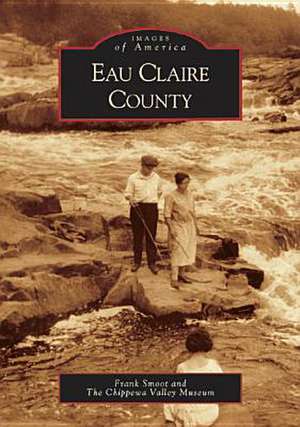
Eau Claire County
Autor Frank Smoot, The Chippewa Valley Museumen Limba Engleză Paperback – iul 2005
Preț: 132.83 lei
Puncte Express: 199
Carte tipărită la comandă
Livrare economică 19 noiembrie-03 decembrie
Livrare prin curier în România Termenul estimat este afișat lângă disponibilitate.
Transport gratuit de la 400.00 lei Plată online sau ramburs, în funcție de opțiunile comenzii.
Retur gratuit în 14 zile Comandă securizată și suport în română.
Specificații
ISBN-13: 9780738533957
ISBN-10: 0738533955
Pagini: 130
Dimensiuni: 167 x 236 x 9 mm
Greutate: 0.3 kg
Editura: Arcadia Publishing (SC)
ISBN-10: 0738533955
Pagini: 130
Dimensiuni: 167 x 236 x 9 mm
Greutate: 0.3 kg
Editura: Arcadia Publishing (SC)
Descriere
In 1855, Wisconsin's Chippewa County set the wheels in motion to divide itself into three parts. The southernmost section became Eau Claire County. With good forest, good farmland, and the confluence of two scenic rivers, it quickly established its own identity. Eau Claire County followed a classic American path. The county harvested its native natural resources (timber in this case) and started a strong agricultural tradition. In later decades, as its sesquicentennial approached, the county had developed a diversified economy, anchored by health care, retail, higher education, and high-tech manufacturing. But it is the interesting and ever-changing mix of people who built the county, and who have sustained it for 150 years. In 1890, seven of every ten people living in Wisconsin's Chippewa Valley, with Eau Claire County at its heart, were born outside the U.S. or had foreign-born parents. The area still welcomes new arrivals. Through scores of historic photographs, this book captures the hardworking, fun-loving people who have given the county its distinctive place in the American heartland.