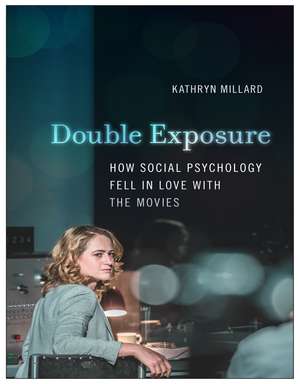
Double Exposure
Autor Kathryn Millarden Limba Engleză Paperback – 18 mar 2022
Preț: 271.55 lei
Puncte Express: 407
Preț estimativ în valută:
48.07€ • 55.83$ • 41.64£
48.07€ • 55.83$ • 41.64£
Carte indisponibilă temporar
Doresc să fiu notificat când acest titlu va fi disponibil:
Se trimite...
Preluare comenzi: 021 569.72.76
Specificații
ISBN-13: 9781978809451
ISBN-10: 197880945X
Pagini: 170
Ilustrații: 23 b&w images
Dimensiuni: 152 x 226 x 16 mm
Greutate: 0.22 kg
Editura: Rutgers University Press
ISBN-10: 197880945X
Pagini: 170
Ilustrații: 23 b&w images
Dimensiuni: 152 x 226 x 16 mm
Greutate: 0.22 kg
Editura: Rutgers University Press
Notă biografică
KATHRYN MILLARD is a writer, independent filmmaker and an honorary professor of screen and creative arts at Macquarie University, Sydney, Australia. She is the author of Screenwriting in a Digital Era.
Cuprins
List of Illustrations
Introduction
1. Setting the Scene
2. “You’re an Actor Now”
3. New Haven Noir
4. Good or Bad Samaritans?
5. Doing Time
6. Crime Scenes
7. Restaging the Psychology Experiment
8. “I was the SYSTEM”
9. Shifting the Story
Index
Introduction
1. Setting the Scene
2. “You’re an Actor Now”
3. New Haven Noir
4. Good or Bad Samaritans?
5. Doing Time
6. Crime Scenes
7. Restaging the Psychology Experiment
8. “I was the SYSTEM”
9. Shifting the Story
Index
Recenzii
“A landmark work! The classic films that reported human behavior experiments selectively told one story but many more were possible. Why one and not another? Millard explains why the dominant stories won out with an insightful provocative mix of analysis and speculation.”
"Kathryn Millard’s book is one of the rare instances in film studies that acknowledges the history of the use of film in social psychological experiments. Millard’s examination is also notable for referencing social psychology more broadly as an academic discipline that has been marginalized in the film studies literature as a result of the predominance of applications of psychoanalysis and cognitive psychology to film."
Descriere
Double Exposure examines the role of cinema in shaping social psychology’s landmark post-war experiments. The most influential experiments left a trail of visual evidence central to capturing the public imagination. Examining the dramaturgy, staging and filming of these experiments, Double Exposure recovers a new set of narratives.