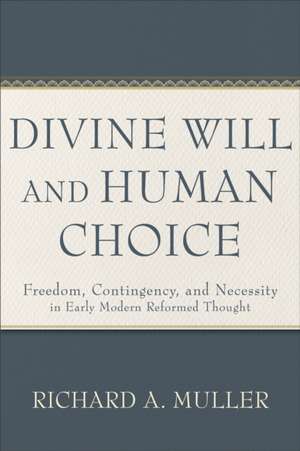
Divine Will and Human Choice
Autor Richard A. Mulleren Limba Engleză Paperback – 29 mar 2022
Această monografie de teologie istorică reprezintă o incursiune densă în fundamentele metafizice ale tradiției reformate. Notăm cu interes modul în care Richard A. Muller deconstruiește mitul conform căruia teologia protestantă ar fi abandonat conceptul de libertate umană în favoarea unui determinism rigid. Credem că valoarea centrală a lucrării rezidă în rigoarea cu care autorul urmărește traiectoria ideilor de la Aristotel și scolasticii medievali, precum Toma d'Aquino sau Duns Scotus, până la formulările sistematice ale ortodoxiei reformate. Spre deosebire de abordările simpliste, Muller demonstrează că autorii reformați au utilizat distincții filosofice complexe pentru a menține simultan suveranitatea divină și responsabilitatea morală a omului. Textul este structurat pentru a servi atât cercetătorilor, cât și studenților avansați, oferind o analiză a contingenței și necesității care evită anacronismele moderne. Cartea acoperă o arie tematică similară cu A Reformed View of Freedom de Michael Patrick Preciado, dar acolo unde Preciado se concentrează pe compatibilismul filosofic contemporan, Muller oferă o perspectivă istorică mult mai vastă, ancorată în sursele primare ale secolelor XVI-XVII. În contextul operei sale, Divine Will and Human Choice rafinează tezele din Calvin and the Reformed Tradition, oferind o examinare mult mai tehnică a mecanismelor voinței, depășind simpla istorie a ideilor pentru a intra în profunzimea ontologiei teologice.
Preț: 301.24 lei
Carte disponibilă
Livrare economică 24 iunie-08 iulie
Specificații
ISBN-10: 1540965988
Pagini: 336
Dimensiuni: 153 x 225 x 22 mm
Greutate: 0.48 kg
Editura: Baker Publishing Group
De ce să citești această carte
Această lucrare este esențială pentru oricine dorește să înțeleagă nuanțele reale ale predestinării și libertății în gândirea reformată. Cititorul câștigă o perspectivă clară asupra modului în care teologia protestantă s-a grefat pe metafizica occidentală clasică. Este o recomandare certă pentru seminariști și filosofi interesați de intersecția dintre providență și alegerea umană, oferind instrumentele necesare pentru a naviga dezbaterile teologice actuale cu precizie istorică.
Despre autor
Richard A. Muller, doctor în filosofie la Duke University, este profesor emerit de teologie istorică la Calvin Theological Seminary și o autoritate recunoscută la nivel mondial în studiul Reformei. Activitatea sa de editor pentru seria Texts and Studies in Reformation and Post-Reformation Thought și lucrări monumentale precum Post-Reformation Reformed Dogmatics au redefinit studiul scolasticii protestante. Expertiza sa în limbile clasice și în filosofia medievală îi permite să analizeze sursele teologice cu o profunzime rar întâlnită în mediul academic contemporan.
Descriere scurtă
--Bruce Gordon, Yale Divinity School
"There is not a more contested area in the study of Reformed orthodoxy than issues of divine foreknowledge, human free will, and the nature of contingency. The matter is highly complicated and involves multiple questions of interpretation and reception, including how Aristotle was appropriated by medieval schoolmen, such as Aquinas and Scotus, and how the medievals were then used by the Reformed. Those new to the field can easily become overwhelmed by the sheer volume of primary literature and the confusing subtlety of the arguments. In this context, Divine Will and Human Choice is a welcome addition to the literature because it offers both the neophyte and the scholar a superb account of the various questions involved and provides judicious critiques of the contemporary debate."
--Carl R. Trueman, Westminster Theological Seminary
"Once again Richard Muller has provided us with an extremely careful and insightful analysis on the development of Reformed theology. He has approached the topics of freedom and necessity in Reformed thought from his extremely knowledgeable background of ancient philosophy and medieval theology. In so doing he has provided a trajectory that demonstrates that Reformed thought cannot be understood in isolation from the Western tradition as a whole. This is a superb study, and there is much to learn from this volume."
--Susan Schreiner, University of Chicago Divinity School
"Muller's masterful treatment of God's will and human free choice is exemplary. It clearly and accurately presents the positions held by medieval and early modern Reformed theologians rather than spinning them in favor of a preferred position or conclusion. Muller has command of both the historical and contemporary philosophical categories and positions involved in theological debates, and he fruitfully relates historic positions to current philosophical and theological debates without anachronistically treating our theological ancestors as our philosophical contemporaries."
--John Cooper, Calvin Theological Seminary
"Muller continues to surprise readers with fascinating news from historical sources, and this rich volume is the latest fruit of his ongoing research. His careful analysis in Divine Will and Human Choice shows that this theme remains highly relevant for church and society today. Here Muller reevaluates positions, challenges readers, and serves theology with another fine work."
--Herman Selderhuis, Theological University Apeldoorn; director of Refo500