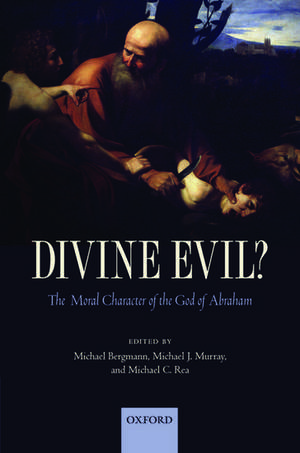
Divine Evil?: The Moral Character of the God of Abraham
Editat de Michael Bergmann, Michael J. Murray, Michael C. Reaen Limba Engleză Paperback – 10 ian 2013
Observăm în Divine Evil? o abordare riguroasă a uneia dintre cele mai spinoase probleme din filozofia religiei contemporane: compatibilitatea dintre perfecțiunea morală divină și portretizările problematice ale lui Dumnezeu în textele sacre. Punctul de plecare al acestui volum, editat de Michael Bergmann, Michael J. Murray și Michael C. Rea, îl reprezintă provocările lansate de „noii atei” și cercetători care identifică în scripturi elemente de misoginie, homofobie sau aprobare a sclaviei. Reținem structura inedită a lucrării, care nu se mulțumește cu o simplă expunere de motive, ci organizează un dialog dialectic sub formă de eseu, comentariu critic și replică, oferind cititorului o imagine completă asupra argumentelor pro și contra.
Analiza se concentrează pe caracterul moral al Dumnezeului lui Avraam, evaluând dacă atribute precum justiția și mila pot coexista cu episoadele de violență extremă descrise în Biblie sau Coran. Comparabil cu Is God a Moral Monster? de Paul Copan în ceea ce privește tematica apologetică, acest volum publicat de OUP OXFORD se distinge prin rigoarea academică și diversitatea vocilor incluse, fiind actualizat pentru noile critici filozofice și sociale. Față de abordarea satirică din God de Peter Heinegg, lucrarea de față menține un ton sobru, axat pe logică și exegeză, fiind esențială pentru înțelegerea modului în care teologia modernă răspunde acuzațiilor de imoralitate divină. Pentru Michael Bergmann, acest proiect marchează o trecere de la preocupările sale anterioare din Radical Skepticism and Epistemic Intuition către o epistemologie aplicată în sfera sacrului.
Preț: 363.45 lei
Preț vechi: 445.24 lei
-18%
Carte tipărită la comandă
Livrare economică 10-21 iulie
Specificații
ISBN-10: 0199671850
Pagini: 352
Dimensiuni: 176 x 233 x 18 mm
Greutate: 0.53 kg
Editura: OUP OXFORD
Colecția OUP Oxford
Locul publicării:Oxford, United Kingdom
V-ar putea interesa
-
 The Christian GodRichard Swinburne-15%Preț: 359.35 lei421.50 lei
 -
 Providence and the Problem of EvilRichard Swinburne-18%Preț: 335.81 lei408.55 lei
 -
 Religion and Human NatureKeith Ward-15%Preț: 264.93 lei313.00 lei
 -
 Does God's Existence Need Proof?Richard Messer-41%Preț: 182.28 lei306.47 lei
 -
 -11%Preț: 345.07 lei387.71 lei
 -
 God, the Best, and EvilBruce Langtry-31%Preț: 523.54 lei760.39 lei
 -
 -16%Preț: 296.77 lei353.65 lei
 -
 God and GoodnessHugh Rice-37%Preț: 218.91 lei348.43 lei
 -
 Justification without Awareness: A Defense of Epistemic ExternalismMichael Bergmann-22%Preț: 393.95 lei508.12 lei
 -
 Eternal God: A Study of God without TimePaul Helm-13%Preț: 325.23 lei372.84 lei
 -
 Preț: 278.87 lei
 -
 Freedom, God, and WorldsMichael J. Almeida-14%Preț: 542.09 lei630.34 lei
 -
 The Predicament of Belief: Science, Philosophy, and FaithPhilip Clayton-6%Preț: 234.72 lei248.52 lei
 -
 Friendship with God: An uncommon dialogueNeale Donald Walsch-27%Preț: 73.34 lei100.18 lei
 -
 -26%Preț: 1095.13 lei1477.92 lei
 -
 Praising GodRuth C. DuckPreț: 133.16 lei
 -
 The Jesus MysteriesPeter GandyPreț: 78.43 lei
De ce să citești această carte
Această carte este indispensabilă pentru studenții la filozofie și teologie care doresc să exploreze critic dilemele morale ale teismului abrahamic. Cititorul câștigă acces la o dezbatere de înalt nivel academic despre natura divinității, primind instrumente logice pentru a analiza textele religioase dincolo de interpretările literale. Este o resursă valoroasă pentru oricine vrea să înțeleagă fundamentele etice ale religiei într-un context intelectual modern și pluralist.
Despre autor
Michael Bergmann este profesor de filozofie, recunoscut pentru contribuțiile sale în epistemologie și filozofia religiei. Lucrarea sa anterioară, Radical Skepticism and Epistemic Intuition, demonstrează interesul său profund pentru fundamentele raționalității și intuiției. În volumul Divine Evil?, Bergmann colaborează cu Michael J. Murray și Michael C. Rea pentru a coordona o analiză multidisciplinară. Deși numele său apare și pe lucrări din domenii diverse, precum managementul costurilor sau psihologia nutriției, activitatea sa academică principală rămâne ancorată în analiza riguroasă a credințelor și a justificării acestora în fața criticilor contemporane.