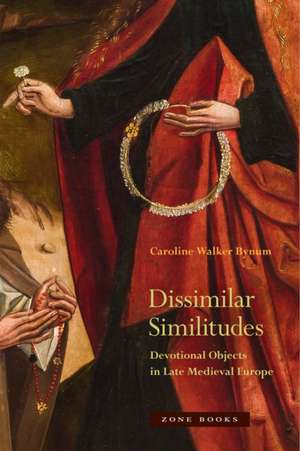
Dissimilar Similitudes
Autor Caroline Walker Bynumen Limba Engleză Hardback – 29 sep 2020
Înțelegerea modului în care creștinismul medieval a gestionat tensiunea dintre divinul imaterial și obiectul palpabil este esențială pentru orice cercetător al istoriei culturii. În Dissimilar Similitudes, descoperim o analiză riguroasă a paradoxului reprezentării: cum pot niște obiecte mundane — bucăți de pământ, păpuși sau simple sfori ce măsoară urmele pașilor lui Hristos — să medieze prezența sacrului fără a-l limita? Caroline Walker Bynum demonstrează că aceste obiecte nu sunt simple instrumente de cult, ci poartă în ele o „similitudine disimilară”. Aceasta înseamnă că detaliile lor fizice reflectă gloria divină tocmai prin recunoașterea faptului că cerul este dincolo de orice reprezentare pământească. Această lucrare extinde cadrul propus de Material Christianity de Christopher Ocker cu date noi provenite din studiul micro-istoric al obiectelor de devotament specifice secolelor XII-XVI. Spre deosebire de abordarea enciclopedică din The Middle Ages in 50 Objects, unde accentul cade pe semnificația culturală generală, Bynum propune o schimbare de paradigmă metodologică. Ea ne îndeamnă să nu comparăm obiectele doar pentru că „arată la fel”, ci să explorăm modul în care diferite culturi localizează „altul” religios în structuri vizuale disimilare. Putem afirma că acest volum reprezintă punctul culminant al preocupărilor autoarei pentru substanță și formă, teme explorate anterior în Christian Materiality. Stilul este unul academic, precis, structurat sub forma unor eseuri interdependente care oferă o perspectivă critică asupra fundamentelor Reformei și a modului în care materialitatea a modelat credința europeană.
Preț: 238.86 lei
Carte disponibilă
Livrare economică 27 iunie-11 iulie
Livrare express 13-19 iunie pentru 109.81 lei
Specificații
ISBN-10: 1942130376
Pagini: 344
Dimensiuni: 161 x 244 x 33 mm
Greutate: 0.65 kg
Editura: ZONE BOOKS
V-ar putea interesa
-
 -18%Preț: 1200.58 lei1464.12 lei
 -
 -15%Preț: 436.51 lei513.54 lei
 -
 Sculpting Simulacra in Medieval Germany, 1250-1380Assaf Pinkus-18%Preț: 1089.37 lei1328.49 lei
De ce să citești această carte
Recomandăm această carte istoricilor, teologilor și studenților interesați de antropologia religioasă. Cititorul câștigă o înțelegere profundă a modului în care obiectele medievale au pregătit terenul pentru marile schimbări confesionale europene. Este o lectură esențială pentru a deprinde o metodologie nouă de cercetare comparativă, care trece dincolo de aparențele vizuale pentru a analiza funcția teologică a materiei.
Despre autor
Caroline Walker Bynum este profesor de istorie medievală europeană la Institute for Advanced Study din Princeton și profesor emerit la Columbia University. Renumită pentru cercetările sale asupra istoriei corpului și a materialității în creștinismul occidental, ea a semnat lucrări fundamentale precum The Resurrection of the Body in Western Christianity, 200–1336 și Wonderful Blood. Opera sa se concentrează pe modul în care concepțiile despre materie, gen și identitate au modelat spiritualitatea medievală, fiind una dintre cele mai influente voci în studiile umaniste contemporane.
Descriere scurtă
Between the twelfth and the sixteenth centuries, European Christians used a plethora of objects in worship, not only prayer books, statues, and paintings but also pieces of natural materials, such as stones and earth, considered to carry holiness, dolls representing Jesus and Mary, and even bits of consecrated bread and wine thought to be miraculously preserved flesh and blood. Theologians and ordinary worshippers alike explained, utilized, justified, and warned against some of these objects, which could carry with them both anti-Semitic charges and the glorious promise of heaven. Their proliferation and the reaction against them form a crucial background to the European-wide movements we know today as "reformations" (both Protestant and Catholic). In a set of independent but interrelated essays, Caroline Bynum considers some examples of such holy things, among them beds for the baby Jesus, the headdresses of medieval nuns, and the footprints of Christ carried home from the Holy Land by pilgrims in patterns cut to their shape or their measurement in lengths of string. Building on and going beyond her well-received work on the history of materiality, Bynum makes two arguments, one substantive, the other methodological. First, she demonstrates that the objects themselves communicate a paradox of dissimilar similitude--that is, that in their very details they both image the glory of heaven and make clear that that heaven is beyond any representation in earthly things. Second, she uses the theme of likeness and unlikeness to interrogate current practices of comparative history. Suggesting that contemporary students of religion, art, and culture should avoid comparing things that merely "look alike," she proposes that humanists turn instead to comparing across cultures the disparate and perhaps visually dissimilar objects in which worshippers as well as theorists locate the "other" that gives religion enduring power.