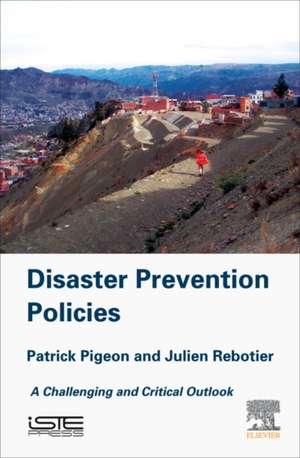
Disaster Prevention Policies: A Challenging and Critical Outlook
Autor Patrick Pigeon, Julien Rebotieren Limba Engleză Hardback – 12 oct 2016
- Offers a fresh perspective on the assessments currently available on disaster and DRR policies
- Provides insight based on examples of DRR policies taken from Latin American, Asian, and European cases
- Focuses on reducing the paradox that exists between the compulsory implementation of DRR policies and continuing limitations
Preț: 571.82 lei
Preț vechi: 628.37 lei
-9%
Puncte Express: 858
Carte tipărită la comandă
Livrare economică 10-24 noiembrie
Livrare prin curier în România Termenul estimat este afișat lângă disponibilitate.
Transport gratuit pentru acest produs Plată online sau ramburs, în funcție de opțiunile comenzii.
Retur gratuit în 14 zile Comandă securizată și suport în română.
Specificații
ISBN-13: 9781785481963
ISBN-10: 1785481967
Pagini: 240
Dimensiuni: 152 x 229 x 26 mm
Greutate: 0.57 kg
Editura: ELSEVIER SCIENCE
ISBN-10: 1785481967
Pagini: 240
Dimensiuni: 152 x 229 x 26 mm
Greutate: 0.57 kg
Editura: ELSEVIER SCIENCE
V-ar putea interesa
-
 -15%Preț: 662.86 lei779.83 lei
 -
 Florida SinkholesRobert BrinkmannPreț: 366.32 lei
 -
 Community-Based Landslide Risk ReductionMalcolm G. AndersonPreț: 340.40 lei
 -
 Hunting Nature's FuryRoger HillPreț: 101.17 lei
 -
 Extreme Natural Hazards, Disaster Risks and Societal ImplicationsAlik Ismail-Zadeh-14%Preț: 715.06 lei831.47 lei
 -
 A Wall of WhiteJennifer WoodliefPreț: 111.61 lei
 -
 Surviving the Terror IKECarole HamadeyPreț: 109.75 lei
 -
 My Earthquake Preparedness GuideJackie KloosterboerPreț: 135.45 lei
 -
 Advanced ICTs for Disaster Management and Threat DetectionEleana Asimakopoulou-18%Preț: 1034.14 lei1261.15 lei
 -
 PreppingEliza PlumPreț: 36.19 lei
 -
 Preț: 47.60 lei
 -
 -15%Preț: 543.82 lei639.79 lei
 -
 HOW to LIVE on WHEATJohn W HillPreț: 82.82 lei
 -
 GIS, Human Geography, and DisastersAndrew Curtis-19%Preț: 622.65 lei768.71 lei
 -
 Handbook of Disaster Risk Reduction for ResilienceSaeid Eslamian-18%Preț: 870.43 lei1061.49 lei
 -
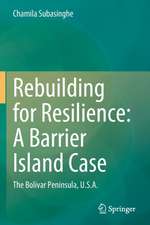 Rebuilding for Resilience: A Barrier Island CaseChamila Subasinghe-15%Preț: 611.74 lei719.70 lei
 -
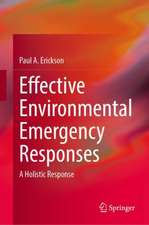 Effective Environmental Emergency ResponsesPaul A. Erickson-18%Preț: 894.97 lei1091.43 lei
 -
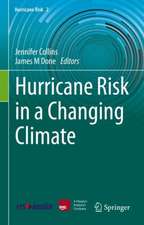 Hurricane Risk in a Changing ClimateJennifer M. CollinsPreț: 482.58 lei
 -
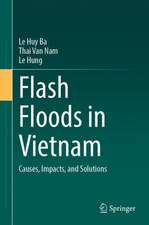 Flash Floods in VietnamLe Huy Ba-15%Preț: 619.14 lei728.39 lei
 -
 Monitoring and Managing Multi-hazardsJayanta Das-18%Preț: 1021.88 lei1246.19 lei
 -
 -15%Preț: 625.77 lei736.21 lei
 -
 -18%Preț: 950.28 lei1158.88 lei
 -
 Coseismic LandslidesIkuo Towhata-24%Preț: 1216.36 lei1600.48 lei
 -
 Tsunami Data Assimilation for Early WarningYuchen Wang-18%Preț: 967.66 lei1180.07 lei
Public țintă
National and international academic and management teams in the fields disaster and disaster risk reduction policies; Organizations involved in environmental protection.Cuprins
Part 1: Disaster Prevention Policies: Paradoxical and Ambiguous Assessments
1: The Rise in Knowledge and Policies Suggest an Increase in Disasters
2: The Contributions to Disaster Prevention are Difficult to Assess
Part 2: Understanding and Managing Disaster Risk: The Multiple Limits of Specialized Approaches
Introduction
3: The Limits of Understanding Disasters
4: The Limits of Disaster Prevention: Returns on Management Experiences
Part 3: Why and How Does the Prevention of Disasters Necessitate Thinking and Acting in an Imperfect World?
Introduction
5: The Principle of Cognitive Limits: Its Application to Disaster Prevention
6: Bridging the Gap between Disaster Prevention and Environmental Concerns
7: Reflections upon the Contribution of Social Geography to Disaster Prevention
8: How Can We Best Manage Disasters?
1: The Rise in Knowledge and Policies Suggest an Increase in Disasters
2: The Contributions to Disaster Prevention are Difficult to Assess
Part 2: Understanding and Managing Disaster Risk: The Multiple Limits of Specialized Approaches
Introduction
3: The Limits of Understanding Disasters
4: The Limits of Disaster Prevention: Returns on Management Experiences
Part 3: Why and How Does the Prevention of Disasters Necessitate Thinking and Acting in an Imperfect World?
Introduction
5: The Principle of Cognitive Limits: Its Application to Disaster Prevention
6: Bridging the Gap between Disaster Prevention and Environmental Concerns
7: Reflections upon the Contribution of Social Geography to Disaster Prevention
8: How Can We Best Manage Disasters?
Notă biografică
Patrick Pigeon lectures in Geography at the University of Savoie-Mont-Blanc in France. His research focuses on geomorphology and risks geography.