Cantitate/Preț
Produs

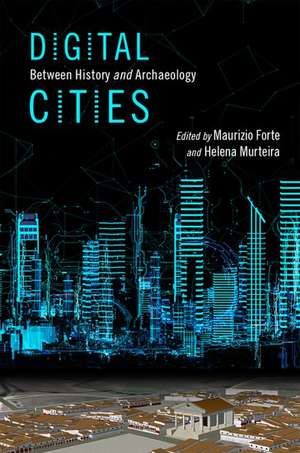
Digital Cities: Between History and Archaeology

Editat de Maurizio Forte, Helena Murteira
en Limba Engleză Paperback – 24 mar 2020

Observăm în volumul Digital Cities o schimbare fundamentală de paradigmă: orașul nu mai este privit doar ca un sit fizic, ci ca o entitate fluidă, reconstruită prin date digitale. Capitolul dedicat provocărilor pe care instrumentele digitale le impun studiului contextelor pre-urbane și urbane subliniază modul în care tehnologia nu doar conservă, ci reinventează dovezile istorice. Ne-a atras atenția în mod deosebit modul în care editorii Maurizio Forte și Helena Murteira reușesc să sintetizeze contribuții din domenii aparent divergente, precum geografia și informatica, pentru a procesa resturi arhitecturale la o scară imposibil de atins prin metode tradiționale.

Această lucrare reprezintă o alternativă la Digital Archaeology de Patrick Daly pentru cursurile de arheologie computațională, cu avantajul unei focalizări stricte pe fenomenul urban și pe relația dintre limbajul digital și narațiunea istorică. În timp ce alte titluri se concentrează pe tehnici generale de teren, Digital Cities explorează dimensiunea socială și multimodală a spațiului locuit.

În contextul operei lui Maurizio Forte, acest titlu rafinează conceptele explorate anterior în Cyber-Archaeology și Digital Methods and Remote Sensing in Archaeology. Dacă lucrările sale precedente puneau bazele tehnice ale teledetecției și analizei senzorilor, volumul de față extinde viziunea către o „arheologie cibernetică” aplicată complexității urbane, transformând datele brute în obiecte de studiu antropologic și istoric.

Citește tot Restrânge

Preț: 31293 lei

Puncte Express: 469

Carte tipărită la comandă

Livrare economică 03-14 iulie


Specificații

ISBN-13: 9780197501122
ISBN-10: 0197501125
Pagini: 368
Dimensiuni: 234 x 155 x 20 mm
Greutate: 0.56 kg
Editura: Oxford University Press
Colecția OUP USA
Locul publicării:New York, United States

De ce să citești această carte

Apreciem această lucrare pentru capacitatea de a transforma arheologia într-o disciplină vizuală și interactivă. Este o resursă esențială pentru cercetătorii care doresc să înțeleagă cum scanarea laser și realitatea augmentată redefinesc interpretarea siturilor istorice. Cititorul câștigă o perspectivă clară asupra modului în care orașele digitale pot umple golul dintre datele fragmentare din teren și reconstrucția coerentă a trecutului social.


Despre autor

Maurizio Forte este un pionier în domeniul arheologiei digitale, fiind recunoscut pentru contribuțiile sale teoretice și practice în „Cyber-Archaeology”. Expertiza sa acoperă utilizarea tehnologiilor avansate de teledetecție și modelare 3D pentru înțelegerea civilizațiilor antice, temă centrală și în lucrarea sa A New Etruscan Archaeology. Alături de Helena Murteira, arhitect și istoric, acesta coordonează proiecte care îmbină rigoarea academică a Oxford University Press cu inovația tehnologică, facilitând dialogul dintre științele umaniste și informatică pentru conservarea patrimoniului mondial.


Descriere

The onset of digital archaeology and its subsequent remarkable development has had a crucial impact on the study of cultural heritage. Presently, researchers are able to manipulate and reinvent digital and historical data; the study of the city stands out in this context. Cities are microcosms, often reflecting the changing structure of societies over time. A vast array of digital tools (laser scanning, augmented reality, remote sensing, and beyond) can process, test, and display archaeological data, architectural remains, and built heritage on a scale previously unattainable. The digitization of historical research is manipulating and reinventing the ways in which we examine historical evidence. This intersection between history and computer science allows for an expansion and enhancement of historical, archaeological, and anthropological research. The resulting configurations lead to the creation of new data and new objects of study within these fields, which makes it crucial for those in these fields to understand the impact of generating digital information in this context. Digital Cities explores the study of the city in the digital realm by reexamining the data processing and knowledge sharing between historians, architects, geographers, anthropologist, and computer scientists. Digital Cities considers the city from pre-historic settlements to the present in different geographical contexts. Each section of the book offers a new level of engagement with various digital tools, spanning topics such as the challenges digital instruments pose to the study of pre-urban and urban contexts, the didactic scope of virtual heritage, and the consolidation of the relationship between digital language and historical narrative. The resulting research traverses the idea of Digital Cities through a historical, social, and multimodal context, and it fills the gap in scholarship between the study of the city and the concept and significance of the Digital City.

Notă biografică

Maurizio Forte is William and Sue Gross Professor of Classical Studies Art, Art History, and Visual Studies at Duke University. He is the founder and director of the DIG@Lab at Duke as well as the author or editor of three books, including Virtual Archaeology.Helena Murteira is an art historian with a PhD from the University of Edinburgh. She is a member of the Scientific Committee of the Centre for Art History and Artistic Research (CHAIA) at the University of Évora.