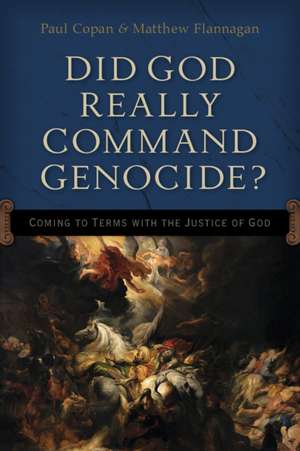
Did God Really Command Genocide?: Coming to Terms with the Justice of God
Autor Paul Copan, Matt Flannaganen Limba Engleză Paperback – 18 noi 2014
Observăm că una dintre cele mai mari dificultăți în studiul Vechiului Testament este justificarea violenței extreme, un subiect care pune adesea în dificultate atât teologii, cât și laicii. Did God Really Command Genocide? oferă o aplicabilitate practică imediată pentru cei care se confruntă cu aceste dileme etice, furnizând un cadru de analiză care depășește lectura superficială a textului sacru. Subliniem faptul că Paul Copan și Matt Flannagan nu se limitează la o simplă scuză teologică, ci investighează dacă limbajul utilizat în textele despre cucerirea Canaanului este unul literal sau reflectă convenții retorice specifice Orientului Apropiat antic.
Merită menționat că această lucrare reprezintă o evoluție a temelor explorate de Copan în Is God a Moral Monster?, unde autorul a răspuns criticilor Noului Ateism. În timp ce în The Gospel in the Marketplace of Ideas autorul se concentra pe dialogul multicultural, aici el rafinează argumentația filozofică pentru a reconcilia imaginea lui Dumnezeu din Vechiul Testament cu cea a lui Iisus din Noul Testament. Cartea este o alternativă solidă la Show Them No Mercy pentru cursurile de hermeneutică biblică sau apologetică, cu avantajul că aduce o perspectivă interdisciplinară ce îmbină filozofia analitică cu exegeza riguroasă.
Spre deosebire de Holy War in the Bible de Heath A. Thomas, care oferă o privire de ansamblu asupra motivului războiului în întreaga Scriptură, volumul de față se concentrează intens pe problema morală a genocidului, oferind instrumente de lucru pentru pastori și studenți. Structura argumentației este logică și transparentă, facilitând o înțelegere nuanțată a conceptului de dreptate divină.
Preț: 117.58 lei
Carte disponibilă
Livrare economică 29 mai-12 iunie
Specificații
ISBN-10: 0801016223
Pagini: 352
Dimensiuni: 154 x 228 x 25 mm
Greutate: 0.48 kg
Editura: Baker Publishing Group
V-ar putea interesa
-
 Because They HateBrigitte GabrielPreț: 118.24 lei
 -
 Preț: 124.51 lei
 -
 Why the Universe Is the Way It IsHugh RossPreț: 98.95 lei
 -
 Preț: 104.25 lei
 -
 Preț: 105.85 lei
 -
 Words of DelightLeland RykenPreț: 314.02 lei
 -
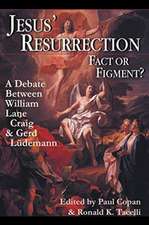 Jesus' ResurrectionPaul CopanPreț: 149.43 lei
 -
 An Introduction to Biblical EthicsRobertson McquilkinPreț: 397.35 lei
 -
 Truth Unchanged, UnchangingMartyn Lloyd-JonesPreț: 93.96 lei
 -
 Preț: 116.78 lei
 -
 Buddhismus GrundwissenNils HornPreț: 87.49 lei
 -
 THE BOOK OF I JOHNCarlos MoorePreț: 112.99 lei
 -
 Preț: 218.53 lei
 -
 Spiritual GardeningJonathan HolifieldPreț: 137.01 lei
 -
 Ten Ox-Herding ImagesWim van den DungenPreț: 186.60 lei
 -
 Abba AbbaStephen JohanPreț: 72.80 lei
 -
 Preț: 143.41 lei
 -
 Preț: 143.41 lei
 -
 OriginsPaul CopanPreț: 101.99 lei
 -
 Wisdom from the Greater Community, Vol IIMarshall Vian SummersPreț: 209.65 lei
 -
 Preț: 104.64 lei
De ce să citești această carte
Recomandăm această carte oricărui cititor care s-a simțit tulburat de pasajele violente din Biblie. Veți câștiga o perspectivă informată istoric și filozofic asupra modului în care trebuie interpretate campaniile militare din vechime. Este o resursă esențială pentru cei care doresc să apere integritatea morală a credinței creștine în fața acuzațiilor contemporane de intoleranță, oferind răspunsuri documentate la întrebări teologice dificile.
Despre autor
Paul Copan este un distins profesor și deținător al catedrei Pledger Family de Filozofie și Etică la Palm Beach Atlantic University din Florida. Expertiza sa în domeniul apologeticii și al filozofiei religiei este recunoscută internațional, fiind un autor prolific care explorează intersecția dintre credință și rațiune. În lucrări precum A Little Book for New Philosophers, Copan subliniază importanța studiului filozofic ca instrument pentru teologie, o abordare vizibilă și în analiza sa asupra violenței din Vechiul Testament, unde rigoarea logică este dublată de o cunoaștere profundă a contextului biblic.
Textul de pe ultima copertă
Reconciling a violent Old Testament God with a loving Jesus
Would a good, kind, and loving deity ever command the wholesale slaughter of nations? We often avoid reading difficult Old Testament passages that make us squeamish and quickly jump to the enemy-loving, forgiving Jesus of the New Testament. And yet, the question remains.
In the tradition of his popular Is God a Moral Monster?, Paul Copan teams up with Matthew Flannagan to tackle some of the most confusing and uncomfortable passages of Scripture. Together they help the Christian and nonbeliever alike understand the biblical, theological, philosophical, and ethical implications of Old Testament warfare passages.
"Copan and Flannagan address the arguments of the atheists who use divine violence in the Bible to undermine belief and confidence in God. Not only are they adept at biblical interpretation and philosophy as they effectively counter this challenge, but they also write in a deeply compelling way."--Tremper Longman III, Robert H. Gundry Professor of Biblical Studies, Westmont College
"Copan and Flannagan go beyond standard treatments of Old Testament warfare; they incorporate biblical, theological, philosophical, ethical, legal, and historical perspectives on a much-debated but often misunderstood topic."--William Lane Craig, research professor of philosophy, Talbot School of Theology
"This is a very lucid and helpful discussion of this troubling topic."--Gordon Wenham, professor of Old Testament, Trinity College, Bristol
"This brave, hard-nosed, and wide-ranging study constitutes a serious attempt at facing all the varied aspects of a question that troubles so many people. Well done!"--John Goldingay, David Allan Hubbard Professor of Old Testament, Fuller Theological Seminary
"The most thorough and comprehensive treatment of the problem of violence in the Old Testament that I have encountered."--Christopher J. H. Wright, international ministries director, Langham Partnership; author, Old Testament Ethics for the People of God and The God I Don't Understand
Paul Copan (PhD, Marquette University) is the Pledger Family Chair of Philosophy and Ethics at Palm Beach Atlantic University. He has authored and edited thirty scholarly and popular books, including Is God a Moral Monster?
Descriere
A common objection to belief in the God of the Bible is that a good, kind, and loving deity would never command the wholesale slaughter of nations. Even Christians have a hard time stomaching such a thought, and many avoid reading those difficult Old Testament passages that make us squeamish. Instead, we quickly jump to the enemy-loving, forgiving Jesus of the New Testament. And yet, the question doesn't go away. Did God really command genocide? Is the command to "utterly destroy" morally unjustifiable? Is it literal? Are the issues more complex and nuanced than we realize?
In the tradition of his popular "Is God a Moral Monster?," Paul Copan teams up with Matthew Flannagan to tackle some of the most confusing and uncomfortable passages of Scripture. Together they help the Christian and nonbeliever alike understand the biblical, theological, philosophical, and ethical implications of Old Testament warfare passages. Pastors, youth pastors, campus ministers, apologetics readers, and laypeople will find that this book both enlightens and equips them for serious discussion of troubling spiritual questions.