Cantitate/Preț
Produs

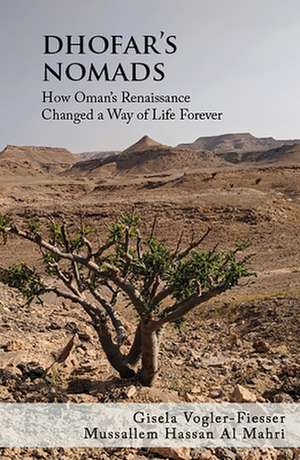
Dhofar's Nomads

Autor Gisela Vogler
en Limba Engleză Hardback – 8 aug 2023

Studiul societăților nomade din Peninsula Arabică a evoluat în ultimele decenii de la observația externă, adesea marcată de un exotism romantic, spre o analiză documentată a mecanismelor de adaptare culturală în fața modernizării accelerate. Dhofar's Nomads reprezintă o piesă esențială în acest nou val de cercetare, punând în lumină perioada cunoscută sub numele de „Renașterea Omaneză”. Suntem de părere că valoarea acestui volum rezidă în capacitatea autorilor, Gisela Vogler-Fiesser și Mussallem Hassan Al Mahri, de a reconcilia imaginea consacrată a Omanului din scrierile lui Wilfrid Thesiger cu realitatea trăită de populația indigenă. Găsim în această lucrare nu doar o cronică istorică, ci un efort de recuperare a tradiției orale, oferind voce unui băiat nomad a cărui viață oglindește transformările radicale ale întregii regiuni Dhofar. Această perspectivă subiectivă este dublată de o rigoare academică ce analizează cum infrastructura modernă și economia bazată pe resurse au reconfigurat identitatea pastorală. Cartea completează perspectiva oferită de Women and Community in Oman, adăugând o dimensiune specifică experienței masculine și a triburilor din sud, în timp ce lucrarea lui Christine Eickelman se concentrează pe viața domestică și comunitară din oazele nordice. De asemenea, spre deosebire de In the Time of Oil, care analizează impactul bogăției petroliere în orașe precum Bahla, volumul de față urmărește traiectoria mult mai fragilă a nomazilor care au fost nevoiți să navigheze între libertatea deșertului și exigențele statului modern. Structura narativă este una fluidă, transformând datele socio-economice într-o poveste despre reziliență și schimbare culturală ireversibilă.

Citește tot Restrânge

Preț: 23752 lei

Puncte Express: 356

Carte disponibilă

Livrare economică 05-19 noiembrie

Livrare prin curier în România Termenul estimat este afișat lângă disponibilitate.
Transport gratuit de la 40000 lei Plată online sau ramburs, în funcție de opțiunile comenzii.
Retur gratuit în 14 zile Comandă securizată și suport în română.

Specificații

ISBN-13: 9781908531735
ISBN-10: 1908531738
Pagini: 218
Dimensiuni: 150 x 220 x 26 mm
Greutate: 0.55 kg
Ediția:Hmf
Editura: Nomad Publishing

De ce să citești această carte

Recomandăm această carte cititorilor interesați de antropologie și istoria Orientului Mijlociu. Este o resursă prețioasă pentru a înțelege cum a fost resimțită modernizarea Omanului din interiorul comunităților nomade, nu doar din cifrele economice. Cititorul câștigă o perspectivă autentică asupra modului în care tradiția orală și identitatea tribală supraviețuiesc într-o lume în schimbare rapidă, fiind o lectură complementară ideală pentru cursurile de studii arabe sau istorie contemporană.


Descriere scurtă

An exploration of the way of life of the Nomads of Dhofar and the changes since Oman's Renaissance. Dhofar's Nomads bridges two images of Oman: the one passed to us through the renowned travelogues of Wilfrid Thesiger and his fe^ted fellow explorers of the Arabian Peninsula in the 20th century, and the less familair version of the same story as expressed by the Omani population who lived through this period. This other side of the coin is locked in an oral tradition that has not yet found sufficient expression in Western descriptions. This is the account of a nomad boy whose life story mirrors the rapid social and economical changes experienced by almost all of the pastoral people of Oman. Mussallem's personal account maps the tensions and challenges encountered by the nomadic population of Dhofar as it went through a process of rapid modernisation during the Omani Renaissance. Spell-binding and informative throughout, with surprises and twists for even the most experienced student of Oman's history, this charming story is essential reading for an understanding of Oman today. The accession of Sultan Qaboos bin Sa'id to the throne in 1970 was a watershed in the recent history of Oman. The rapid change in social and economic conditions that followed was a formidable challenge to traditional ways of life that had remained immutable through many generations. The Sultan's reforms directly affected many Omanis born in the 1950s and 1960s. Their often harsh experience of a childhood in the footsteps of their fathers gradually gave way to a relatively prosperous present. Mussallem Hassan Al Mahri is one such eyewitness to the Omani Renaissance. Growing up in a family of pastoral nomads in Dhofar, Mussallem was one of the first of his tribe to be educated in the newly-established schools. Up until that point indigenous knowledge had been passed down within the tribal unit from one generation to another. Mussallem's father, who like thousands of others had to migrate to neighbouring countries in pursuit of work in order to support his family, wisely recognised the advantages his children would gain from a modern education. After 1970 'nomadism' in the traditional sense was soon no longer viable. New opportunities were opening at this time to Mussallem, gradually transforming him from nomadic boy into a city dweller and eventually into an entrepreneur in tourism. ? The oral history recounted by Mussallem Hassan Al Mahri is captured and presented here through the clear prism of Gisela Vogler-Fiesser's meticulous research and analysis, providing a valuable record of a vanishing world.

Notă biografică

Gisela Vogler- Fiesser is a German art historian and physicist by academic background, and has been visiting Salalah, Oman, regularly since 2013. Her interest in anthropology and the study of heritage and tradition has resulted in publications ranging from a trilingual rendition of a well-known Gaelic poem Eilean Na h-Oige / Island of Youth in 1985 through to her most recent book, A Harris Way of Life (2002), following the work of Marion Campbell, the Harris Tweed weaver who did so much to preserve the Hebridean craft into the modern age.