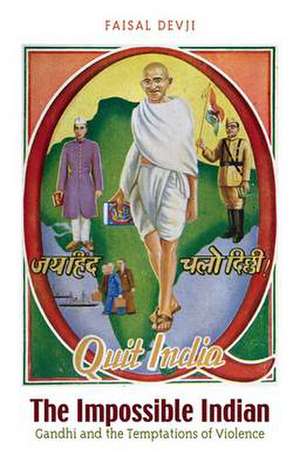
Devji, F: The Impossible Indian
Autor Faisal Devjien Limba Engleză Hardback – 31 mai 2012
Observăm că analiza propusă de Faisal Devji în Terrorist in Search of Humanity debutează prin deconstrucția studiilor de caz privind mișcările militante contemporane, precum al-Qaeda, privite nu prin prisma teologiei radicale, ci ca fenomene politice care caută o formă de „agenție” globală. Autorul propune o perspectivă provocatoare: actele de teroare sunt interpretate ca eforturi paradoxale de a obține legitimitate istorică, similare în motivația de fond cu intervențiile umanitare, ecologismul sau pacifismul. Remarcăm rigurozitatea cu care această ediție revizuită explorează modul în care militanții încearcă să devină actori pe scena mondială, transformând suferința în simboluri ale unei lupte universale pentru recunoaștere.
Din punct de vedere al curriculumului de științe politice și sociologie, textul oferă un cadru conceptual rar, unde teroarea nu este doar violență nihilistă, ci o încercare de a construi o societate globală în absența instituțiilor statale tradiționale. Stilul lui Faisal Devji este dens și teoretic, evitând clișeele securitare în favoarea unei analize profunde a filozofiei politice moderne. Lucrarea completează perspectiva oferită de Gandhi and Bin Laden de James L. Rowell, adăugând o dimensiune structurală despre cum mișcările globale — fie ele violente sau binevoitoare — urmăresc aceleași obiective de vizibilitate umanitară. În timp ce Landscapes of the Jihad se concentrează pe trăsăturile comune ale islamului militant cu mișcările de masă, acest volum aprofundează motivația ontologică a individului care alege calea violenței pentru a fi „umanizat” prin istorie. Este o lectură esențială pentru înțelegerea crizelor politice actuale, oferind o lentilă critică asupra modului în care conceptul de umanitate este revendicat în spațiul global.
Preț: 142.87 lei
Preț vechi: 209.51 lei
-32%
Carte tipărită la comandă
Livrare economică 13-24 noiembrie
Specificații
ISBN-10: 1849041156
Pagini: 176
Dimensiuni: 220 x 145 x 26 mm
Greutate: 0.44 kg
Editura: C Hurst & Co Publishers Ltd
De ce să citești această carte
Această ediție revizuită este esențială pentru studenții și cercetătorii în științe politice care doresc să înțeleagă rădăcinile intelectuale ale radicalismului modern. Cititorul câștigă o perspectivă unică asupra modului în care teroarea se intersectează cu discursul umanitar global. Faisal Devji oferă un argument provocator care forțează reevaluarea conceptelor de egalitate și agenție politică în secolul XXI, dincolo de analizele convenționale de securitate.
Descriere scurtă
Recenzii
'True to form, Faisal Devji has developed a novel interpretation of a well-studied historical issue, in this case M. K. Gandhi's commitment to non-violence. Here Gandhi emerges neither as a neo-Christian figure 'turning the other cheek', nor as a liberal concerned with human rights, but rather as a thinker who sees self-sacrifice and death as the embodiment of human duty.' - Sir Christopher Bayly, Vere Harmsworth Professor of Imperial and Naval History, University of Cambridge 'This subtle yet polemical study presents M.K. Gandhi as the genius behind an anti-majoritarian type of mass politics which emerged in the twentieth-century but still awaits proper elaboration. Devji's highly original portrait is not always salubrious but it makes Gandhi look all the more radical, and sometimes almost like a postcolonial heir to Friedrich Nietzsche.' - Leela Gandhi, University of Chicago 'Devji is a creative and distinctive thinker who has now developed a style of exposition that is all his own. He manages to tease gently out of Gandhi's writings intellectual-political positions that both surprise and enlighten the reader.' - Professor Dipesh Chakrabarty, Lawrence A. Kimpton Distinguished Service Professor, Department of History, University of Chicago 'A fresh and insightful view of the Mahatma and his ideas. Devji effectively situates Gandhi, not as an outmoded, sentimental idealist, adrift in an anachronistic rural utopia, but as a remarkably original thinker who speaks to many of the most pressing issues of modernity and present-day politics - not least the abiding problem of violence and the place of minorities within contemporary societies. ... This book does not claim to be a complete history of Gandhi. What it offers instead is a remarkably fresh and original look at the meaning and significance of Gandhi's thought and practice, bringing together a well-nuanced sense of Gandhi's historical and cultural context with a sharp present-day concern for his abiding relevance and profound challenge to the world today. It is an important book; some will find it provocative. Either way, it will stimulate fresh debate among scholars, students and a wider public readership.' - David Arnold, Professor of Asian and Global History, Warwick University