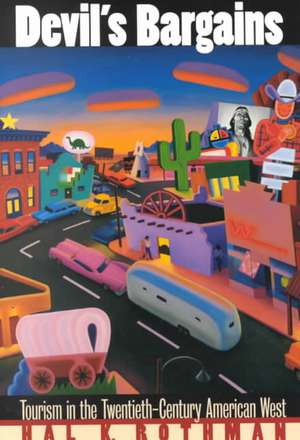
Devil's Bargains
Autor Hal Rothmanen Limba Engleză Paperback – oct 2000
Considerăm că Devil's Bargains reprezintă o resursă fundamentală pentru disciplinele de istorie regională, geografie umană și sociologia turismului, oferind o perspectivă critică asupra modului în care industria timpului liber a remodelat identitatea Vestului American în secolul XX. Hal Rothman propune o analiză riguroasă a ceea ce el numește „târgul diavolului”: compromisul prin care comunități aflate în pragul extincției au acceptat prosperitatea economică adusă de turism, pierzându-și în schimb controlul politic și autenticitatea culturală. Această ediție reprint, publicată de University Press of Kansas în seria Development of Western Resources (Paperback), documentează tranziția de la turismul de elită al căilor ferate la explozia zborurilor comerciale și a hotelurilor de lux post-belice. Spre deosebire de abordările nostalgice, Hal Rothman demonstrează cum destinații precum Aspen, Santa Fe sau Las Vegas au devenit subiectul unui nou tip de colonialism, unde capitalul extern dictează dezvoltarea locală. Cartea este o alternativă necesară la In Search of the Golden West de Earl Pomeroy pentru cursurile de istoria Americii, cu avantajul că aduce analiza în prezent, concentrându-se pe tensiunile dintre rezidenți și corporații. De asemenea, lucrarea completează viziunea din Colony and Empire de William G. Robbins, mutând accentul de la exploatarea resurselor naturale la exploatarea imaginii și a experienței de vacanță. Ritmul narativ este susținut de studii de caz concrete, oferind o bază teoretică solidă pentru înțelegerea mecanismelor de gentrificare și a costurilor intangibile ale progresului economic.
Preț: 306.36 lei
Carte tipărită la comandă
Livrare economică 14-28 noiembrie
Specificații
ISBN-10: 0700610561
Pagini: 450
Dimensiuni: 154 x 230 x 23 mm
Greutate: 0.59 kg
Ediția:Reprint
Editura: University Press of Kansas
V-ar putea interesa
-
 Hidden FiguresMargot Lee ShetterlyPreț: 90.88 lei
 -
 Texas RisingStephen L MoorePreț: 109.77 lei
 -
 KissingerNiall Ferguson-17%Preț: 116.13 lei139.34 lei
 -
 Ronald ReaganMichael Schaller-19%Preț: 79.66 lei98.75 lei
 -
 Preț: 403.58 lei
 -
 Preț: 106.98 lei
 -
 The N WordJabari AsimPreț: 107.13 lei
 -
 The Imperial PresidencyArthur Meier Jr. SchlesingerPreț: 186.59 lei
 -
 America's National Monuments (PB)Hal RothmanPreț: 229.80 lei
 -
 Slavery and the Supreme Court, 1825-1861Earl M. MaltzPreț: 480.33 lei
 -
 The Age of DeficitsIwan MorganPreț: 480.62 lei
 -
 John Brown to Bob DoleVirgil W DeanPreț: 243.81 lei
 -
 Preț: 459.48 lei
 -
 Preț: 412.96 lei
 -
 War's Desolating Scourge: The Union's Occupation of North AlabamaJoseph W. DanielsonPreț: 415.73 lei
 -
 Preț: 363.89 lei
 -
 Preț: 429.61 lei
 -
 Playing the Odds: Las Vegas and the Modern WestHal RothmanPreț: 194.45 lei
 -
 Preț: 282.72 lei
 -
 Death Valley National Park: A HistoryHal RothmanPreț: 134.15 lei
 -
 Preț: 258.24 lei
 -
 Preț: 446.59 lei
 -
 Black Hawk and the Warrior's PathRoger L NicholsPreț: 267.51 lei
 -
 All Our RelationsWinona LadukePreț: 111.87 lei
 -
 The Secret Societies of All Ages & Countries (Two Volumes in One)Charles William HeckethornPreț: 238.51 lei
 -
 Rio de JaneiroLuiz Eduardo SoaresPreț: 114.10 lei
De ce să citești această carte
Recomandăm această carte studenților la istorie și sociologie, precum și celor interesați de planificare urbană. Cititorul câștigă o înțelegere profundă a modului în care turismul poate salva, dar și domina o comunitate. Este o lectură esențială pentru a înțelege forțele economice care transformă peisajele culturale în produse de consum, oferind un avertisment documentat despre dependența de capitalul corporatist în dezvoltarea regională.