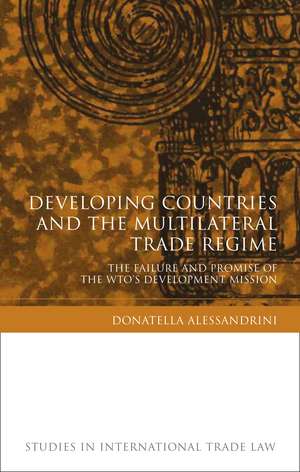
Developing Countries and the Multilateral Trade Regime: The Failure and Promise of the WTO's Development Mission: Studies in International Trade and Investment Law
Autor Donatella Alessandrinien Limba Engleză Hardback – 10 aug 2010
"Intense controversy surrounds the issue of the relationship between trade and development. This book is novel in examining the emergence of the international trade regime in the context of the history of the concept of development that may be traced back at least to the time of the League of Nations. This is a very welcome and original contribution to the field that should generate new discussions and understanding about the law of international trade."
Antony Anghie, University of Utah
Din seria Studies in International Trade and Investment Law
- 21%
 Preț: 331.16 lei
 - 33%
 Preț: 582.88 lei
 - 22%
 Preț: 333.41 lei
 - 21%
 Preț: 332.06 lei
 - 22%
 Preț: 339.64 lei
 - 15%
 Preț: 257.93 lei
 - 21%
 Preț: 330.69 lei
 - 25%
 Preț: 253.90 lei
 - 33%
 Preț: 1049.67 lei
 - 23%
 Preț: 328.44 lei
 - 35%
 Preț: 460.54 lei
 - 29%
 Preț: 840.06 lei
 - 28%
 Preț: 355.58 lei
 - 34%
 Preț: 801.45 lei
 - 32%
 Preț: 635.36 lei
 - 21%
 Preț: 329.94 lei
 - 34%
 Preț: 489.54 lei
 - 17%
 Preț: 200.45 lei
 - 24%
 Preț: 293.00 lei
 - 32%
 Preț: 586.59 lei
 - 32%
 Preț: 664.06 lei
 - 25%
 Preț: 291.31 lei
 - 21%
 Preț: 344.48 lei
 - 36%
 Preț: 997.68 lei
 - 34%
 Preț: 983.08 lei
 - 32%
 Preț: 865.00 lei
 - 32%
 Preț: 583.95 lei
 - 21%
 Preț: 331.60 lei
 - 32%
 Preț: 630.82 lei
 - 32%
 Preț: 665.33 lei
 - 34%
 Preț: 1046.26 lei
 - 32%
 Preț: 658.23 lei
 - nou
 Preț: 652.03 lei
Preț: 584.12 lei
Preț vechi: 864.56 lei
-32%
Puncte Express: 876
Carte tipărită la comandă
Livrare economică 07-21 decembrie
Livrare prin curier în România Termenul estimat este afișat lângă disponibilitate.
Transport gratuit pentru acest produs Plată online sau ramburs, în funcție de opțiunile comenzii.
Retur gratuit în 14 zile Comandă securizată și suport în română.
Specificații
ISBN-13: 9781849460309
ISBN-10: 1849460302
Pagini: 280
Dimensiuni: 164 x 238 x 22 mm
Greutate: 0.57 kg
Editura: Bloomsbury Publishing
Colecția Hart Publishing
Seria Studies in International Trade and Investment Law
Locul publicării:London, United Kingdom
ISBN-10: 1849460302
Pagini: 280
Dimensiuni: 164 x 238 x 22 mm
Greutate: 0.57 kg
Editura: Bloomsbury Publishing
Colecția Hart Publishing
Seria Studies in International Trade and Investment Law
Locul publicării:London, United Kingdom
Cuprins
INTRODUCTION - THE FAILURE AND THE PROMISE OF THE MULTILATERAL TRADING REGIME
I The 'Science of Development' and 'Capitalist Imperialism'
II Development as a 'Discourse' and Development as a 'Trap'
III Outline of the Chapters
1 THE BRETTON WOODS CONFERENCE: TRADE AND THE 'CIVILISING MISSION' IN THE POSTWAR INTERNATIONAL TRADING REGIME
I The Mandate System and 'the Science of Development'
A Freedom of Transit and Equitable Treatment: The First Regulatory Attempt at a World Trade Order
B . . . and the Extension of Market Imperatives
II The Bretton Woods Conference and the Postwar International Economic Order
A Grounding 'Non-Discrimination' and 'Equal Treatment' in Trade Relations
B The Draft Charter and the London Conference: Of Rules and Exceptions
C The Free-Trade Contradictions of the Charter: Structuring the International Division of Labour
D The Investment Provisions: Protecting Capital Abroad
E The Outcome of the ITO Negotiations
III The General Agreement on Tariffs and Trade (GATT)
Conclusions
2 THE 'SCIENCE OF DEVELOPMENT' AND THE GATT NORM
I The Emergence of the Development Enterprise
A The 'Professionalisation' and 'Institutionalisation' of Development
B Development Economics' 'Growth' and 'Progress'
C Development Economics' Normative Assumptions
D Reformist Dependency Theories and the Development Matrix: The Structuralist School of Thought
II The GATT Development Mission
A The GATT First Review Session: Positing Developing Countries' Failure
B The Haberler Report and Committee III: Tracing Discrimination
C The GATT Part IV: Discharging Responsibility
D Enabling Non-Reciprocity
E A'Differential and More Favourable Treatment'?
F Assessing the GATT's Flexibility
Conclusions
3 THE NEO-LIBERAL TRANSFORMATION OF DEVELOPMENT THINKING AND THE RENEWED MISSION OF THE MULTILATERAL TRADING REGIME
I The Neo-Liberal Conversion of Development Thinking
A Rational Choice-Based Approach
B . . . and Failing Institutional Arrangements
C Outward-Oriented Policies and Government Controls
II The Neo-Liberal Transformation of the International Trading Regime
A The World Recession and the Restructuring of the International Economy
B Towards a Trade-Service-Investment Driven Market Integration: Enter the 'New Issues'
C Setting the Scene for the New Mandate
D Punta del Este: A Divisive Strategy
III Developing Countries' Re-Alignment: Revisiting the Story
A From the Oil and Debt Crisis to the Structural Adjustment Policies
B The Challenge of Increasing Discrimination
C The Pressure Tactics Unilateralism/Bilateralism/Multilateralism
Conclusions
4 THE URUGUAY ROUND AND THE CONSTRUCTION OF THE NEW CONSENSUS
I Old and New Issues on the Negotiating Table, Corporate Activism and the Single Undertaking Approach
II The Rise of US Protectionism and the Consolidation of the Pressure Tactic
III The Montreal/Geneva Mid-Term Review: Weakening the Opposition to a Broader Mandate
IV Brussels Ministerial Meeting: Reintroducing Reciprocity
V From Brussels to Marrakesh: Clinton's Aggressive Approach to Market Openness
VI The Final Agreement: Towards an Equal Playing Field?
A The New Issues
B . . . and the Same Old Ones
Conclusions
5 THE WORLD TRADE ORGANISATION: THE POWER OF TRANSNATIONAL CAPITAL AND THE REDUCTION OF DOMESTIC REGULATORY SPACE
I Assessing the 'Trade Off': the Market Access Issues
A Agriculture
B Textiles and Clothing
C Safeguards and Anti-Dumping
D Implementation Costs
II Liberalisation Rhetoric and Practice: Opening Markets, Protecting Capital
A Investors' Rights in Historical Context
B The Changing Investment Climate of the 1980s and 1990s: Securing Protection Abroad
C The 'Modest' TRIMs Agreement
D The 'Flexible' General Agreement on Trade in Services (GATS)
E The 'Balanced' TRIPs Agreement
Conclusions
6 OF FAILURES AND PROMISES: THE MANY LIVES OF THE DOHA DEVELOPMENT ROUND
I The Road to Doha: Reflecting on the UR Imbalances
II The Doha Agenda
A Principles and Objectives: Multilateralism, Free Trade, Development
B Work Programme: Towards a Softening of the WTO Neo-Liberal Agenda?
III From Cancun to Geneva: Emerging Oppositions
IV Reaction to Cancun: Silencing Dissent
V GATS'Flexibility': Rhetoric and Negotiating Practice
A The Safeguard Mechanism and Liberalisation of GATS Mode 4: An Uncertain Future
B Targeting Non-Discriminatory Domestic Regulation: GATS Article VI
C Enter Specific Commitments: The Request-Offer Approach
VI TRIPs: Transfer of Technology v. Investors' Rights
A Substantive TRIPs-plus Standards in Investment Agreements
B Investor-to-State Dispute Resolution
C Expropriation
VII From Hong Kong to Geneva: The Last Breath of the Doha Round?
A The July Framework
B The Hong Kong Ministerial Declaration
C Suspension, Crisis, Resumption
Conclusions
CONCLUSIONS: THE DEVELOPMENT MISSION OF THE WTO
I The First Perspective: The Reform of the International Trading System
A The GATS and the Financial Crisis
B Addressing the Challenge, Strengthening the Mindset
II The Second Perspective: The WTO and its Civilising Mission
III The WTO's Market-Access Mindset
IV The 'Political Rationality' of Development
Bibliography
Index
I The 'Science of Development' and 'Capitalist Imperialism'
II Development as a 'Discourse' and Development as a 'Trap'
III Outline of the Chapters
1 THE BRETTON WOODS CONFERENCE: TRADE AND THE 'CIVILISING MISSION' IN THE POSTWAR INTERNATIONAL TRADING REGIME
I The Mandate System and 'the Science of Development'
A Freedom of Transit and Equitable Treatment: The First Regulatory Attempt at a World Trade Order
B . . . and the Extension of Market Imperatives
II The Bretton Woods Conference and the Postwar International Economic Order
A Grounding 'Non-Discrimination' and 'Equal Treatment' in Trade Relations
B The Draft Charter and the London Conference: Of Rules and Exceptions
C The Free-Trade Contradictions of the Charter: Structuring the International Division of Labour
D The Investment Provisions: Protecting Capital Abroad
E The Outcome of the ITO Negotiations
III The General Agreement on Tariffs and Trade (GATT)
Conclusions
2 THE 'SCIENCE OF DEVELOPMENT' AND THE GATT NORM
I The Emergence of the Development Enterprise
A The 'Professionalisation' and 'Institutionalisation' of Development
B Development Economics' 'Growth' and 'Progress'
C Development Economics' Normative Assumptions
D Reformist Dependency Theories and the Development Matrix: The Structuralist School of Thought
II The GATT Development Mission
A The GATT First Review Session: Positing Developing Countries' Failure
B The Haberler Report and Committee III: Tracing Discrimination
C The GATT Part IV: Discharging Responsibility
D Enabling Non-Reciprocity
E A'Differential and More Favourable Treatment'?
F Assessing the GATT's Flexibility
Conclusions
3 THE NEO-LIBERAL TRANSFORMATION OF DEVELOPMENT THINKING AND THE RENEWED MISSION OF THE MULTILATERAL TRADING REGIME
I The Neo-Liberal Conversion of Development Thinking
A Rational Choice-Based Approach
B . . . and Failing Institutional Arrangements
C Outward-Oriented Policies and Government Controls
II The Neo-Liberal Transformation of the International Trading Regime
A The World Recession and the Restructuring of the International Economy
B Towards a Trade-Service-Investment Driven Market Integration: Enter the 'New Issues'
C Setting the Scene for the New Mandate
D Punta del Este: A Divisive Strategy
III Developing Countries' Re-Alignment: Revisiting the Story
A From the Oil and Debt Crisis to the Structural Adjustment Policies
B The Challenge of Increasing Discrimination
C The Pressure Tactics Unilateralism/Bilateralism/Multilateralism
Conclusions
4 THE URUGUAY ROUND AND THE CONSTRUCTION OF THE NEW CONSENSUS
I Old and New Issues on the Negotiating Table, Corporate Activism and the Single Undertaking Approach
II The Rise of US Protectionism and the Consolidation of the Pressure Tactic
III The Montreal/Geneva Mid-Term Review: Weakening the Opposition to a Broader Mandate
IV Brussels Ministerial Meeting: Reintroducing Reciprocity
V From Brussels to Marrakesh: Clinton's Aggressive Approach to Market Openness
VI The Final Agreement: Towards an Equal Playing Field?
A The New Issues
B . . . and the Same Old Ones
Conclusions
5 THE WORLD TRADE ORGANISATION: THE POWER OF TRANSNATIONAL CAPITAL AND THE REDUCTION OF DOMESTIC REGULATORY SPACE
I Assessing the 'Trade Off': the Market Access Issues
A Agriculture
B Textiles and Clothing
C Safeguards and Anti-Dumping
D Implementation Costs
II Liberalisation Rhetoric and Practice: Opening Markets, Protecting Capital
A Investors' Rights in Historical Context
B The Changing Investment Climate of the 1980s and 1990s: Securing Protection Abroad
C The 'Modest' TRIMs Agreement
D The 'Flexible' General Agreement on Trade in Services (GATS)
E The 'Balanced' TRIPs Agreement
Conclusions
6 OF FAILURES AND PROMISES: THE MANY LIVES OF THE DOHA DEVELOPMENT ROUND
I The Road to Doha: Reflecting on the UR Imbalances
II The Doha Agenda
A Principles and Objectives: Multilateralism, Free Trade, Development
B Work Programme: Towards a Softening of the WTO Neo-Liberal Agenda?
III From Cancun to Geneva: Emerging Oppositions
IV Reaction to Cancun: Silencing Dissent
V GATS'Flexibility': Rhetoric and Negotiating Practice
A The Safeguard Mechanism and Liberalisation of GATS Mode 4: An Uncertain Future
B Targeting Non-Discriminatory Domestic Regulation: GATS Article VI
C Enter Specific Commitments: The Request-Offer Approach
VI TRIPs: Transfer of Technology v. Investors' Rights
A Substantive TRIPs-plus Standards in Investment Agreements
B Investor-to-State Dispute Resolution
C Expropriation
VII From Hong Kong to Geneva: The Last Breath of the Doha Round?
A The July Framework
B The Hong Kong Ministerial Declaration
C Suspension, Crisis, Resumption
Conclusions
CONCLUSIONS: THE DEVELOPMENT MISSION OF THE WTO
I The First Perspective: The Reform of the International Trading System
A The GATS and the Financial Crisis
B Addressing the Challenge, Strengthening the Mindset
II The Second Perspective: The WTO and its Civilising Mission
III The WTO's Market-Access Mindset
IV The 'Political Rationality' of Development
Bibliography
Index
Recenzii
Developing Countries and the Multilateral Trade Regime provides valuable insights to the debate surrounding free trade, multilateralism and the challenges facing developing countries under the trading current structure.
...a worthy addition to the critical literature on free trade and multilateralism. Scholars, researchers and policy makers, particularly those in developing countries, would find some important insights and lessons to be learnt from the issues highlighted in the book.
..a text that offers a coherent and thoughtful narrative about the ongoing challenge of developing countries within the WTO...
... a commendable contribution to the literature on development and the WTO.
What Alessandrini has done in this book is a commendable job of developing, explaining, and defending a historical narrative of multilateral trading system that tends to devalue and (at least partially) disenfranchise developing countries. It is well researched and well thought, and it usefully places its subject in historical perspective. The book also offers a useful point of departure for further scholarship along various lines.
...a worthy addition to the critical literature on free trade and multilateralism. Scholars, researchers and policy makers, particularly those in developing countries, would find some important insights and lessons to be learnt from the issues highlighted in the book.
..a text that offers a coherent and thoughtful narrative about the ongoing challenge of developing countries within the WTO...
... a commendable contribution to the literature on development and the WTO.
What Alessandrini has done in this book is a commendable job of developing, explaining, and defending a historical narrative of multilateral trading system that tends to devalue and (at least partially) disenfranchise developing countries. It is well researched and well thought, and it usefully places its subject in historical perspective. The book also offers a useful point of departure for further scholarship along various lines.