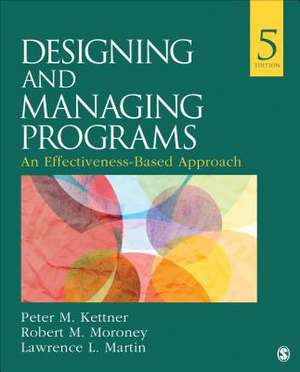
Designing and Managing Programs: An Effectiveness-Based Approach: SAGE Sourcebooks for the Human Services
Autor Peter M. Kettner, Robert M. Moroney, Lawrence L. Martinen Limba Engleză Electronic book text – 13 apr 2016
Considerăm că utilitatea practică a volumului Designing and Managing Programs rezidă în capacitatea sa de a transforma teorii complexe de planificare în instrumente de lucru aplicabile imediat la nivelul agențiilor locale. Ajunsă la cea de-a șasea ediție, această lucrare fundamentală se distinge prin rigoarea cu care abordează „era responsabilității”, oferind studenților și administratorilor din serviciile sociale un cadru metodologic pentru a demonstra, prin date concrete, impactul intervențiilor lor. Suntem de părere că progresia logică a conținutului — de la analiza fundamentelor teoretice în prima parte, până la identificarea condițiilor sociale și evaluarea nevoilor în capitolele ulterioare — facilitează o înțelegere profundă a ciclului de viață al unui program.
Spre deosebire de abordările pur administrative, autorii integrează conceptul de „planificare bazată pe eficacitate”, punând accent pe rezultatele finale (outcomes) și nu doar pe volumul de activitate. Comparabil cu Managing for Service Effectiveness in Social Welfare Organizations de Rino J. Patti în ceea ce privește rigoarea academică, textul de față este însă actualizat pentru a răspunde cerințelor contemporane de transparență și utilizare a Modelului Logic. În contextul operei lui Peter M. Kettner, această ediție rafinează temele explorate în Measuring the Performance of Human Service Programs, oferind o perspectivă mai integrată asupra modului în care măsurarea performanței trebuie să informeze etapa de proiectare, nu doar pe cea de evaluare finală. Textul rămâne un reper pentru curriculumul universitar datorită modului în care echilibrează rigoarea științifică cu necesitățile pragmatice ale asistenței sociale moderne.
Din seria SAGE Sourcebooks for the Human Services
- 9%
 Preț: 1100.96 lei
 - 23%
 Preț: 1031.50 lei
 - 5%
 Preț: 562.20 lei
 - 8%
 Preț: 516.96 lei
 - 8%
 Preț: 599.98 lei
 - 15%
 Preț: 401.65 lei
 - 8%
 Preț: 516.96 lei
 -
 Preț: 269.02 lei
 - 8%
 Preț: 599.98 lei
 -
 Preț: 382.20 lei
 - 8%
 Preț: 516.96 lei
 - 8%
 Preț: 516.96 lei
 - 15%
 Preț: 401.65 lei
 - 15%
 Preț: 401.65 lei
 - 8%
 Preț: 516.96 lei
 - 8%
 Preț: 516.96 lei
 - 8%
 Preț: 516.96 lei
 - 8%
 Preț: 516.96 lei
 - 15%
 Preț: 401.65 lei
Preț: 401.65 lei
Preț vechi: 472.53 lei
-15%
Indisponibil temporar
Specificații
ISBN-10: 1483388298
Pagini: 288
Dimensiuni: 187 x 232 mm
Ediția:Fifth Edition
Editura: SAGE Publications
Colecția Sage Publications, Inc
Seria SAGE Sourcebooks for the Human Services
Locul publicării:Thousand Oaks, United States
De ce să citești această carte
Recomandăm această carte oricărui viitor administrator sau specialist în asistență socială care dorește să învețe cum să construiască programe cu impact real. Cititorul câștigă o metodologie clară pentru a justifica finanțările și a îmbunătăți serviciile comunitare. Este o resursă esențială pentru a trece de la o gestiune intuitivă la una bazată pe dovezi și eficacitate, într-un format accesibil și structurat didactic.
Despre autor
Peter M. Kettner este Profesor Emerit la Școala de Asistență Socială a Universității de Stat din Arizona. Cu o carieră de peste 30 de ani, acesta este o autoritate recunoscută în administrarea serviciilor umane, fiind autorul a șase cărți și a peste 50 de articole de specialitate. Experiența sa nu este doar academică; Kettner a activat ca consultant pentru cinci agenții statale și zeci de organizații nonprofit, specializându-se în externalizarea serviciilor și implementarea sistemelor de planificare bazate pe eficacitate. Această dublă expertiză, teoretică și practică, se reflectă în abordarea pragmatică a tuturor lucrărilor sale.
Descriere scurtă
Recenzii
“This book provides adetailedandcumulativeset of instructions and guidelines that every human service manager should know.”
“[This book’s]practicalandstraightforwardapproach guides students through the fundamentals of program planning and evaluation from an effectiveness-based perspective. The strengths of thiswell-organizedtext are its pragmatic approach and applied focus. The real-life examples and practical information make this text a veryvaluableresource for both students and practitioners.”
Cuprins
Chapter 1: Contemporary Issues in Human Service Program Planning and Administration
The Era of Accountability
The Logic Model
Community Focus
The Issue of Effectiveness
Assessing an Existing Program
What Is Effectiveness-Based Program Planning?
Using Effectiveness Principles to Understand Existing Programs
Implementation Considerations
Part II: Problem Analysis/Needs Assessment
Chapter 2: The Contribution of Theory to Program Planning
The Use of Theory in Program Planning
Theory in Practice
Planning Theory
Types of Planning
Theory in Program Planning
Chapter 3: Understanding Social Problems
Addressing Social Problems
Stating Problems as Solutions
The Need for a New Approach
Identifying a Social Condition
Defining Problems
Frameworks for Production Analysis
Chapter 4: Needs Assessment: Theoretical Considerations
The Concept of Need
Theoretical understandings of Need
Needs Assessment and the Planning Process
Factors Influencing the Definition of Need
Different Perspectives on Need
Factors Influencing the Definition of Need
Different Perspectives on Need
Need Categories and the Planning Process
Determining Who Is in Need
Two Major Problems: Reliability and Availability of Data
Chapter 5: Needs Assessment: Approaches to Measurement
Methodologies Used in Measuring Need
Extrapolating from Existing Studies: Normative Need
Using Resource Inventories: Normative Need
Using Service Statistics: Expressed Need
Conducting a Social Survey: Perceived Need
Holding a Public Forum: Perceived Need
Focus Groups
Selecting the Best Method
Approaches Useful for Locating Concentrations of High-Risk Groups
Part III: Planning, Designing, and Tracking the Intervention
Chapter 6: Selecting the Appropriate Intervention Strategy
The Program Hypothesis
Types of Program Hypotheses
The Process of Developing a Program Hypothesis
Program Hypotheses and the Idea of Consequences
From Program Hypothesis to Service
Benefits of the Program Hypothesis
Chapter 7: Setting Goals and Objectives
From Program Hypothesis to Goals and Objectives
The Function of a Mission Statement
Goals and Objectives: A Framework for Action
Agency Example: Safe Haven
The Formulation of Goals
The Formulation of Objectives
Requirements for All Objectives
Outcome Objectives
Process Objectives and Activities
Integrating Outcome Objectives, Process Objectives, and Activities
Chapter 8: Designing Effective Programs
The Significance of Program Design
Program Design and Diversity
Defining the Elements of a Program
The Relationship between Objectives and System Components
Specifying the Program Hypothesis
Chapter 9: Designing Effectiveness-Based Information Systems
Documentation Practices in Human Services
Designing a Data Collection System for a Program
Part IV: Calculating the Value and Cost of the Intervention
Chapter 10: Performance Measurement, Monitoring, and Program Evaluation
The Link between Performance Measurement, Monitoring, and Evaluation and Management Information Systems
Feedback and Self-Evaluating Systems
Performance Measurment
Monitoring
Program Evaluations
Program Data Requirements
Performance Measurement, Monitoring, Program Evaluation, and Program Data
The Utility of Performance Measurement, Monitoring, and Program Evaluation
Chapter 11: Impact Program Evaluation and Hypothesis Testing
Differentiating Impact Program Evaluation from Performance Measurement
Impact Program Evaluation
Impact Program Evaluation and Hypothesis Testing
Research Design for Impact Program Evaluation
Nonequivalent Comparison Group Design
Chapter 12: Budgeting for Financial Control, Management, and Planning
The Differences between Budgeting and Accounting
The Principal Purposes and Budgeting
Budgeting and the Systems Framework
Major Models of the Budgetary Process
Major Budgeting Systems
Dealing with Revenue Increases and Decreases
Budgeting in Human Service Agencies and Programs Today
Chapter 13: Developing Line-Item, Functional, and Program Budgeting Systems
Developing Line-Item Budgeting Systems
The Link between Line-Item, Functional, and Program Budgeting Systems
Fucntional Budgeting Systems
Program Budgeting Systems
A Comprehensive Budgeting System