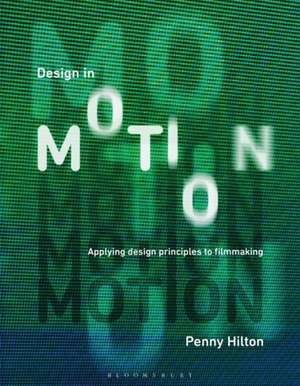
Design in Motion: Applying Design Principles to Filmmaking
Autor Penny Hiltonen Limba Engleză Paperback – 23 ian 2020
Whether you work in info-graphics, documentary or design, this book is structured to follow the production process and, together with its multimedia companion website, will be a by-your-side companion to guide you through your next project.
Preț: 294.09 lei
Preț vechi: 369.39 lei
-20%
Puncte Express: 441
Carte disponibilă
Livrare economică 06-20 noiembrie
Livrare express 23-29 octombrie pentru 145.77 lei
Livrare prin curier în România Termenul estimat este afișat lângă disponibilitate.
Transport gratuit de la 400.00 lei Plată online sau ramburs, în funcție de opțiunile comenzii.
Retur gratuit în 14 zile Comandă securizată și suport în română.
Specificații
ISBN-13: 9781350025516
ISBN-10: 1350025518
Pagini: 280
Ilustrații: 288 colour illus
Dimensiuni: 210 x 268 x 20 mm
Greutate: 1.1 kg
Editura: Bloomsbury Publishing
Colecția Bloomsbury Academic
Locul publicării:London, United Kingdom
ISBN-10: 1350025518
Pagini: 280
Ilustrații: 288 colour illus
Dimensiuni: 210 x 268 x 20 mm
Greutate: 1.1 kg
Editura: Bloomsbury Publishing
Colecția Bloomsbury Academic
Locul publicării:London, United Kingdom
V-ar putea interesa
-
 Sound Design and Science FictionWilliam WhittingtonPreț: 234.08 lei
 -
 The Emerging Film ComposerRichard BellisPreț: 130.10 lei
 -
 The Films of Peter GreenawayDouglas KeeseyPreț: 303.14 lei
 -
 Herschell Gordon Lewis, Godfather of GoreRandy PalmerPreț: 238.39 lei
 -
 Preț: 301.35 lei
 -
 Preț: 309.31 lei
 -
 Preț: 305.02 lei
 -
 RushesJosh BeckerPreț: 121.91 lei
 -
 Find the Director and Other Hitchcock GamesThomas M. LeitchPreț: 266.50 lei
 -
 -22%Preț: 195.27 lei250.68 lei
 -
 Preț: 160.75 lei
 -
 Preț: 72.32 lei
 -
 Preț: 70.92 lei
 -
 Preț: 88.72 lei
 -
 Preț: 71.10 lei
 -
 Framelines Film TipsPeter John RossPreț: 131.25 lei
 -
 -21%Preț: 242.12 lei304.65 lei
 -
 Directing Screen PerformancesRobert Klenner-22%Preț: 223.49 lei288.05 lei
 -
 Mass Producing European Cinema: Studiocanal and Its WorksDr Christopher Meir-33%Preț: 709.71 lei1055.43 lei
 -
 -33%Preț: 613.23 lei912.05 lei
 -
 -25%Preț: 189.58 lei252.33 lei
 -
 Preț: 212.51 lei
 -
 -23%Preț: 238.98 lei310.16 lei
 -
 Jean-Luc GodardJeremy Mark RobinsonPreț: 312.05 lei
Cuprins
Acknowledgements
Preface
Introduction
Part One : Setting It All Up
Chapter 1: Foundations
Chapter Overview
Brainstorming
Primary versus Secondary research
Storyboarding
Development
Feedback and Feed Forward
Documentation
Resources
Chapter 2: Audience
Chapter Overview
Personas and Empathy Maps
Context
Format
Treatment
Tone of Voice
Resources
Chapter 3: Structure
Chapter Overview
Story
Narrative
Key message
Documentary
Voice over versus captions
Resources
Chapter 4: Sound
Chapter Overview
Creating the right tone and atmosphere
Sound as a tool for Focus
Shape
Working with Musicians
What's free and what's Not
Resources
Part Two: Creating The Elements
Chapter 5: Composition
Chapter Overview
Framing
Motion versus stillness
Screen space
Focus
Resources
Chapter 6: Camera
Chapter Overview
Camera movement
Why use different lenses
Camera techniques
Using a variety of Shot
Resources
Chapter 7: Form
Chapter Overview
Circle Square Triangle
Using Form as exploration
Visual Summaries
Outcomes
Resources
Chapter 8: Colour
Chapter Overview
A quick overview of the history of colour on screen
Significance of colour
Combinations
Creating a colour palette
Colour correction and grading
Resources
Part Three: Putting it all Together
Chapter 9: Text and Info
Chapter Overview
Character
Legibility versus readability
Ways of creating text
Movement
Titles
Data Visualisation
Resources
Chapter 10: Editing
Chapter Overview
How editing developed from shorts to features
Invisible and visible editing
Transitions (and Tips)
Effects
Rhythm and Pace
Resources
Index
Preface
Introduction
Part One : Setting It All Up
Chapter 1: Foundations
Chapter Overview
Brainstorming
Primary versus Secondary research
Storyboarding
Development
Feedback and Feed Forward
Documentation
Resources
Chapter 2: Audience
Chapter Overview
Personas and Empathy Maps
Context
Format
Treatment
Tone of Voice
Resources
Chapter 3: Structure
Chapter Overview
Story
Narrative
Key message
Documentary
Voice over versus captions
Resources
Chapter 4: Sound
Chapter Overview
Creating the right tone and atmosphere
Sound as a tool for Focus
Shape
Working with Musicians
What's free and what's Not
Resources
Part Two: Creating The Elements
Chapter 5: Composition
Chapter Overview
Framing
Motion versus stillness
Screen space
Focus
Resources
Chapter 6: Camera
Chapter Overview
Camera movement
Why use different lenses
Camera techniques
Using a variety of Shot
Resources
Chapter 7: Form
Chapter Overview
Circle Square Triangle
Using Form as exploration
Visual Summaries
Outcomes
Resources
Chapter 8: Colour
Chapter Overview
A quick overview of the history of colour on screen
Significance of colour
Combinations
Creating a colour palette
Colour correction and grading
Resources
Part Three: Putting it all Together
Chapter 9: Text and Info
Chapter Overview
Character
Legibility versus readability
Ways of creating text
Movement
Titles
Data Visualisation
Resources
Chapter 10: Editing
Chapter Overview
How editing developed from shorts to features
Invisible and visible editing
Transitions (and Tips)
Effects
Rhythm and Pace
Resources
Index
Recenzii
Design in Motion is an essential handbook in conceiving, planning and realising moving image production, providing a comprehensive guide for professional or aspiring creatives wishing to communicate with time based media. Identifying key strategies, techniques, tools and resources Penny Hilton unravels complex processes into accessible steps for each stage of production with concise and insightful advice and support for your motion design and filmic ambitions from initial ideas to completed production.