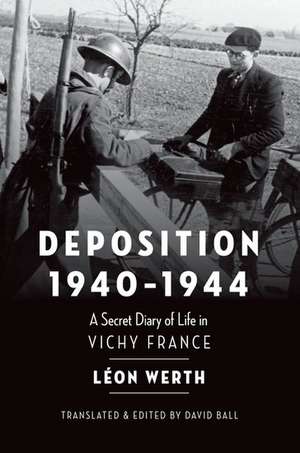
Deposition 1940-1944
Autor Léon Werthen Limba Engleză Paperback – 13 oct 2021
Autorul Léon Werth, o figură intelectuală neclasificabilă — romancier, critic de artă și jurnalist politic — fundamentează această lucrare pe o experiență directă și dureroasă a marginalizării. Fiind evreu în perioada ocupației naziste, Werth s-a refugiat în satul Saint-Amour din Munții Jura, transformând izolarea într-un exercițiu de observație sociologică și istorică de o precizie rară. Considerăm că Deposition 1940-1944 nu este doar un jurnal de război, ci un document de analiză a transformărilor umane sub presiunea ideologică.
Subliniem capacitatea autorului de a surprinde evoluția atitudinilor contradictorii ale populației rurale față de regimul de la Vichy. Structura narativă urmărește cronologia conflictului, de la viața cotidiană în ferme și piețe, până la momentele de maximă tensiune ale rezistenței rurale și, în final, eliberarea Parisului în august 1944. Reținem ironia tăioasă cu care Werth deconstruiește propaganda oficială, confruntând discursul public cu realitatea arestărilor și a deportărilor. Stilul său, deși ancorat în realitatea brută, păstrează fluiditatea unui romancier, oferind viață unor personaje reale — de la jandarmi la proprietari de cafenele.
Această ediție de la Oxford University Press completează perspectiva oferită de France Under the German Occupation, 1940-1944 de Donna Evleth. În timp ce lucrarea lui Evleth oferă o privire de ansamblu bibliografică și critică asupra perioadei, volumul lui Werth aduce acea dimensiune umană și subiectivă necesară pentru a înțelege „atmosfera” epocii. De asemenea, se distinge de Diary of the Dark Years, 1940-1944 de Jean Guehenno prin focalizarea pe mediul rural și pe tranziția de la pasivitatea provincială la efervescența insurecției urbane, oferind un tablou complet al societății franceze fragmentate.
Preț: 176.22 lei
Preț vechi: 235.95 lei
-25%
Carte disponibilă
Livrare economică 15-26 mai
Specificații
ISBN-10: 0197602967
Pagini: 368
Ilustrații: 12 b/w photos
Dimensiuni: 236 x 160 x 25 mm
Greutate: 0.57 kg
Editura: Oxford University Press
Colecția OUP USA
Locul publicării:New York, United States
De ce să citești această carte
Recomandăm această carte cititorilor pasionați de istoria modernă care caută mai mult decât date statistice. Veți câștiga o înțelegere profundă a modului în care propaganda alterează percepția realității și veți descoperi cum s-a trăit, zi de zi, incertitudinea ocupației. Este o lectură esențială pentru a înțelege complexitatea morală a Franței din perioada 1940-1944, scrisă cu onestitatea unui martor care a refuzat să tacă.
Despre autor
Léon Werth (1878–1955) a fost un scriitor, critic și jurnalist francez de origine evreiască, cunoscut pentru spiritul său independent și critic. Autor a unsprezece romane și a numeroase eseuri, Werth a fost un observator fin al scenei politice și culturale interbelice. Prieten apropiat al lui Antoine de Saint-Exupéry — care i-a dedicat celebra lucrare „Micul Prinț” — Werth a trăit experiența primului război mondial în tranșee, fapt ce i-a alimentat pacifismul și scepticismul față de autorități. Jurnalul său de ocupație rămâne o piesă centrală a literaturii testimoniale franceze.
Descriere
Recenzii
There is much to be admired in Werth's Deposition. While the immediate context and description of a rural village at war is valuable in and of itself, Werth's musings on politics, the press, and human nature add a dimension that makes this more than a chronicle of shortages and daily life in a small town. Werth is both an observer and a participant in the history unfurling before him. He captures the ambiguity, ambivalence, and endless waiting associated with the war as it was happening. With the advantage of hindsight, scholars have written about the topics that Werth experienced and recorded in real time with the extraordinary talent of an ethnographer....David Ball's highly readable translation of this remarkable record is a welcome addition for scholars of the Vichy period and suitable for classroom use.