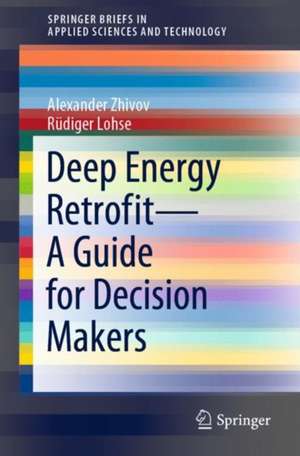
Deep Energy Retrofit-A Guide for Decision Makers: SpringerBriefs in Applied Sciences and Technology
Autor Alexander Zhivov, Rüdiger Lohseen Limba Engleză Paperback – 11 feb 2021
Suntem de părere că tranziția către eficiența energetică în sectorul public necesită mai mult decât simple renovări de suprafață; necesită un model de intervenție profundă. Deep Energy Retrofit-A Guide for Decision Makers propune cadrul DER (Deep Energy Retrofit), o strategie riguroasă care vizează reduceri de consum de peste 50%, depășind pragul modest de 10-20% specific renovărilor convenționale. Considerăm că această abordare este esențială în contextul în care datele IEA indică un potențial de economisire neexploatat de 80% în clădirile publice.
Structura volumului este una pragmatică, orientată spre rezultate măsurabile. Alexander Zhivov și Rüdiger Lohse ghidează cititorul printr-o progresie logică: de la definirea clară a conceptului de DER față de renovările „shallow”, până la procesele de asigurare a calității și identificarea modelelor de business viabile. Complementar volumului Cost-Effective Energy-Efficient Methods for Refurbishment and Retrofitting of Buildings, care explorează în detaliu materialele și tehnologiile de construcție, acest ghid acoperă zona critică a procesului decizional, a finanțării și a strategiilor de implementare pentru manageri.
Această lucrare reprezintă o evoluție firească în opera autorilor. Dacă în Air Curtains for Buildings and Industrial Processes Alexander Zhivov se concentra pe optimizarea ventilației și proceselor industriale, în volumul de față el extinde expertiza către o viziune holistică de management energetic. Credem că importanța acestei cărți rezidă în capacitatea de a transforma obiectivele climatice abstracte în pași de execuție cost-eficienți, demonstrând cum clădirile vechi pot atinge standarde de Casă Pasivă prin pachete tehnologice corect selectate.
Din seria SpringerBriefs in Applied Sciences and Technology
-
 Preț: 301.01 lei
 -
 Preț: 364.77 lei
 - 20%
 Preț: 314.65 lei
 -
 Preț: 364.51 lei
 -
 Preț: 459.50 lei
 -
 Preț: 367.72 lei
 -
 Preț: 416.14 lei
 -
 Preț: 368.30 lei
 - 20%
 Preț: 309.31 lei
 -
 Preț: 336.26 lei
 -
 Preț: 375.56 lei
 -
 Preț: 334.91 lei
 -
 Preț: 251.64 lei
 -
 Preț: 334.09 lei
 -
 Preț: 254.42 lei
 -
 Preț: 365.06 lei
 -
 Preț: 368.30 lei
 -
 Preț: 365.31 lei
 -
 Preț: 461.36 lei
 - 20%
 Preț: 216.46 lei
 -
 Preț: 363.26 lei
 -
 Preț: 369.60 lei
 -
 Preț: 365.75 lei
 -
 Preț: 396.35 lei
 -
 Preț: 332.21 lei
 -
 Preț: 365.59 lei
 -
 Preț: 251.49 lei
 -
 Preț: 330.32 lei
 - 5%
 Preț: 348.31 lei
 -
 Preț: 398.15 lei
 -
 Preț: 334.09 lei
 -
 Preț: 366.64 lei
 - 20%
 Preț: 286.05 lei
 -
 Preț: 333.81 lei
 -
 Preț: 364.24 lei
 -
 Preț: 367.72 lei
 -
 Preț: 369.31 lei
 -
 Preț: 333.28 lei
 -
 Preț: 367.19 lei
 -
 Preț: 400.85 lei
 -
 Preț: 365.59 lei
 -
 Preț: 364.24 lei
 -
 Preț: 365.06 lei
 - 20%
 Preț: 314.65 lei
 - 20%
 Preț: 313.75 lei
 -
 Preț: 397.86 lei
 -
 Preț: 365.97 lei
 - 15%
 Preț: 476.02 lei
 -
 Preț: 362.68 lei
Preț: 365.97 lei
Carte disponibilă
Livrare economică 21 mai-04 iunie
Specificații
ISBN-10: 3030662101
Pagini: 108
Ilustrații: XXI, 84 p. 22 illus., 19 illus. in color.
Dimensiuni: 155 x 235 x 6 mm
Greutate: 0.2 kg
Ediția:1st edition 2021
Editura: Springer
Colecția SpringerBriefs in Applied Sciences and Technology
Seria SpringerBriefs in Applied Sciences and Technology
Locul publicării:Cham, Switzerland
De ce să citești această carte
Recomandăm această carte factorilor de decizie din administrația publică și managerilor de facilități care doresc să depășească renovările estetice în favoarea performanței energetice reale. Cititorul câștigă acces la un set de instrumente pentru finanțarea și livrarea proiectelor de tip Net Zero Energy. Este un ghid esențial pentru a înțelege cum investițiile în eficiență pot genera beneficii economice de miliarde de euro până în 2030.
Despre autor
Alexander Zhivov este un expert recunoscut în eficiență energetică și ventilație industrială, cu o experiență de câteva decenii în cercetare și optimizarea proceselor în facilități comerciale și de producție. Alături de Rüdiger Lohse, specialist în strategii de renovare pentru sectorul public, acesta a contribuit la dezvoltarea unor ghiduri fundamentale pentru comunități reziliente. Expertiza lor combinată, reflectată în numeroase publicații sub egida Springer, se concentrează pe aplicarea practică a cunoștințelor tehnice pentru atingerea obiectivelor de emisii net zero în infrastructura publică globală.
Descriere scurtă
Cuprins
Notă biografică
Rüdiger Lohse leads the department of Energy Services and Financing at the Climate Protection Energy Agency of Baden- Württemberg and the Competence Centre for Energy Services in Baden- Württemberg.