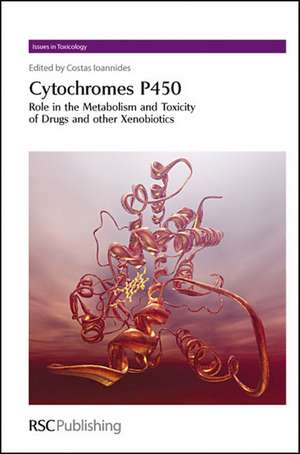
Cytochromes P450
Editat de Costas Ioannidesen Limba Engleză Hardback – 27 iun 2008
Ne-a atras atenția modul în care acest volum coordonat de Costas Ioannides reușește să sintetizeze progresele recente dintr-un domeniu în care literatura de specialitate se perimează rapid. Cytochromes P450 debutează cu o perspectivă evoluționistă asupra structurii și funcției acestor enzime, un punct de plecare esențial pentru a înțelege diversitatea acestei superfamilii descoperite în 1958. Structura cărții este riguros segmentată pentru a servi atât cercetării fundamentale, cât și celei aplicate. Partea B constituie nucleul tehnic al lucrării, dedicând capitole individuale pentru zece subfamilii și două familii de citocromi (de la CYP1A până la CYP4), oferind date critice pentru evaluarea siguranței substanțelor chimice. Considerăm că relevanța pentru curriculumul de biochimie și farmacologie este susținută de integrarea noilor metodologii de biologie moleculară care au permis clasificarea precisă a acestor enzime. Spre deosebire de Fifty Years of Cytochrome P450 Research, care adoptă o perspectivă istorică și retrospectivă, volumul de față se concentrează pe mecanismele de reglare prin stimuli mediați de receptori și pe impactul fitochimicelor asupra activității enzimatice. Această abordare este o extensie firească a preocupărilor editorului, vizibile și în lucrarea sa anterioară, Enzyme Systems That Metabolise Drugs and Other Xenobiotics, unde analiza metabolismului xenobioticelor era deja o temă centrală. Textul este calibrat pentru eficiență: autorii au integrat un volum generos de date tabulare și ilustrații, permițând extragerea informațiilor fără parcurgerea integrală a textului. Finalul cărții face tranziția necesară către aplicația clinică, explorând potențialul citocromilor P450 în terapiile oncologice, un subiect de actualitate care diferențiază această ediție de manualele clasice de biochimie.
Preț: 1177.34 lei
Preț vechi: 1369.01 lei
-14%
Carte disponibilă
Livrare economică 05-19 noiembrie
Specificații
ISBN-10: 0854042741
Pagini: 544
Dimensiuni: 164 x 248 x 35 mm
Greutate: 0.98 kg
Editura: RSC Publishing
V-ar putea interesa
-
 Drug Delivery StrategiesDennis Douroumis-5%Preț: 1300.27 lei1368.70 lei
 -
 Enzyme Systems That Metabolise Drugs and Other XenobioticsCostas Ioannides-5%Preț: 3211.57 lei3380.60 lei
 -
 Nutrition Chemical ToxicityIoannides-9%Preț: 1968.19 lei2162.85 lei
 -
 Experimental ToxicologyDiana Anderson-5%Preț: 289.85 lei305.11 lei
 -
 Fundamental ToxicologyJohn H DuffusPreț: 396.83 lei
 -
 DrugsAngelo Albini-5%Preț: 697.12 lei733.81 lei
 -
 Principles of ToxicologyKaren E. Stine-5%Preț: 803.18 lei845.45 lei
 -
 -27%Preț: 1250.75 lei1703.36 lei
 -
 -23%Preț: 608.29 lei793.96 lei
 -
 Botulinum Toxins & BotulismCharlotte Reynolds-23%Preț: 1041.81 lei1361.38 lei
 -
 -29%Preț: 50.46 lei71.57 lei
 -
 Detection of Drug MisuseKim Wolff-5%Preț: 788.20 lei829.68 lei
 -
 Oxidative Stress and Redox Signalling in Parkinson's DiseaseRodrigo Franco-5%Preț: 1596.29 lei1680.31 lei
 -
 Human Stem Cell ToxicologyJames L Sherley-5%Preț: 1446.66 lei1522.80 lei
 -
 Englisch in der ApothekeDagmar CarraPreț: 269.27 lei
De ce să citești această carte
Recomandăm această lucrare cercetătorilor din industria farmaceutică și studenților de la facultățile de profil care au nevoie de o resursă actualizată despre metabolismul medicamentelor. Cititorul câștigă o înțelegere aprofundată a modului în care familiile CYP influențează toxicitatea chimică și eficiența terapeutică. Este o resursă indispensabilă pentru evaluarea siguranței substanțelor și pentru înțelegerea interacțiunilor farmacocinetice complexe la nivel molecular.
Despre autor
Costas Ioannides este un cercetător respectat și editor de prestigiu în domeniul toxicologiei și biochimiei. Activitatea sa academică și editorială s-a concentrat constant pe sistemele enzimatice responsabile de metabolizarea xenobioticelor. Prin coordonarea volumului de față, acesta continuă direcțiile de cercetare explorate în lucrări de referință precum Enzyme Systems That Metabolise Drugs and Other Xenobiotics, consolidându-și reputația de expert în studiul citocromilor P450. Expertiza sa asigură o selecție riguroasă a contribuțiilor științifice, punând accent pe acuratețea datelor experimentale și pe relevanța lor pentru siguranța chimică și farmacologia clinică.