Cantitate/Preț
Produs

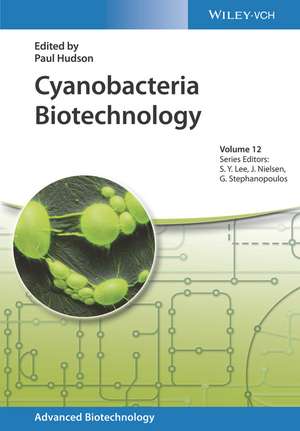
Cyanobacteria Biotechnology: Advanced Biotechnology

Autor P Hudson
en Limba Engleză Hardback – 4 mai 2021

Lucrarea Cyanobacteria Biotechnology aduce o abordare integrată, unind rigoarea cercetării biologice fundamentale cu viziunea pragmatică a ingineriei biotehnologice. Față de literatura existentă, care adesea separă studiul fiziologic de aplicațiile comerciale, acest volum oferă un ghid sistematic asupra metabolismului cianobacteriilor privit ca un „modul” ce poate fi optimizat pentru producția industrială. Descoperim aici nu doar mecanismele teoretice, ci și cerințele logistice și experiențele concrete din mediul de afaceri, elemente esențiale pentru tranziția de la laborator la scară industrială.

Comparabil cu Synthetic Biology of Cyanobacteria de Weiwen Zhang în ceea ce privește rigoarea științifică, volumul editat de P Hudson se distinge prin accentul pus pe experiența industrială reală și pe crearea unui cadru de lucru (framework) pentru proiectarea proceselor. În timp ce alte titluri din domeniu se concentrează strict pe instrumente de bioinformatică sau protocoale de laborator, Cyanobacteria Biotechnology analizează critic limitările și oportunitățile economice ale utilizării acestor microorganisme fotosintetice.

Structura narativă a textului urmează o logică clară: de la principiile de bază ale metabolismului, la tehnicile actuale de inginerie metabolică și, în final, la studiile de caz din industrie. Ritmul este cel al unui manual avansat, dens în date tehnice, dar orientat spre soluții aplicabile. Considerăm că includerea acestui titlu în seria Advanced Biotechnology subliniază relevanța sa pentru curriculumul academic modern și pentru cercetătorii care urmăresc dezvoltarea de tehnologii verzi sustenabile.
Citește tot Restrânge

Din seria Advanced Biotechnology

Preț: 99829 lei

Preț vechi: 129648 lei
-23%

Puncte Express: 1497

Carte disponibilă

Livrare economică 09-15 mai
Livrare express 29 aprilie-05 mai pentru 9504 lei


Specificații

ISBN-13: 9783527347148
ISBN-10: 3527347143
Pagini: 560
Dimensiuni: 176 x 248 x 32 mm
Greutate: 1.22 kg
Ediția:1
Editura: Wiley Vch
Seria Advanced Biotechnology

Locul publicării:Weinheim, Germany

De ce să citești această carte

Recomandăm această carte biotehnologilor și microbiologilor care doresc să depășească faza de cercetare fundamentală. Cititorul câștigă o înțelegere profundă a modului în care metabolismul cianobacteriilor poate fi manipulat pentru aplicații industriale. Este o resursă esențială deoarece oferă atât fundamentul teoretic, cât și experiența practică necesară pentru a proiecta procese biotehnologice eficiente și scalabile.


Descriere scurtă

Guides the reader through the interesting and useful aspects of cyanobacteria metabolism but will keep true to a biotechnology vision.

Cuprins

1 Inorganic carbon assimilation in cyanobacteria: mechanisms, regulation and engineering 1.1 Introduction - the need for a carbon-concentrating mechanism 1.2 The carbon-concentrating mechanism (CCM) among cyanobacteria 1.3 Regulation of Ci assimilation 1.4 Engineering the cyanobacterial CCM 1.5 Photorespiration 1.6 Concluding remarks 2 Electron transport inc yanobacteria and its potential in bioproduction 2.1. Introduction 2.2. Electron transport in a bioenergetic membrane 2.3. Respiratory electron transport 2.4 The role of electron sinks in photoprotection 2.5 Regulating electron flux into different pathways 2.6 Spatial organisation of electron transport complexes 2.7 Manipulating electron transport for synthetic biology applications 2.8 Future challenges in cyanobacterial electron transport 3 Optimizing the spectral fit between cyanobacteria and solar radiation in the light of sustainability applications 3.1 Introduction 3.2 The molecular basis and efficiency of Oxygenic Photosynthesis 3.3 Fit between the spectrum of solar radiation and the action spectrum of photosynthesis 3.4 Expansion of the PAR region of Oxygenic Photosynthesis 3.5 Modulation and optimization of the transparency of photobioreactors 3.6 Full control of the light regime: LEDs inside the PBR 3.7 Conclusions and prospects 4 What we can learn from measuring metabolic fluxes in cyanobacteria 4.1 Central carbon metabolism in cyanobacteria: an overview and renewed pathway knowledge 4.2 Methodologies for predicting and quantifying metabolic fluxes in cyanobacteria 4.3 Cyanobacteria fluxome in response to altered nutrient modes and environmental conditions 4.4 Metabolic fluxes redirected in cyanobacteria for biomanufacturing purposes 4.5 Synopsis and future directions 5 Synthetic biology in cyanobacteria and applications for biotechnology 5.1 Getting genes into cyanobacteria 5.2 Basic synthetic control of gene expression in cyanobacteria 5.3 Exotic signals for controlling expression 5.4 Advanced regulation: the near future 5.5 Conclusions 6 Sink Engineering in Photosynthetic Microbes 6.1 Introduction 6.2 Source and Sink 6.3 Regulation of Sink Energy in Plants 6.4 Engineered pathways as sinks in Photosynthetic Microbes 6.5 What are key source/sink regulatory hubs in photosynthetic microbes? 6.6 Concluding Remarks 7 Design principles for engineering metabolic pathways in cyanobacteria 7.1 Introduction 7.2 Cofactor optimization 7.3 Incorporation of thermodynamic driving force into metabolic pathway design 7.4 Development of synthetic pathways for carbon conserving photorespiration and enhanced carbon fixation 7.5 Summary and future perspective on cyanobacterial metabolic engineering 8 Engineering cyanobacteria for efficient photosynthetic production: ethanol case study 8.1 Introduction 8.2 Pathway for ethanol synthesis in cyanobacteria 8.3 Selection of optimal cyanobacteria ?chassis,? strain for ethanol production 8.4 Metabolic engineering strategies toward more efficient and stable ethanol production 8.5 Exploring the response in cyanobacteria to ethanol 8.6 Metabolic engineering strategies to facilitate robust cultivation against biocontaminants 8.7 Conclusions and Perspectives 9 Engineering cyanobacteria as host organisms for production of terpenes and terpenoids 9.1 Terpenoids and industrial applications 9.2 Terpenoid biosynthesis in cyanobacteria 9.3 Natural occurrence and physiological roles of terpenes and terpenoids in cyanobacteria 9.4 Engineering cyanobacteria for terpenoid production 9.5 Summary and outlook 10 Cyanobacterial biopolymers 10.1 Polyhydroxybutryate 10.2. Cyanophycin granules in cyanobacteria 11 Biosynthesis of fatty acid derivatives by cyanobacteria: from basics to biofuel production 11.1 Introduction 11.2 Overview of fatty acid metabolism 11.3 Basic technologies for production of free fatty acids 11.4 Advanced technologies for enhancement of free fatty acid production 11.5 Hydrocarbon production in cyanobacteria 11.6 Advanced technologies for enhancement of hydrocarbon production 11.7 Basic technologies for production of fatty alcohols 11.8 Advanced technologies for enhancement of fatty alcohol production 11.9 Basic technologies for production of fatty acid alkyl esters 11.10 Perspectives 12 Product export in cyanobacteria 12.1 Introduction 12.2 Secretion mediated by membrane-embedded systems 12.3. Membrane vesicle-mediated secretion 12.4 Concluding remarks 13 Harnessing Solar-Powered Oxic N2-fixing Cyanobacteria for the BioNitrogen Economy 13.1 Introduction 13.2 Physiology and Implications of Oxic Nitrogen Fixation 13.3 Major Biotechnology Applications for Diazotrophic Cyanobacteria 13.4 Conclusions 14 Traits of fast-growing cyanobacteria 14.1 Introduction 14.2 Why is growth rate significant? 14.3 An overview of factors affecting growth rates of cyanobacteria 14.4 An overview of the fast-growing model cyanobacteria 14.5 Relationship between light usage and growth rate in model strains 14.6 Molecular determinants of fast growth of S. elongatus UTEX 2973 14.7 Carbon fluxes in fast-growing strains determined using metabolic flux analysis (MFA) 14.8 Engineering cyanobacteria for fast growth 14.9 Conclusion 15 Cyanobacterial biofilms in natural and synthetic environments 15.1 Motivation 15.2 Introduction to biofilms: biology and applications 15.3 Cyanobacteria in natural biofilms and microbial mats 15.4 Introduction to (Photo-)biotechnology 15.5 Benefits of microscale systems for (photo-)biofilm cultivation 15.6 Oxygen accumulation and its impacts 15.7 Resource management in biofilms 15.8 Applications of photosynthetic biofilms 15.9 Outlook 16 Growth of Photosynthetic Microorganisms in Different Photobioreactors Operated Outdoors 16.1 Background 16.2 Case studies of Outdoor Cultivations of Photosynthetic Microorganisms 6.3 Conclusion

Descriere

Unites a biological and a biotechnological perspective on cyanobacteria, and includes the industrial aspects and applications of cyanobacteria Cyanobacteria Biotechnology offers a guide to the interesting and useful features of cyanobacteria metabolism that keeps true to a biotechnology vision. In one volume the book brings together both biology and biotechnology to illuminate the core acpects and principles of cyanobacteria metabolism. Designed to offer a practical approach to the metabolic engineering of cyanobacteria, the book contains relevant examples of how this metabolic "module" is currently being engineered and how it could be engineered in the future. The author includes information on the requirements and real-world experiences of the industrial applications of cyanobacteria. This important book: Brings together biology and biotechnology in order to gain insight into the industrial relevant topic of cyanobacteria Introduces the key aspects of the metabolism of cyanobacteria Presents a grounded, practical approach to the metabolic engineering of cyanobacteria Offers an analysis of the requirements and experiences for industrial cyanobacteria Provides a framework for readers to design their own processes Written for biotechnologists, microbiologists, biologists, biochemists, Cyanobacteria Biotechnology provides a systematic and clear volume that brings together the biological and biotechnological perspective on cyanobacteria.