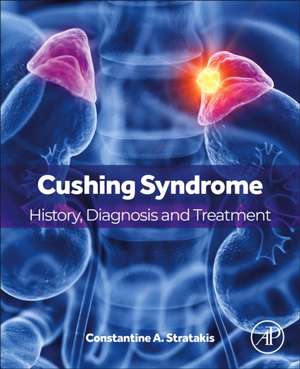
Cushing Syndrome: History, Diagnosis and Treatment
Editat de Constantine A. Stratakisen Limba Engleză Paperback – 9 feb 2026
The book has a section dedicated to our patients with the patients’ experiences, which will add to the outcome research presented by the physicians. This is a must have reference for scientists and researchers with the latest information in diagnosing and treating this difficult-to-diagnose and difficult-to-treat condition and gives the clinician, a patient-centric approach to communicate with this particular group of patients.
- Provides comprehensive “how to” information for diagnosis and treatment
- Includes the latest information on genetics, all molecular advances, and new medical therapies
- Presents a patient-centric approach with an emphasis on patients’ perspectives and long-term effects of cortisol excess, well-being, and mental health
Preț: 883.90 lei
Preț vechi: 1226.24 lei
-28%
Puncte Express: 1326
Carte tipărită la comandă
Livrare economică 21 noiembrie-05 decembrie
Livrare prin curier în România Termenul estimat este afișat lângă disponibilitate.
Transport gratuit pentru acest produs Plată online sau ramburs, în funcție de opțiunile comenzii.
Retur gratuit în 14 zile Comandă securizată și suport în română.
Specificații
ISBN-13: 9780323961004
ISBN-10: 0323961002
Pagini: 426
Dimensiuni: 191 x 235 mm
Editura: ELSEVIER SCIENCE
ISBN-10: 0323961002
Pagini: 426
Dimensiuni: 191 x 235 mm
Editura: ELSEVIER SCIENCE
Cuprins
1. Identification of Cushing syndrome (CS) and its history from Harvey Cushing to today
2. Exogenous CS (iatrogenic): most frequent uses of glucocorticoids and outcomes, including recommendations for recovery (post-chemotherapy, asthma treatments, chronic use on rheumatoid and/or skeletal disorders)
3. Endogenous CS: causes and genetics
4. CS and malingering: Munchausen syndrome and Muncausen-by-proxy: cases, diagnosis, and outcomes
5. Non-tumorous functional hypercortisolemia (pseudo-CS): causes and long-term issues
6. Cushing disease: pituitary tumors causing CS: genetics, molecular advances, diagnosis, and treatment
7. Inferior Petrosal Sinus Sampling: to do or not to do
8. CRH test: to do or not to do
9. All about dexamethasone testing in CS
10. ACTH-independent CS: adrenal tumors causing CS: genetics, molecular advances, diagnosis, and treatment
11. Ectopic ACTH or CRH-producing tumors and CS: genetics, syndromes, molecular advances, diagnosis, and treatment
12. Animal models of CS: what do they teach us?
13. Medical therapies for CS
14. Surgical issues for a patient with CS: techniques, complications, and recovery
15. The patient with CS: perspectives written by patients; resources for patients
16. Cortisol exposure and mental health
17. CS and long-term effects on health, cognition, and function
2. Exogenous CS (iatrogenic): most frequent uses of glucocorticoids and outcomes, including recommendations for recovery (post-chemotherapy, asthma treatments, chronic use on rheumatoid and/or skeletal disorders)
3. Endogenous CS: causes and genetics
4. CS and malingering: Munchausen syndrome and Muncausen-by-proxy: cases, diagnosis, and outcomes
5. Non-tumorous functional hypercortisolemia (pseudo-CS): causes and long-term issues
6. Cushing disease: pituitary tumors causing CS: genetics, molecular advances, diagnosis, and treatment
7. Inferior Petrosal Sinus Sampling: to do or not to do
8. CRH test: to do or not to do
9. All about dexamethasone testing in CS
10. ACTH-independent CS: adrenal tumors causing CS: genetics, molecular advances, diagnosis, and treatment
11. Ectopic ACTH or CRH-producing tumors and CS: genetics, syndromes, molecular advances, diagnosis, and treatment
12. Animal models of CS: what do they teach us?
13. Medical therapies for CS
14. Surgical issues for a patient with CS: techniques, complications, and recovery
15. The patient with CS: perspectives written by patients; resources for patients
16. Cortisol exposure and mental health
17. CS and long-term effects on health, cognition, and function