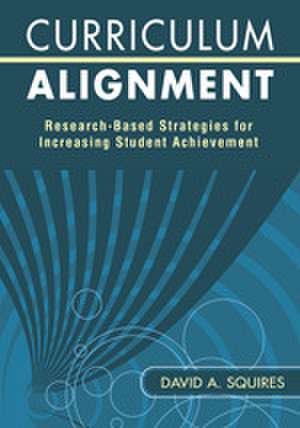
Curriculum Alignment: Research-Based Strategies for Increasing Student Achievement
Editat de David A. Squiresen Limba Engleză Electronic book text – 27 iun 2013
Preț: 198.80 lei
Puncte Express: 298
Indisponibil temporar
Doresc să fiu notificat când acest titlu va fi disponibil:
Se trimite...
Specificații
ISBN-13: 9781452212944
ISBN-10: 1452212945
Pagini: 232
Dimensiuni: 178 x 254 mm
Ediția:1
Editura: SAGE Publications
Colecția Corwin
Locul publicării:Thousand Oaks, United States
ISBN-10: 1452212945
Pagini: 232
Dimensiuni: 178 x 254 mm
Ediția:1
Editura: SAGE Publications
Colecția Corwin
Locul publicării:Thousand Oaks, United States
V-ar putea interesa
-
 EDUCATION REFORMStephen Ball-29%Preț: 209.25 lei295.28 lei
 -
 Changing School SubjectsCarrie F PaechterPreț: 356.89 lei
 -
 Assessment for Learning without LimitsAlison Peacock-30%Preț: 155.44 lei222.93 lei
 -
 Essential Primary EnglishJane Medwell-29%Preț: 159.71 lei224.25 lei
 -
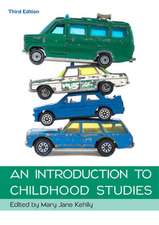 Introduction to Childhood StudiesMary Jane Kehily-28%Preț: 172.70 lei241.03 lei
 -
 Media EducationDavid BuckinghamPreț: 156.55 lei
 -
 Curriculum Studies in the Lifelong Learning SectorJonathan TummonsPreț: 313.42 lei
 -
 Positively Smarter CConyersPreț: 365.15 lei
 -
 The Power of PedagogyJenny Leach-15%Preț: 663.97 lei781.14 lei
 -
 Enriching Curriculum for All StudentsJoseph S. RenzulliPreț: 306.30 lei
 -
 Closing the Teaching GapDonald B. BartaloPreț: 310.25 lei
 -
 Creating Standards-Based Integrated CurriculumSusan M. DrakePreț: 282.03 lei
 -
 Cross-curricular Approaches to Teaching and LearningChris Rowley-15%Preț: 549.92 lei646.96 lei
 -
 Cognition and Curriculum ReconsideredElliot W. EisnerPreț: 195.78 lei
 -
 -16%Preț: 79.54 lei94.73 lei
Recenzii
"One
of
the
few
books
that
takes
a
holistic
look
at
alignment
and
helps
clarify
the
definition
of
alignment. Squires helped
increase
my
knowledge
as
an
instructional
leader
and
showed
me
that
alignment
can
be
a
valuable
tool
when
used
with
real
intent.
The
book
engaged
me
in
authentic
reflection
on
my
professional
practice."
"The author provides readers with much food for thought, resources to delve more deeply into specific ideas, and benefits and challenges to weigh when making curricular and alignment decisions. Readers are urged to seriously consider how they define curriculum and are offered an alternative definition that, when acted upon, may play a critical role in increasing student learning."
"The author provides readers with much food for thought, resources to delve more deeply into specific ideas, and benefits and challenges to weigh when making curricular and alignment decisions. Readers are urged to seriously consider how they define curriculum and are offered an alternative definition that, when acted upon, may play a critical role in increasing student learning."
Cuprins
Preface
List of Figures and Tables
Acknowledgments
About the Author
Part I. Alignment and Instruction, Textbooks, and Standardized Tests
1. Introduction to Curriculum Alignment
What is Alignment?
Alignment Problems
The Alignment Matrix
2. Alignment and Instruction
Introduction
The "Reform Up Close" Study and Alignment Dimensions
Instructional Alignment and Professional Development
Three Smaller Studies of Instructional Alignment
What Districts Can Do
3. Alignment and Textbooks
Introduction
Textbook to Test Alignment
Summary of Findings for Studies of Textbook to Test Alignment
Quality of Textbook Instruction
Modifying the Use of Textbooks to Improve Alignment
Summary of Findings for Textbook Alignment
What Districts Can Do
4. Alignment and Standardized Tests
Introduction
Marzano's Standards Compilation
The Webb Studies:Aligning State Standards, Assessments, and Policies
Webb's WAT Web Site
The Browder Study: Alignment in Special Education
Vertical Alignment
Science Inquiry and Alignment to Three Large-Scale Assessments
The Bowe and Kingsbury Study
The National Center for Educational Statistics Study (2007): Cut Scores for State Tests and the NAEP
Backloanding the Curriculum
Summary of Findings for Studies of Alignment of State Tests
What Districts Can Do
Part II. Alignment and Mastery Learning, Project 2061, and TIMSS
5. Alignment, Reteaching, and Mastery Learning
A Personal Ntoe
Introduction
Bloom's Theory of School Learning
Cohen: Instructional Alignment
The Wishnick Study
Summary of Findings for Studies of Mastery Learning
What Districts Can Do
6. Ideas From Project 2061 of the American Association for the Advancement of Science
Introduction
Project 2061
Summary of Findings for Project 2061
What Districts Can Do
7. Alignment and the TIMSS Analysis
Introduction
The TIMSS Methodology
Curriculum and Student Acheivement
What Districts Can Do
Part III. The Aligned Curriculum
8. Criteria for a Useful and Useable Curriculum Incorporating Alignment
Introduction
The Many Meaning of Curriculum
The Common Definition of Curriculum
Our Definition of Curriculum
Criteria for a Useful and Useable Curriculum
9. Addressing Alignment Through a Curriculum Design: The Balanced Curriculum Model
Introduction
Results from School Districts
The Balanced Curriculum Model
Is the Balanced Curriculum Useful and Useable?
What Districts Can Do- A Conclusion
10. How the Balanced Curriculum Meets This Book's Recommendations for Districts
11. Summary of Alignment Research and Recommendations
Introduction
Summary of the Book
Summary of the Book's Chapters
The Reasearch Posted on the Alignment Matrix
Major Findings From the Alignment Research
Resource A: 10 Criteria for Structuring a Useful and Useable Curriculum
References
Index
List of Figures and Tables
Acknowledgments
About the Author
Part I. Alignment and Instruction, Textbooks, and Standardized Tests
1. Introduction to Curriculum Alignment
What is Alignment?
Alignment Problems
The Alignment Matrix
2. Alignment and Instruction
Introduction
The "Reform Up Close" Study and Alignment Dimensions
Instructional Alignment and Professional Development
Three Smaller Studies of Instructional Alignment
What Districts Can Do
3. Alignment and Textbooks
Introduction
Textbook to Test Alignment
Summary of Findings for Studies of Textbook to Test Alignment
Quality of Textbook Instruction
Modifying the Use of Textbooks to Improve Alignment
Summary of Findings for Textbook Alignment
What Districts Can Do
4. Alignment and Standardized Tests
Introduction
Marzano's Standards Compilation
The Webb Studies:Aligning State Standards, Assessments, and Policies
Webb's WAT Web Site
The Browder Study: Alignment in Special Education
Vertical Alignment
Science Inquiry and Alignment to Three Large-Scale Assessments
The Bowe and Kingsbury Study
The National Center for Educational Statistics Study (2007): Cut Scores for State Tests and the NAEP
Backloanding the Curriculum
Summary of Findings for Studies of Alignment of State Tests
What Districts Can Do
Part II. Alignment and Mastery Learning, Project 2061, and TIMSS
5. Alignment, Reteaching, and Mastery Learning
A Personal Ntoe
Introduction
Bloom's Theory of School Learning
Cohen: Instructional Alignment
The Wishnick Study
Summary of Findings for Studies of Mastery Learning
What Districts Can Do
6. Ideas From Project 2061 of the American Association for the Advancement of Science
Introduction
Project 2061
Summary of Findings for Project 2061
What Districts Can Do
7. Alignment and the TIMSS Analysis
Introduction
The TIMSS Methodology
Curriculum and Student Acheivement
What Districts Can Do
Part III. The Aligned Curriculum
8. Criteria for a Useful and Useable Curriculum Incorporating Alignment
Introduction
The Many Meaning of Curriculum
The Common Definition of Curriculum
Our Definition of Curriculum
Criteria for a Useful and Useable Curriculum
9. Addressing Alignment Through a Curriculum Design: The Balanced Curriculum Model
Introduction
Results from School Districts
The Balanced Curriculum Model
Is the Balanced Curriculum Useful and Useable?
What Districts Can Do- A Conclusion
10. How the Balanced Curriculum Meets This Book's Recommendations for Districts
11. Summary of Alignment Research and Recommendations
Introduction
Summary of the Book
Summary of the Book's Chapters
The Reasearch Posted on the Alignment Matrix
Major Findings From the Alignment Research
Resource A: 10 Criteria for Structuring a Useful and Useable Curriculum
References
Index
Descriere
This
resource
offers
school
administrators
and
curriculum
specialists
practical
guidance
for
aligning
curriculum
and
instruction
with
state
standards
and
assessments
to
improve
teaching
and
learning.