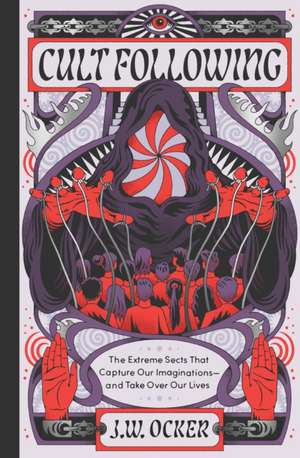
Cult Following: The Extreme Sects That Capture Our Imaginations—and Take Over Our Lives
Autor J. W. Ockeren Limba Engleză Hardback – 10 sep 2024
“A must-read.” – Publishers Weekly
How do intelligent, ordinary people become drawn into extreme groups – and why can leaving become so difficult?
Everything you've ever wanted to know about history's most notorious cults – and the psychology of the people who join them – is packed into J.W. Ocker’s accessible, engaging Cult Following. Walk in the footsteps of those who were lured into sinister groups from Heaven's Gate to NXIVM. Along the way, he uncovers bizarre beliefs, charismatic leaders, manipulation, criminal acts, apocalyptic predictions, UFO religions, spiritual communes, self-improvement movements, and some of the strangest attempts humans have made to find truth, protection, purpose, salvation, and belonging.
Ocker brings his trademark curiosity and wonder to the subject of cults and the terrifying way they attract followers, demonstrating the elasticity of belief, the desperateness of belonging, and the tragedy of trust.
Perfect for true-crime readers, cult-documentary fans, history buffs, psychology enthusiasts, and anyone fascinated by the question: Could this happen to me?
- Explore 30 notorious cults including Heaven’s Gate, NXIVM, the Branch Davidians, the Rajneesh movement, Breatharianism, UFO cults, and more
- Understand how belonging, identity, trust, vulnerability, and escalating control can draw ordinary people into extreme groups
- Examine charismatic leadership, isolation, coercion, exploitation, apocalyptic belief, and the gradual erosion of independence
- True crime + strange history: Discover bizarre beliefs alongside real cases involving fraud, trafficking, murder, bioterrorism, mass violence, and other crimes
- J. W. Ocker combines serious research with concise chapters, strange details, and an engaging voice for readers new to cult history
Step inside 30 extraordinary belief systems… and discover why the most unsettling thing about cults may be how human their appeal can seem.
Preț: 108.52 lei
Preț vechi: 131.36 lei
-17%
Puncte Express: 163
Carte disponibilă
Livrare economică 10-17 noiembrie
Livrare express 27-31 octombrie pentru 56.39 lei
Livrare prin curier în România Termenul estimat este afișat lângă disponibilitate.
Transport gratuit de la 400.00 lei Plată online sau ramburs, în funcție de opțiunile comenzii.
Retur gratuit în 14 zile Comandă securizată și suport în română.
Specificații
ISBN-13: 9781683694120
ISBN-10: 1683694120
Pagini: 272
Dimensiuni: 139 x 211 x 25 mm
Greutate: 0.5 kg
Editura: QUIRK BOOKS
Colecția Quirk Books
ISBN-10: 1683694120
Pagini: 272
Dimensiuni: 139 x 211 x 25 mm
Greutate: 0.5 kg
Editura: QUIRK BOOKS
Colecția Quirk Books
V-ar putea interesa
-
 The Penguin Book of CultsVariousPreț: 106.77 lei
 -
 We Call Them WitchesIndia-Rose BowerPreț: 108.89 lei
 -
 The World's Worst CultsAl CiminoPreț: 98.66 lei
 -
 -26%Preț: 118.48 lei159.33 lei
 -
 -25%Preț: 93.57 lei124.51 lei
 -
 Cults: The World's Most Notorious CultsNigel Cawthorne-27%Preț: 56.70 lei77.56 lei
 -
 What Would Ozzy Do?Pop PressPreț: 65.46 lei
 -
 -16%Preț: 92.78 lei110.87 lei
 -
 Preț: 96.21 lei
 -
 Bog PeopleVariousPreț: 137.40 lei
 -
 Midden WitchFiona BensonPreț: 91.76 lei
 -
 The Society of Unknowable ObjectsGareth BrownPreț: 126.06 lei
 -
 Preț: 151.05 lei
 -
 -19%Preț: 46.53 lei57.39 lei
 -
 -17%Preț: 48.27 lei58.40 lei
 -
 A Compendium of Curious ContraptionsAnna GoldfieldPreț: 112.76 lei
 -
 Preț: 120.77 lei
 -
 Preț: 61.56 lei
Notă biografică
J. W. (Jason) Ocker is an Edgar Award winning travel writer, horror novelist, and blogger. His previous nonfiction books include Poe-Land,The New England Grimpendium and The New York Grimpendium, A Season with the Witch, the New York Times-reviewed Cursed Objects, and The United States of Cryptids. He is the creator of the blog and podcast OTIS: Odd Things I've Seen (oddthingsiveseen.com).
Extras
Cult is a scary word. Like terrorist. Or leprosy. Sharknado. Even people in cults don’t like the word cult. Dictionary definitions do little to encapsulate the fear and loathing the word inspires. Merriam-Webster simply describes a cult as “a religion regarded as unorthodox or spurious.” The Oxford English Dictionary gets us a little closer to the creepy connotation with “a relatively small group of people having (esp. religious) beliefs or practices regarded by others as strange or sinister, or as exercising excessive control over members.”
Noted psychiatrist Robert Jay Lifton, in the 1991 paper “Cult Formation,” goes deeper. To paraphrase, the three elements of his definition are:
1. A charismatic leader who often becomes an object of worship
2. A process of indoctrination
3. A mechanism of exploitation, whether that be financial, sexual, or otherwise
Now things are getting scary. But it gets even worse.
Cults often seem to end badly—whether in mass suicide, mass murder, or mere public embarrassment. Such as Heaven’s Gate members dead in their bunks, stomachs full of phenobarbital and applesauce. Or Chen Tao in their white clothes and cowboy hats despondently leaving their suburban Texas neighborhood when UFOs didn’t arrive on the day their leader promised. Or Game of Thrones fans turning off their TVs, gobsmacked at how eight years of investment and dedication were rewarded with anticlimax. And there’s always the good rule of thumb that if a group’s leader wound up dead or in jail, the group was probably a cult.
Despite these multiple definitions, and despite the stranglehold cults have on the public imagination, it’s surprisingly difficult to define a cult, or even to recognize one. For example, there’s a thin, blurry line between a religion and a cult. Lifton’s definition can easily apply to any religion—but the imperceptible delineation between a cult and a religion might just be its level of success. Religions are big. Mainstream. And as for ending badly, religions are large and influential enough to absorb or withstand crimes, scandals, and tragedies within their structures and continue on, ties straightened, collars starched, and halos burnished, in a way that smaller sects cannot.
To complicate the definition even further, cults can form around more than just religious ideas and goals—from the scientific to the political to the commercial. The Remnant Fellowship Church was based on dieting, for goodness’ sake. And, of course, we’ve expanded the definition even further with the term cult following, which we use to describe obsession and fanaticism about pop culture.
But what if I were to tell you that, despite all the fear and strangeness and danger that cults can bring up, joining a cult is one of the most human things a person can do?
We all want to belong to something greater than ourselves. To be accepted by like-minded people. We all want to believe that our ideas about the world are the ultimate truth of the universe. Cults are that straightforward: purpose, community, and understanding how the world works. Who doesn’t want all those things?
And we are all followers. Even the most egotistical alpha out there follows something or someone. We follow parents and bosses, experts and mentors, cultural norms, laws of the land, and scientific consensus. We follow market trends and fashion trends and social media trends. We are programmed to follow.
Still, nobody actually joins a cult. At least not consciously. According to the cult expert Dr. Steven Hassan as quoted in the Sydney Morning Herald, “People join communities, not cults.” And cults can offer a legitimate sense of community and all the benefits that come with it—friendship, dedication to a cause, stability, shelter. At least at first. The grisly end that many cult members meet with is often the final step in a years-long indoctrination process of members that begins with a lengthy honeymoon period, devolves into increased isolation and control, and culminates in tragedy only once every other escape route is blocked off. Some people never realize that they’ve joined a cult. Some realize it and defect from the group, while others realize it too late. Often, as in many relationships and commitments, followers put up with the bad because there is enough good present in the situation, or keep going because the sunk cost fallacy has convinced them they’re in too deep and payoff is just around the corner.
Cult members are often unfairly derided as naïve, brainwashed followers when in fact, the research shows this couldn’t be further from the truth. (And it’s worth noting here that the concept of brainwashing is not supported by medical or psychological evidence—see page 236 for more.) Research from religious scholar Lorne L. Dawson’s book The Sociology of New Religious Movements shows that the average cult follower is middle to upper class, highly educated, intelligent, ambitious, curious, and idealistic. I’m willing to bet that description fits many of the readers of this book.
Anyone can be easily tricked by a person or group they’ve come to trust. Those same human longings and needs to connect with others and to belong to a group also make us extremely susceptible—especially during the most vulnerable times of our lives—to being taken advantage of by the unscrupulous and deluded. And here’s where cults really get scary: cult leaders. Cults wouldn’t be so bad if it weren’t for the people who start them.
Joining a cult and starting a cult are two different impulses. One is an attempt to find acceptance and purpose, the other an attempt to control and exploit. But the most effective cult leaders are more than power hungry, egotistical, and charismatic (although they definitely need to be those things). They also need to have some new—or at least new-seeming—and often seriously strange ideas about life.
Within these pages, we will look at thirty of the most fascinating cults in history, from cults that believe extraterrestrials control our destiny, to cults that believe our feet hold the secrets of our future, to cults that believe eating is unnecessary.
And that’s not just because the stranger the cult, the more interesting its story—although that’s certainly part of it. More important, the stranger the cult, the more we learn about the elasticity of belief. About the desperateness of belonging. The tragedy of trust. And the vulnerability (and weirdness) of being human.
The cults in this book are organized not by what they believe in (e.g., UFO cults or doomsday cults), but by what their adherents sought by being part of the group: truth, protection, purpose, salvation, betterment. The things we all seek. Because that’s how you join a cult: by being human, and by searching for those things we all need and desire.
And that’s probably the scariest thing about cults: not the damage they are capable of, but how relatable their members’ search for meaning is, and how slippery the slope is to joining one.
Noted psychiatrist Robert Jay Lifton, in the 1991 paper “Cult Formation,” goes deeper. To paraphrase, the three elements of his definition are:
1. A charismatic leader who often becomes an object of worship
2. A process of indoctrination
3. A mechanism of exploitation, whether that be financial, sexual, or otherwise
Now things are getting scary. But it gets even worse.
Cults often seem to end badly—whether in mass suicide, mass murder, or mere public embarrassment. Such as Heaven’s Gate members dead in their bunks, stomachs full of phenobarbital and applesauce. Or Chen Tao in their white clothes and cowboy hats despondently leaving their suburban Texas neighborhood when UFOs didn’t arrive on the day their leader promised. Or Game of Thrones fans turning off their TVs, gobsmacked at how eight years of investment and dedication were rewarded with anticlimax. And there’s always the good rule of thumb that if a group’s leader wound up dead or in jail, the group was probably a cult.
Despite these multiple definitions, and despite the stranglehold cults have on the public imagination, it’s surprisingly difficult to define a cult, or even to recognize one. For example, there’s a thin, blurry line between a religion and a cult. Lifton’s definition can easily apply to any religion—but the imperceptible delineation between a cult and a religion might just be its level of success. Religions are big. Mainstream. And as for ending badly, religions are large and influential enough to absorb or withstand crimes, scandals, and tragedies within their structures and continue on, ties straightened, collars starched, and halos burnished, in a way that smaller sects cannot.
To complicate the definition even further, cults can form around more than just religious ideas and goals—from the scientific to the political to the commercial. The Remnant Fellowship Church was based on dieting, for goodness’ sake. And, of course, we’ve expanded the definition even further with the term cult following, which we use to describe obsession and fanaticism about pop culture.
But what if I were to tell you that, despite all the fear and strangeness and danger that cults can bring up, joining a cult is one of the most human things a person can do?
We all want to belong to something greater than ourselves. To be accepted by like-minded people. We all want to believe that our ideas about the world are the ultimate truth of the universe. Cults are that straightforward: purpose, community, and understanding how the world works. Who doesn’t want all those things?
And we are all followers. Even the most egotistical alpha out there follows something or someone. We follow parents and bosses, experts and mentors, cultural norms, laws of the land, and scientific consensus. We follow market trends and fashion trends and social media trends. We are programmed to follow.
Still, nobody actually joins a cult. At least not consciously. According to the cult expert Dr. Steven Hassan as quoted in the Sydney Morning Herald, “People join communities, not cults.” And cults can offer a legitimate sense of community and all the benefits that come with it—friendship, dedication to a cause, stability, shelter. At least at first. The grisly end that many cult members meet with is often the final step in a years-long indoctrination process of members that begins with a lengthy honeymoon period, devolves into increased isolation and control, and culminates in tragedy only once every other escape route is blocked off. Some people never realize that they’ve joined a cult. Some realize it and defect from the group, while others realize it too late. Often, as in many relationships and commitments, followers put up with the bad because there is enough good present in the situation, or keep going because the sunk cost fallacy has convinced them they’re in too deep and payoff is just around the corner.
Cult members are often unfairly derided as naïve, brainwashed followers when in fact, the research shows this couldn’t be further from the truth. (And it’s worth noting here that the concept of brainwashing is not supported by medical or psychological evidence—see page 236 for more.) Research from religious scholar Lorne L. Dawson’s book The Sociology of New Religious Movements shows that the average cult follower is middle to upper class, highly educated, intelligent, ambitious, curious, and idealistic. I’m willing to bet that description fits many of the readers of this book.
Anyone can be easily tricked by a person or group they’ve come to trust. Those same human longings and needs to connect with others and to belong to a group also make us extremely susceptible—especially during the most vulnerable times of our lives—to being taken advantage of by the unscrupulous and deluded. And here’s where cults really get scary: cult leaders. Cults wouldn’t be so bad if it weren’t for the people who start them.
Joining a cult and starting a cult are two different impulses. One is an attempt to find acceptance and purpose, the other an attempt to control and exploit. But the most effective cult leaders are more than power hungry, egotistical, and charismatic (although they definitely need to be those things). They also need to have some new—or at least new-seeming—and often seriously strange ideas about life.
Within these pages, we will look at thirty of the most fascinating cults in history, from cults that believe extraterrestrials control our destiny, to cults that believe our feet hold the secrets of our future, to cults that believe eating is unnecessary.
And that’s not just because the stranger the cult, the more interesting its story—although that’s certainly part of it. More important, the stranger the cult, the more we learn about the elasticity of belief. About the desperateness of belonging. The tragedy of trust. And the vulnerability (and weirdness) of being human.
The cults in this book are organized not by what they believe in (e.g., UFO cults or doomsday cults), but by what their adherents sought by being part of the group: truth, protection, purpose, salvation, betterment. The things we all seek. Because that’s how you join a cult: by being human, and by searching for those things we all need and desire.
And that’s probably the scariest thing about cults: not the damage they are capable of, but how relatable their members’ search for meaning is, and how slippery the slope is to joining one.
Recenzii
“A must-read for those with a taste for cult narratives.”—Publishers Weekly
Praise for The United States of Cryptids
“A deliciously nerdy chronicle that celebrates thinking about life beyond.”—Vice
“Thoughtful and well-researched...a worthy addition to any cryptid enthusiast’s library.”—AIPT Comics
“[Ocker's] breezy storytelling talents make for enjoyable reading.”—Booklist
“Essential reading for anyone with an interest in unexplained mysteries, folklore, mythology, and the supernatural. An inherently fascinating, impressively informative, truly exceptional, and unreservedly recommended addition to community and academic library Cryptid collections.”—Midwest Book Review
“I love folklore, so naturally, I also love cryptids, since they're basically the scary story versions of modern folklore. Which is precisely what I enjoyed about The United States of Cryptids.”—BoingBoing
Praise for Cursed Objects
“This book is so fun that I couldn't put it down. It reminded me that life is short, death is nigh and a little humor can help us seize the day just as well as a memento mori.”—The New York Times
“A visual feast of a book...this eye-catching miscellany is perfect for anyone who wants a treasure chest of weird trivia to peruse.”—Bustle
“Well researched....The entry about the Black Aggie statue in Druid Ridge Cemetery in Pikesville, Maryland, is especially chilling….The only question that remains is, who is courageous enough to brave the myriad scary (and true) stories within?”—Memphis Flyer
“I loved J. W. Ocker's Cursed Objects! This cabinet of cursed curiosities is insanely entertaining and dangerously informative, but be forewarned: you may be cursed with reading it late into the night once you open it.”—Lisa Morton, author of Calling the Spirits: A History of Seances and Ghosts: A Haunted History
“A deliciously scary and entertaining look into the spooky stuff of nightmares. Through rich histories, adorably macabre illustrations, and a modicum of hilarity, this book will entrance readers until the last page—if you survive that long!”—Lydia Kang, author of Quackery
Praise for The United States of Cryptids
“A deliciously nerdy chronicle that celebrates thinking about life beyond.”—Vice
“Thoughtful and well-researched...a worthy addition to any cryptid enthusiast’s library.”—AIPT Comics
“[Ocker's] breezy storytelling talents make for enjoyable reading.”—Booklist
“Essential reading for anyone with an interest in unexplained mysteries, folklore, mythology, and the supernatural. An inherently fascinating, impressively informative, truly exceptional, and unreservedly recommended addition to community and academic library Cryptid collections.”—Midwest Book Review
“I love folklore, so naturally, I also love cryptids, since they're basically the scary story versions of modern folklore. Which is precisely what I enjoyed about The United States of Cryptids.”—BoingBoing
Praise for Cursed Objects
“This book is so fun that I couldn't put it down. It reminded me that life is short, death is nigh and a little humor can help us seize the day just as well as a memento mori.”—The New York Times
“A visual feast of a book...this eye-catching miscellany is perfect for anyone who wants a treasure chest of weird trivia to peruse.”—Bustle
“Well researched....The entry about the Black Aggie statue in Druid Ridge Cemetery in Pikesville, Maryland, is especially chilling….The only question that remains is, who is courageous enough to brave the myriad scary (and true) stories within?”—Memphis Flyer
“I loved J. W. Ocker's Cursed Objects! This cabinet of cursed curiosities is insanely entertaining and dangerously informative, but be forewarned: you may be cursed with reading it late into the night once you open it.”—Lisa Morton, author of Calling the Spirits: A History of Seances and Ghosts: A Haunted History
“A deliciously scary and entertaining look into the spooky stuff of nightmares. Through rich histories, adorably macabre illustrations, and a modicum of hilarity, this book will entrance readers until the last page—if you survive that long!”—Lydia Kang, author of Quackery
Descriere
From weird-history expert J. W. Ocker, an eye-popping, accessible guide to 30 of history’s most infamous, audacious, and dangerous cults.
“A must-read.” – Publishers Weekly
“A must-read.” – Publishers Weekly