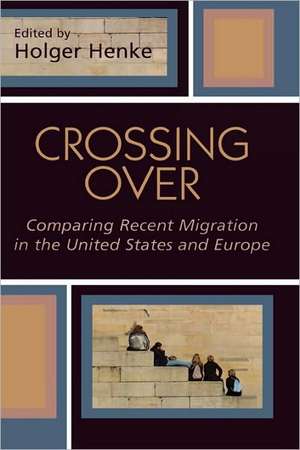
Crossing Over: Comparing Recent Migration in the United States and Europe: Program in Migration and Refugee Studies
Editat de Holger Henke Contribuţii de Tahir Abbas, Parveen Akhtar, Christina Boswell, Alessandra Buonfino, Jeffrey Cohen, Franck Düvell, Zeynep Kiliç, Holger Kolb, Wei Li, Guillermo Alonso Meneses, Pierpaolo Mudu, Joyce Marie Mushaben, Sònia Parella, May Relaño Pastor, Sara Silvestri, Ibrahim Sirkeci, Carlota Solé, Peter van Kriekenen Limba Engleză Hardback – 11 iul 2005



Preț: 782.24 lei
Preț vechi: 1244.81 lei
-37%
Puncte Express: 1173
Carte tipărită la comandă
Livrare economică 07-21 decembrie
Livrare prin curier în România Termenul estimat este afișat lângă disponibilitate.
Transport gratuit pentru acest produs Plată online sau ramburs, în funcție de opțiunile comenzii.
Retur gratuit în 14 zile Comandă securizată și suport în română.
Specificații
ISBN-13: 9780739109618
ISBN-10: 0739109618
Pagini: 330
Dimensiuni: 166 x 235 x 31 mm
Greutate: 0.64 kg
Editura: Bloomsbury Publishing
Colecția Lexington Books
Seria Program in Migration and Refugee Studies
Locul publicării:New York, United States
ISBN-10: 0739109618
Pagini: 330
Dimensiuni: 166 x 235 x 31 mm
Greutate: 0.64 kg
Editura: Bloomsbury Publishing
Colecția Lexington Books
Seria Program in Migration and Refugee Studies
Locul publicării:New York, United States
V-ar putea interesa
-
 God is BackAdrian WooldridgePreț: 117.36 lei
 -
 Boy with the TopknotSathnam Sanghera-24%Preț: 65.40 lei86.31 lei
 -
 Preț: 257.65 lei
 -
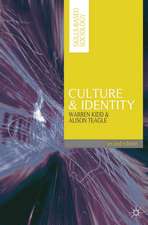 Culture and IdentityWarren Kidd-22%Preț: 279.46 lei356.82 lei
 -
 Forming a Culture of PeaceK. KorostelinaPreț: 391.23 lei
 -
 -23%Preț: 276.46 lei359.33 lei
 -
 Illustrated Encyclopedia of HinduismM. NarasimhacharyPreț: 143.01 lei
 -
 -26%Preț: 258.39 lei351.48 lei
 -
 Society Without GodPhil ZuckermanPreț: 185.88 lei
 -
 The Unfinished Tower of BabelRobert L. BonnPreț: 63.76 lei
 -
 Religion in a Liberal StateGavin D'Costa-40%Preț: 149.88 lei249.64 lei
 -
 Preț: 416.09 lei
 -
 Scandal in a Digital AgeHinda MandellPreț: 370.46 lei
 -
 Religion and the Rise of CapitalismR H TawneyPreț: 244.85 lei
 -
 -18%Preț: 205.49 lei249.74 lei
 -
 The Sociology of ReligionGrace DaviePreț: 398.58 lei
Cuprins
Chapter 1 Introduction
Part 2 Comparing Migration: Concepts and New Realities
Chapter 3 Globalization of Migration Control: A Tug-of-War Between Restricitionists and Human Agency?
Chapter 4 Terrorism and the Changing Paradigm of Migratory Movements
Chapter 5 Beyond the Security Dilemma? The Hegemonic Political Discourse on the Europeanization of Immigration in Italy and Britain
Part 6 The Post-9/11 Scenario: Migration, Citizenship, and the Role of Religion and Ethnicity
Chapter 7 The Situation of Muslim Immigrants in Europe in the 21st Century: The Creation of National Muslim Councils
Chapter 8 The New Sociology of British Ethnic and Cultural Relations: The Experience of British South Asian Muslims in the Post-September 11 Climate
Chapter 9 A Comparative Study of Turkish and Mexican Transnational Migration Outcomes: Facilitating or Restricting Immigrant Integration?
Chapter 10 Second Generation Turkish Immigrants in the U.S. and Germany: Dilemmas of Cultural Identity
Chapter 11 More Than Just a Bad-Hair Day: The Head-Scarf Debate as a Challenge to Euro-National Identities
Part 12 Migration, Labor, and Policy: The More Things Change...?
Chapter 13 Labor Migration Programs in Europe: History Repeating Itself?
Chapter 14 Immigrant Women in Domestic Service: The Care Crisis in the United States and Spain
Chapter 15 Latino Diaspora in Chula Vista, San Diego, and Ciutat Vella, Barcelona: Comparative Approaches
Chapter 16 A Comparative Evaluation of Recent Chinese Immigration in the U.S. and Italy: Settlement Patterns and Local Resistance
Chapter 17 Germany's "Green Card" in Comparative Perspective
Part 2 Comparing Migration: Concepts and New Realities
Chapter 3 Globalization of Migration Control: A Tug-of-War Between Restricitionists and Human Agency?
Chapter 4 Terrorism and the Changing Paradigm of Migratory Movements
Chapter 5 Beyond the Security Dilemma? The Hegemonic Political Discourse on the Europeanization of Immigration in Italy and Britain
Part 6 The Post-9/11 Scenario: Migration, Citizenship, and the Role of Religion and Ethnicity
Chapter 7 The Situation of Muslim Immigrants in Europe in the 21st Century: The Creation of National Muslim Councils
Chapter 8 The New Sociology of British Ethnic and Cultural Relations: The Experience of British South Asian Muslims in the Post-September 11 Climate
Chapter 9 A Comparative Study of Turkish and Mexican Transnational Migration Outcomes: Facilitating or Restricting Immigrant Integration?
Chapter 10 Second Generation Turkish Immigrants in the U.S. and Germany: Dilemmas of Cultural Identity
Chapter 11 More Than Just a Bad-Hair Day: The Head-Scarf Debate as a Challenge to Euro-National Identities
Part 12 Migration, Labor, and Policy: The More Things Change...?
Chapter 13 Labor Migration Programs in Europe: History Repeating Itself?
Chapter 14 Immigrant Women in Domestic Service: The Care Crisis in the United States and Spain
Chapter 15 Latino Diaspora in Chula Vista, San Diego, and Ciutat Vella, Barcelona: Comparative Approaches
Chapter 16 A Comparative Evaluation of Recent Chinese Immigration in the U.S. and Italy: Settlement Patterns and Local Resistance
Chapter 17 Germany's "Green Card" in Comparative Perspective
Recenzii
This timely and ambitious volume features a broad set of comparative studies which raise new questions and offer new insights into the contemporary world of migration. The combination of theoretical depth and empirical exemplification takes the debate to a new level and makes Crossing Over a must for anyone interested in migration research.
Timely and relevant, Professor Henke's edited text brings to life in compelling fashion all the "hot button" theoretical and policy issues confronting nation states in Europe and the United States in this post 9/11 era. It should be a standard supplementary text for professors and policy-makers engaged in the study of migration and is well worth reading.
This volume's profound significance rests in the use, by every single one of its authors, of comparative case studies either between Europe and the United States or across European national formations. The volume is framed by the profound challenges being made in a post-September 11th world to the idea of national peoplehood, culturally and socially, and to notions of the rights of citizenship by rapidly growing immigrant populations. It is a timely engagement with the tensions produced by efforts aimed at the management of a global shift to diasporic identity among immigrants in host countries. The new concern with security has catapulted this shift to the top of the agenda of national policy making, multiculturalism, and scholarly examination. The volume speaks profoundly to each of these issues.
Crossing Over is one of only a few books that analyzes the hotly debated processes of transnational migrations in a multi-faceted comparative perspective. The volume moves beyond the usual and often ideological generalizing conclusions and stereotypes, teaching us to see the different as well as the common economic, political, and intercultural repercussions of transnational migrations in a way that is politically and culturally enabling.
Timely and relevant, Professor Henke's edited text brings to life in compelling fashion all the "hot button" theoretical and policy issues confronting nation states in Europe and the United States in this post 9/11 era. It should be a standard supplementary text for professors and policy-makers engaged in the study of migration and is well worth reading.
This volume's profound significance rests in the use, by every single one of its authors, of comparative case studies either between Europe and the United States or across European national formations. The volume is framed by the profound challenges being made in a post-September 11th world to the idea of national peoplehood, culturally and socially, and to notions of the rights of citizenship by rapidly growing immigrant populations. It is a timely engagement with the tensions produced by efforts aimed at the management of a global shift to diasporic identity among immigrants in host countries. The new concern with security has catapulted this shift to the top of the agenda of national policy making, multiculturalism, and scholarly examination. The volume speaks profoundly to each of these issues.
Crossing Over is one of only a few books that analyzes the hotly debated processes of transnational migrations in a multi-faceted comparative perspective. The volume moves beyond the usual and often ideological generalizing conclusions and stereotypes, teaching us to see the different as well as the common economic, political, and intercultural repercussions of transnational migrations in a way that is politically and culturally enabling.