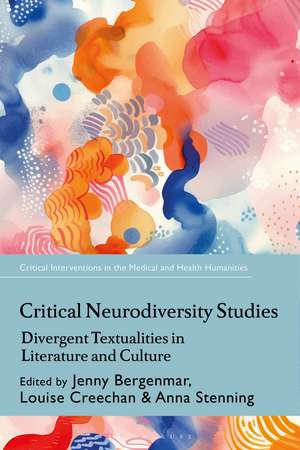
Critical Neurodiversity Studies: Divergent Textualities in Literature and Culture: Critical Interventions in the Medical and Health Humanities
Editat de Jenny Bergenmar, Louise Creechan, Anna Stenningen Limba Engleză Hardback – 7 aug 2025
Drawing on critical disability studies to highlight the ideology behind dominant notions of ability, it moves beyond representations of neurodivergent characters and highlights the entanglement of sensory and cognitive difference with both cultural practices and social status.
Combining the recent turn towards psychiatric depathologisation with insights from feminist, queer, intersectional and critical race theory, this volume aims to amplify the epistemic authority of those who have been subject to marginalisation because of the ways we are taught to read, and value literary culture. In essence, this volume reveals what it means to read, write and love literature and the arts as a neurodivergent person.




Preț: 526.01 lei
Preț vechi: 791.64 lei
-34%
Puncte Express: 789
Preț estimativ în valută:
93.09€ • 108.80$ • 80.82£
93.09€ • 108.80$ • 80.82£
Carte disponibilă
Livrare economică 29 ianuarie-12 februarie
Preluare comenzi: 021 569.72.76
Specificații
ISBN-13: 9781350421172
ISBN-10: 1350421170
Pagini: 252
Ilustrații: 7 bw illus
Dimensiuni: 156 x 238 x 20 mm
Greutate: 0.53 kg
Editura: Bloomsbury Publishing
Colecția Bloomsbury Academic
Seria Critical Interventions in the Medical and Health Humanities
Locul publicării:London, United Kingdom
ISBN-10: 1350421170
Pagini: 252
Ilustrații: 7 bw illus
Dimensiuni: 156 x 238 x 20 mm
Greutate: 0.53 kg
Editura: Bloomsbury Publishing
Colecția Bloomsbury Academic
Seria Critical Interventions in the Medical and Health Humanities
Locul publicării:London, United Kingdom
Cuprins
Acknowledgements
Foreword
Introduction: Jenny Bergenmar, University of Gothenburg, Sweden, Louise Creechan, Durham University, UK, and Anna Stenning, University of Leeds, UK : Critical neurodiversity studies: The contribution of literary and cultural studies
Section 1 Frameworks
Chapter 1: Leni Van Goidsenhoven, University of Amsterdam, Netherlands: Reading porously: How Landschip's oeuvre invites us to read beyond what we think we know
Chapter 2: Sarinah O'Donoghue, University of Aberdeen, UK: 'Read between the signs': Autism, sensory experience, and narrative Invention
Chapter 3: Arya Thampuran, Durham University, UK: Re-embodying difference: Race, space, and neurodiverse realities
Chapter 4: Abs Ashley, University of Bristol, UK: Neuroqueer (a)socialities: Mapping out neurotrans textualities through literary ephemera
Section 2 Readings
Chapter 5: Louise Creechan, Durham University, UK: The Lifted Veil: Neurodivergence, narrative, and scholarship
Chapter 6: Laura Seymour, University of Oxford, UK: "All discourses but my own afflict me": Morose's house as a seventeenth-century autistic utopia (Epicoene, 1609)
Chapter 7: Liselotte van der Gucht, Ghent University, Belgium: 'Words that smack and tremble': Narrating neurodivergence in Ingeborg Bachmann's The Book of Franza
Chapter 8: Chiara Montalti, University of Bologna, Italy: Neurodivergent futures: Community, vulnerability, and social change in Octavia E. Butler's Earthseed series
Chapter 9: Jenny Bergenmar, University of Gothenburg, Sweden: Humorous failures. Neurodivergence in scandinavian young adult literature
Chapter 10: Alice Hagopian, Queen's University Belfast, UK: Albert Camus' L'Étranger. Reparative neurodivergent reading as provocation
Section 3 Writings
Chapter 11: Hanna Bertilsdotter Rosqvist, Södertörn University, Sweden and Anna Nygren, Gothenburg University, Sweden: An autistic writerness: Exploring autistic reader/writer agency
Chapter 12: James McGrath, Leeds Beckett University, UK: AutisTime: Imagined friends and borrowed clocks
Chapter 13: Sophie Sexon, University of Glasgow, UK, and Hope Doherty-Harrison, University of Edinburgh, UK: Wounded attachments: How two neurodivergent scholars connected with medieval literature and each other
Foreword
Introduction: Jenny Bergenmar, University of Gothenburg, Sweden, Louise Creechan, Durham University, UK, and Anna Stenning, University of Leeds, UK : Critical neurodiversity studies: The contribution of literary and cultural studies
Section 1 Frameworks
Chapter 1: Leni Van Goidsenhoven, University of Amsterdam, Netherlands: Reading porously: How Landschip's oeuvre invites us to read beyond what we think we know
Chapter 2: Sarinah O'Donoghue, University of Aberdeen, UK: 'Read between the signs': Autism, sensory experience, and narrative Invention
Chapter 3: Arya Thampuran, Durham University, UK: Re-embodying difference: Race, space, and neurodiverse realities
Chapter 4: Abs Ashley, University of Bristol, UK: Neuroqueer (a)socialities: Mapping out neurotrans textualities through literary ephemera
Section 2 Readings
Chapter 5: Louise Creechan, Durham University, UK: The Lifted Veil: Neurodivergence, narrative, and scholarship
Chapter 6: Laura Seymour, University of Oxford, UK: "All discourses but my own afflict me": Morose's house as a seventeenth-century autistic utopia (Epicoene, 1609)
Chapter 7: Liselotte van der Gucht, Ghent University, Belgium: 'Words that smack and tremble': Narrating neurodivergence in Ingeborg Bachmann's The Book of Franza
Chapter 8: Chiara Montalti, University of Bologna, Italy: Neurodivergent futures: Community, vulnerability, and social change in Octavia E. Butler's Earthseed series
Chapter 9: Jenny Bergenmar, University of Gothenburg, Sweden: Humorous failures. Neurodivergence in scandinavian young adult literature
Chapter 10: Alice Hagopian, Queen's University Belfast, UK: Albert Camus' L'Étranger. Reparative neurodivergent reading as provocation
Section 3 Writings
Chapter 11: Hanna Bertilsdotter Rosqvist, Södertörn University, Sweden and Anna Nygren, Gothenburg University, Sweden: An autistic writerness: Exploring autistic reader/writer agency
Chapter 12: James McGrath, Leeds Beckett University, UK: AutisTime: Imagined friends and borrowed clocks
Chapter 13: Sophie Sexon, University of Glasgow, UK, and Hope Doherty-Harrison, University of Edinburgh, UK: Wounded attachments: How two neurodivergent scholars connected with medieval literature and each other
Recenzii
A vital and exciting step forward for both the emerging field of neurodiversity studies and the field of literary criticism. This volume invites us to new modes of engagement with literature, and is sure to generate many a rich classroom conversation.