
CRISPR Technology for Combating Plant Pests and Pathogens: Genome Modified Plants and Microbes in Food and Agriculture
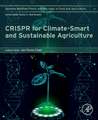
Editat de Jen-Tsung Chenen Limba Engleză Paperback – 17 sep 2025
In agricultural food production, a range of stressors continues to challenge crop production globally. Fortunately, modern crop breeding approaches have developed rapidly, including the promising technology of plant genome editing. Leading to improvements in disease resilience or stress-tolerant crops, CRISPR/Cas9 is among the mainstream genome editing technologies for plant breeding precision and efficiency.
CRISPR Technology for Combating Plant Pests and Pathogens offers in-depth summaries curated by leading experts and professors in the field of agricultural biotechnology, providing the essential knowledge needed to advance research and applications in crop resilience.
- Provides CRISPR-based methods for advancing plant pest and pathogen management
- Includes ways to improve efficiency and reduce off-target effects of CRISPR technology
- Discusses ethical and societal issues for CRISPR technology
Preț: 917.49 lei
Preț vechi: 1318.80 lei
-30%
Puncte Express: 1376
Carte tipărită la comandă
Livrare economică 27 noiembrie-11 decembrie
Livrare express 30 octombrie-05 noiembrie pentru 139.82 lei
Livrare prin curier în România Termenul estimat este afișat lângă disponibilitate.
Transport gratuit pentru acest produs Plată online sau ramburs, în funcție de opțiunile comenzii.
Retur gratuit în 14 zile Comandă securizată și suport în română.
Specificații
ISBN-13: 9780443439209
ISBN-10: 0443439206
Pagini: 332
Dimensiuni: 191 x 235 x 18 mm
Greutate: 0.72 kg
Editura: ELSEVIER SCIENCE
Colecția Genome Modified Plants and Microbes in Food and Agriculture
Seria Genome Modified Plants and Microbes in Food and Agriculture
ISBN-10: 0443439206
Pagini: 332
Dimensiuni: 191 x 235 x 18 mm
Greutate: 0.72 kg
Editura: ELSEVIER SCIENCE
Colecția Genome Modified Plants and Microbes in Food and Agriculture
Seria Genome Modified Plants and Microbes in Food and Agriculture
Cuprins
1. CRISPR/Cas systems for advancing plant disease and pest management: Advances and prospects
2. CRISPR/Cas techniques for developing biotic stress-tolerant plants: Advances, limitations, and future perspectives
3. CRISPR-edited plants for pest resistance: Methods and applications
4. CRISPR-edited plants for resistance to insect herbivores: Methods and applications
5. CRISPR-edited plants for resistance to fungal diseases: Methods and applications
6. CRISPR-edited plants for resistance to bacterial diseases: Methods and applications
7. CRISPR-edited plants for resistance to viral diseases: Methods and applications
8. CRISPR-edited plants for herbicide resistance: Methods and applications
9. CRISPR to enhance biological nitrogen fixation (BNF) and nitrogen use efficiency (NUE): Methods and applications
10. CRISPR-edited plants for enhanced secondary metabolism: Methods and applications
11. CRISPR-edited plants for disease resistance in horticultural crops: Methods and applications
12. Emerging plant CRISPR technologies for improved efficiency and reduced off-targets effects
13. Ethical, societal issues, and future challenges of plant CRISPR technologies
2. CRISPR/Cas techniques for developing biotic stress-tolerant plants: Advances, limitations, and future perspectives
3. CRISPR-edited plants for pest resistance: Methods and applications
4. CRISPR-edited plants for resistance to insect herbivores: Methods and applications
5. CRISPR-edited plants for resistance to fungal diseases: Methods and applications
6. CRISPR-edited plants for resistance to bacterial diseases: Methods and applications
7. CRISPR-edited plants for resistance to viral diseases: Methods and applications
8. CRISPR-edited plants for herbicide resistance: Methods and applications
9. CRISPR to enhance biological nitrogen fixation (BNF) and nitrogen use efficiency (NUE): Methods and applications
10. CRISPR-edited plants for enhanced secondary metabolism: Methods and applications
11. CRISPR-edited plants for disease resistance in horticultural crops: Methods and applications
12. Emerging plant CRISPR technologies for improved efficiency and reduced off-targets effects
13. Ethical, societal issues, and future challenges of plant CRISPR technologies